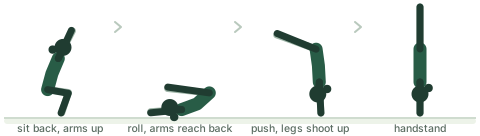
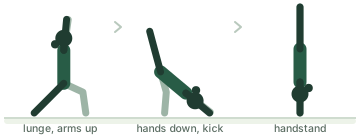
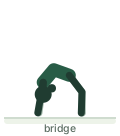
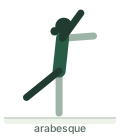
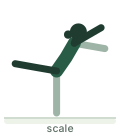
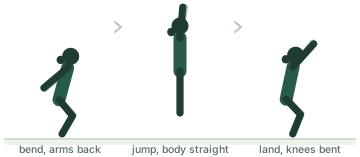
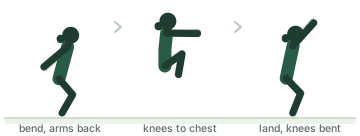
Find a gymnastics move by its starting letter, or explore 40 illustrated moves grouped by type. The A–Z finder includes familiar basics and advanced names such as Quast, Nabieva and Zuchold.
The illustrated library shows movement steps, coaching cues and where each move appears in the USA Gymnastics Level 1–5 routines. You can also try the level skills check or the Name that move quiz. Gym clubs, coaches and teachers can download the drawings for free to use with a credit.
Moves marked Learn with a coach need a trained spotter and proper mats. Don’t try them at home.
Gymnastics skills that start with each letter
Looking for a move beginning with Q, U or Z? Choose a letter for a short answer. This selected list covers women’s and men’s artistic gymnastics, from basic shapes to advanced named skills.
The labels distinguish complete skills from body shapes and positions. A name’s first letter is not its difficulty rating or a guide to what to learn next. For event filters and comparisons, open the Skill Explorer.
A round-off and back-handspring entry lead into a tucked backward somersault off the table.
Skills that start with Z
Zamolodchikova vault
Women's vault · named skill
A stretched Tsukahara vault with two twists; the apparatus matters because the name also belongs to a beam mount. Code reference
Zuchold-Schleudern
Uneven bars · named transition
An inverted pike swing on the high bar leads into release and flight to handstand on the low bar. Code reference
Names such as Quast, Xiao Ruizhi and Zuchold describe advanced competition skills. These entries help you recognize them; they are not practice instructions. Our guide explains how a move gets a gymnast’s name.
40 illustrated gymnastics moves
Browse the drawings below, or filter these entries by name, stage or compulsory level. Use the A–Z finder above for additional competition skill names.
Positions
The body shapes every other skill is built from.
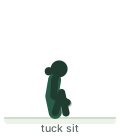
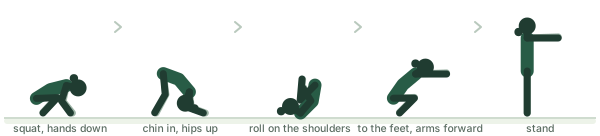
Tuck
Basic
Knees pulled to the chest, the body rounded into a ball. Tucked rolls are the first tumbling skills, and the tuck is the easiest shape for saltos.
How to do it
Sit and pull the knees in toward the chest.
Wrap the arms around the shins and round the back.
Keep the knees and feet together and the chin slightly in.
What coaches look for: Knees close to the chest and together. In a salto, the tighter the tuck, the faster the rotation.
In the USA Gymnastics routines
Level 1Floor: Forward roll (tucked) and backward roll (tucked)
Level 5Floor: Back tuck and front tuck·Bars: Flyaway dismount (tucked, piked or stretched)
Videos by other creators, chosen for clear technique. The player loads from YouTube when you tap.
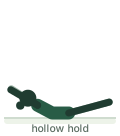
Hollow body
BasicAlso called hollow hold, hollow position, dish
Lying on the back with the lower back pressed to the floor and the shoulders and legs lifted, so the body curves like a shallow dish. It is the tight shape held in handstands, casts and saltos.
How to do it
Lie on the back with the arms by the ears and the legs together.
Press the lower back flat into the floor.
Lift the shoulders and the straight legs a little off the floor, toes pointed.
Hold, keeping the lower back down; if it lifts, raise the legs higher.
What coaches look for: The lower back stays on the floor the whole time. Legs higher and an easier hold is better than a low hold with an arched back.
Videos by other creators, chosen for clear technique. The player loads from YouTube when you tap.
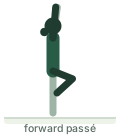
Passé balance
BasicAlso called retiré, relevé passé, forward passé
Balancing high on the ball of one foot with the other knee bent forward and its pointed toes touching the front of the standing knee.
How to do it
Stand tall with the arms up or out to the side.
Bend one knee forward and place the pointed toes against the front of the standing knee.
Rise onto the ball of the standing foot.
Hold with the hips level and the body tall, then lower with control.
What coaches look for: A high relevé, level hips and the toes kept at the knee. USA Gymnastics routines use this forward passé, with the knee in front.
In the USA Gymnastics routines
Level 1Beam: Forward passé balance·Floor: Forward passé balance
Videos by other creators, chosen for clear technique. The player loads from YouTube when you tap.
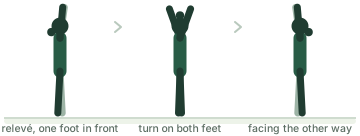
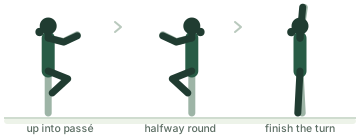
Passé turn
IntermediateAlso called turn in forward passé, pirouette, heel-snap turn
A turn on the ball of one foot with the other foot held in passé at the knee.
How to do it
Start with one foot in front, arms ready.
Push up onto the ball of the standing foot and bring the other foot to passé.
Turn, holding the passé and a tall body.
Finish the full rotation, then lower with control.
What coaches look for: A high relevé the whole turn, the foot kept at the knee and the rotation completed. Levels 2 and 3 and Level 4 beam turn halfway; Level 4 floor and Level 5 turn all the way round.
In the USA Gymnastics routines
Level 2Floor: Half turn in forward passé (heel-snap turn)
Level 3Beam: Half turn in forward passé·Floor: Half turn in forward passé
Level 4Beam: Half turn in forward passé·Floor: Full turn in forward passé
Level 5Beam: Full turn in forward passé·Floor: Full turn in forward passé
Videos by other creators, chosen for clear technique. The player loads from YouTube when you tap.
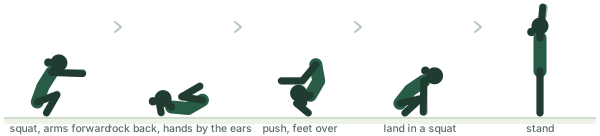
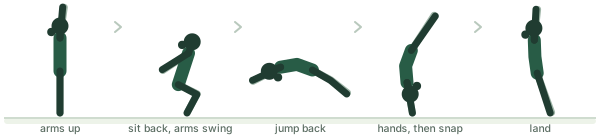
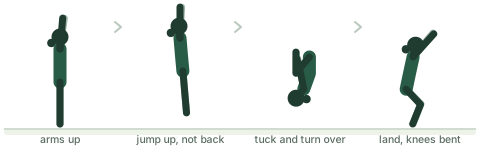
Back handspring
IntermediateLearn with a coachAlso called flic-flac, flip-flop
A powerful jump backward onto the hands and a snap back to the feet. It moves through a handstand with flight before and after.
How to do it
Stand with the arms up, then sit back as if into a chair while the arms swing down.
Jump backward and swing the arms up and back by the ears.
Reach the floor with straight arms as the body passes through handstand.
Push through the shoulders and snap the feet down together.
What coaches look for: A jump that goes back rather than up, straight arms on the floor, and a quick snap-down. It is learned with a coach and spotting, not at home.
In the USA Gymnastics routines
Level 3Floor: Back handspring (flic-flac) to two feet, rebound
Videos by other creators, chosen for clear technique. The player loads from YouTube when you tap.
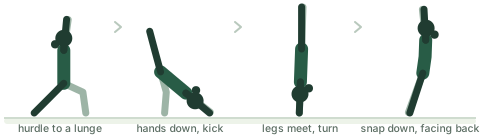
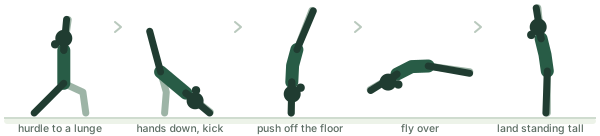
Front handspring
IntermediateLearn with a coach
A fast handspring forward: from a hurdle the hands reach the floor first, the shoulders push hard as the legs kick over, and the gymnast lands on one foot or both.
How to do it
Run and hurdle into a long lunge.
Reach forward and place both hands side by side, shoulder-width apart, as the back leg kicks up, with no flight before the hands touch.
As the hands land, push hard through the shoulders, arms by the ears, and keep rotating.
Rotate over and land on one foot (step-out) or both feet, standing tall.
What coaches look for: Speed and rotation rather than height: at Levels 4 and 5 USA Gymnastics wants it to look like a powerful front walkover, and judges deduct for diving onto the hands. It is learned with a coach and spotting.
Videos by other creators, chosen for clear technique. The player loads from YouTube when you tap.
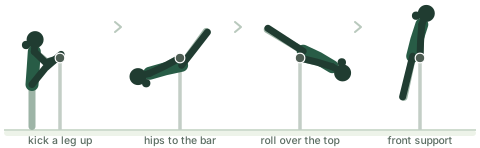
Pullover
BasicAlso called back hip pullover
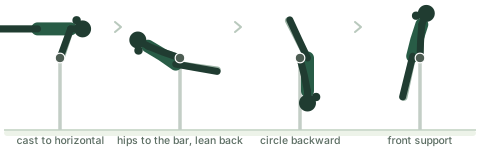
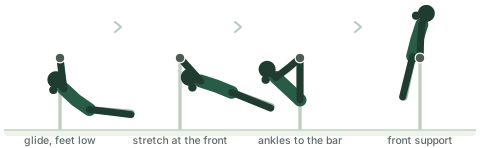
A mount that pulls the hips up to the bar and rolls over it backward, finishing in front support.
How to do it
Stand facing the low bar and grip it, hands shoulder-width apart.
Pull with bent arms to keep the bar close and lift both legs up together and over the bar.
Keep lifting the hips over the bar so the body wraps around it.
Shift the hands to the top of the bar and straighten the arms to finish in front support.
What coaches look for: Both legs lift together (judges deduct 0.30 for a one-foot take-off), the chin stays off the bar, and the head stays neutral, eyes toward the feet.
Videos by other creators, chosen for clear technique. The player loads from YouTube when you tap.
Cast
Basic
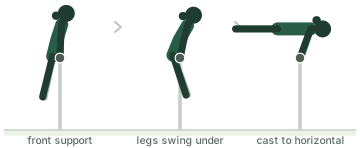
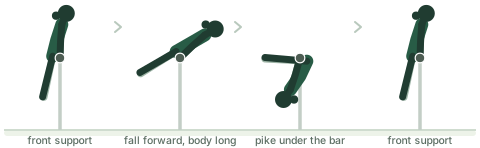
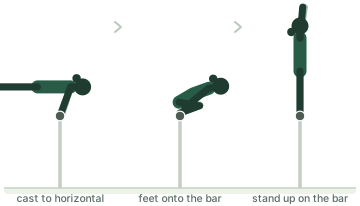
From front support, the legs swing under the bar and then back and up, lifting the body off the bar on straight arms.
How to do it
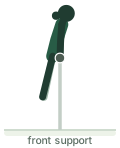
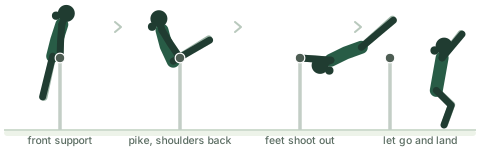
Start in front support.
Pike slightly to swing the legs forward under the bar.
Kick the legs back and push down on the bar with straight arms, shoulders leaning forward.
Lift the body away from the bar in a straight line, then return the hips to the bar.
What coaches look for: Straight arms and a tight, straight body. USA Gymnastics asks for a cast to horizontal at Level 4 and above horizontal at Level 5.
Videos by other creators, chosen for clear technique. The player loads from YouTube when you tap.
Vault
Springboard, table and flight.
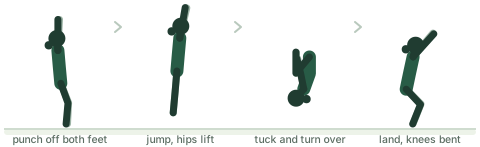
Handspring vault
IntermediateLearn with a coachAlso called front handspring vault, handspring over the table
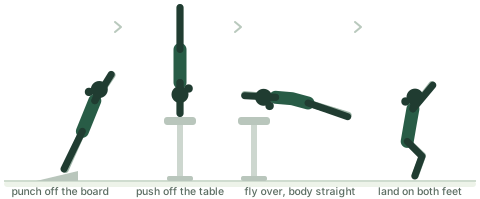
Run, punch off the springboard, push through straight arms on the table as the body passes handstand, and fly over to land on the feet.
How to do it
Sprint down the runway and hurdle onto the springboard.
Punch off the board with both feet, arms reaching for the table.
Place the hands shoulder-width apart and push off through straight arms as the body passes handstand.
Fly off in a straight, tight body and land on both feet.
What coaches look for: A straight body through the vault and a quick, strong push off the table. Level 3 does it over a mat stack at least 32 inches high, Levels 4 and 5 over the vault table.
In the USA Gymnastics routines
Level 3Vault: Handspring over a raised mat stack (at least 32 inches high)
Videos by other creators, chosen for clear technique. The player loads from YouTube when you tap.
No moves match. Clear the search or pick another stage or level.
Which level am I?
Tick the skills you can do on your own, level by level. The lists are the skills in the USA Gymnastics Development Program routines for Levels 1–5, the levels where every gymnast does the same routine. Your ticks stay in this browser only.
How levels really work
Your coach decides which level you compete. USA Gymnastics sets a minimum age for each level: Level 1 from a gymnast’s 4th birthday, Level 2 from her 5th, Level 3 from her 6th, and Levels 4 and 5 from her 7th. Levels 1–3 have no score needed to move up. From Level 4, a gymnast moves up by scoring at least 34.00 in the all-around at Level 4, and two all-around scores of 36.00 at Level 4 let her skip Level 5.
Gymnasts coming from Xcel or another program join the Development Program at Level 4 or below. Xcel has its own skill rules, explained in our guide to the Xcel levels.
Name that move
Look at the drawing and pick the move. Eight questions, using the drawings from the library.
Common questions
What are the basic gymnastics moves?
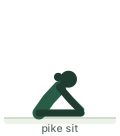
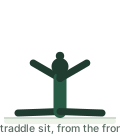
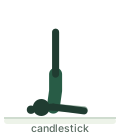
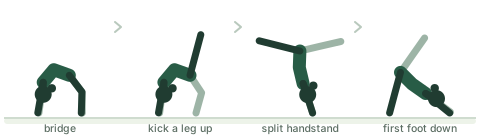
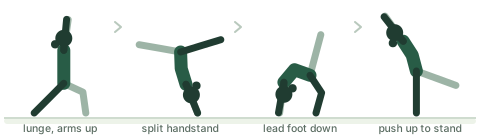
The first moves gymnasts learn are the body shapes (tuck, pike and straddle), the candlestick, forward and backward rolls, the handstand, the bridge and the cartwheel. They make up most of the tumbling in the USA Gymnastics Level 1 and 2 floor routines. On bars, beginners start with the front support, pullover, cast and back hip circle. The round-off and back handspring follow at Level 3, and the back walkover at Level 4.
What order should you learn gymnastics moves in?
Start with the shapes, then the rolls, then the handstand. A steady handstand comes before the cartwheel, and the bridge comes before the back walkover. The round-off builds on the cartwheel, and the back handspring builds on the round-off and the back walkover. The Learn first and Learn next links on each move follow this path.
How do I know what level I am in gymnastics?
Your coach places you, following the USA Gymnastics rules: a minimum age for each level and, from Level 4, a minimum all-around score to move up. The skills check above shows which level’s skills you already have, which is a good guide to where you would start. Our guide to gymnastics levels explains the whole ladder.
Final Takeaway
Use the starting letter to find a name, then check its event and movement. A body shape, a basic skill and an elite named element can share the same first letter without belonging to the same learning stage. The drawings and specialist guides help you put each one in context.