How to Do a Front Hip Circle on Bars: Steps, Drills and Common Mistakes
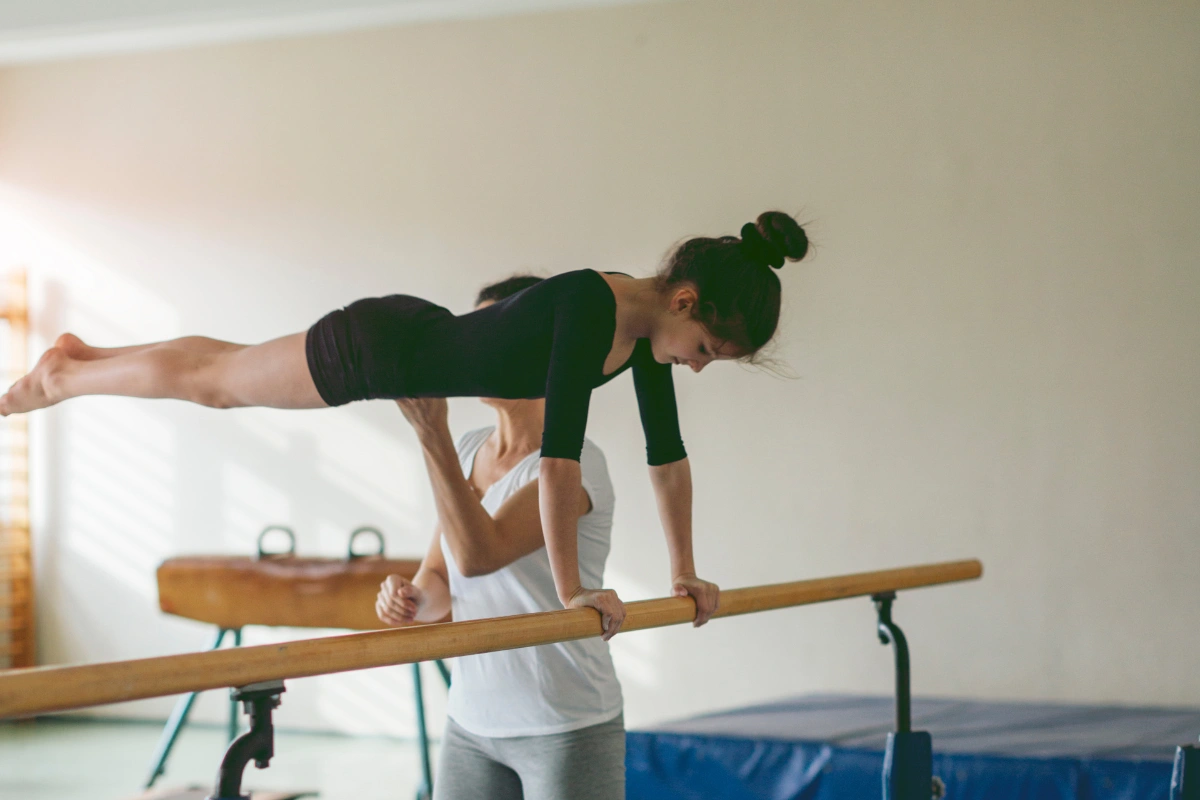
A front hip circle takes a gymnast forward around the bar and back to front support, maintaining contact with the rail around the upper thighs and hips. The difficult part is often the timing: staying long as the body tips forward, then folding quickly enough to come back over the top.
Contents
If a gymnast gets around but falls backward before finishing, “pike harder” may not solve the problem. The hands, shoulders and chest also have to arrive in a position that can support the body. This guide separates the entry, circle and finish so each can be practiced with a clear purpose.
The Front Hip Circle at a Glance
| Part of the skill | What to watch |
|---|---|
| Support | The gymnast presses tall above the rail instead of resting heavily on the stomach. |
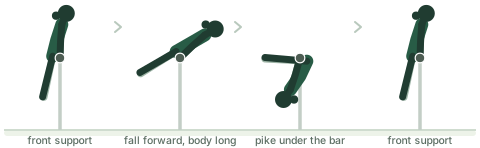
| Forward fall | The chest travels forward and the heels rise while the body stays long. |
| Pike | The gymnast folds at the hips while continuing around the bar. |
| Finish | The hands adjust and the chest comes over the rail, allowing a return to support. |
Watch the Fall, Pike and Return to Support
In Kokokahi Gymnastics’ clinic, Coach Emma works with Level 3 gymnasts on individual parts of the movement. Watch the supported pike-to-support work around 1:39, then the assisted fall-and-pike task around 2:40. Notice how returning the chest over the bar matters as much as getting the legs around.
These are stations arranged for that class, with a coach and gym equipment. The useful lesson is what each task teaches; the mat arrangements and assistance are not instructions for building a practice station at home.
What to Learn Before a Front Hip Circle
A gymnast needs a dependable front support, a controlled way onto and off the bar, and familiarity with circling while maintaining contact with the rail. A pullover helps establish support; back hip circles provide experience moving around the bar in the other direction.
However, completing a back hip circle does not automatically supply the timing for a forward one. The new challenge is allowing the body to travel forward before the quick fold. More strength work alone will not correct an entry that folds too soon.
There is no single number of hollow holds or V-ups that guarantees readiness. A coach can look at whether the gymnast maintains the intended shape, controls the support and understands the next action during assisted practice.
How to Do a Front Hip Circle, Step by Step
1. Establish the Support
Press down through the hands to make the body tall above the rail. Keep the knees straight and the legs together. Starting slumped over the bar makes it harder to distinguish a controlled forward tip from an early fold at the waist.
2. Tip Forward Before Folding
Let the chest move forward as the heels rise, keeping the torso and legs working as one long shape initially. A useful distinction is between tipping the body and immediately dropping the chest toward the knees. The second action shortens the entry before the circle has developed.
For the USAG Level 3 version, this entry must be straight-hollow, without an arch, with the head neutral. “Hollow” here describes a controlled body position; it does not mean making a deep pike at the start.
3. Make the Pike Part of the Circle
Once the forward fall is underway, fold briskly at the hips while continuing the rotation. Keep the knees straight rather than pulling them into a tuck. The fold should help the body travel around the rail, not simply leave the chest hanging down with the legs dropping away.
USAG permits a slight arm bend during the circle. That exception is different from collapsing into a bent-arm support. A coach may still use straight-arm drills to improve the gymnast’s ability to press on the bar.
4. Return the Chest Over the Bar
As the body comes around, the hands shift into a position that can press down on the rail. Bring the chest over the support and straighten the arms. Reaching the top with the chest left behind the hands often ends in a fall backward.
In Level 3, the finish is slightly piked with the feet in front, ready for the immediate small cast. The whole routine and its other elements belong in our Level 3 skills guide.
Drills That Build the Front Hip Circle
Choose a task for the part that is missing. In the clinic video, Coach Emma repeatedly asks the gymnasts what a drill helps them do. That makes the practice more useful than repeating an exercise simply because it looks related.
| Coached task | Purpose | Useful observation |
|---|---|---|
| Supported forward tipping | Separate the long entry from the later pike. | Do the heels rise as the chest travels forward, or does the gymnast immediately fold? |
| Assisted fall followed by a quick pike | Join the two actions with better timing. | Does the fold continue the circle instead of stopping the movement? |
| Pike-to-support preparation | Practice pressing down and bringing the chest over the rail. | Can the gymnast finish supported above the bar rather than leaning back from it? |
These are examples of teaching goals, not a compulsory drill list. The coach selects the apparatus height, assistance and workload. Floor shape work may support the lesson, but success on the floor does not confirm that the gymnast can safely circle a bar.
Common Mistakes and What Judges Deduct
First identify where the movement changes. A side-on view can help a coach distinguish an entry problem from an incomplete finish.
| What happens | What to examine |
|---|---|
| The chest folds down immediately. | Whether the gymnast has understood the long forward tip before the pike. |
| The circle slows underneath the bar. | The timing of the fold and whether the body remains close to the rail. |
| The gymnast gets around, then falls backward. | The hand adjustment and chest position at the return to support. |
| The arms collapse at the finish. | Whether the gymnast is ready to support the body in that position; return to an assisted task. |
Coaching observations are not automatically named deductions. Under the current 2021–2029 compulsory program, the Level 3 front hip circle, small cast and return to support form a 0.40 element. Its specific penalties include up to 0.10 for a missing straight-hollow entry, 0.20 for omitting the immediate small cast, and up to 0.10 for an uncontrolled return to the bar. Going directly to a squat-on without returning to support carries 0.50.
The distinction matters: making the circle does not complete the entire Level 3 element. The cast and controlled return still need attention.
Practicing Safely
Learn the circle on appropriate gym apparatus with secured matting and a coach who can assist. The forward rotation brings the head below the bar; the bar height, clear space and mat arrangement need to suit that gymnast.
The American Academy of Pediatrics recommends trained coaches, available spotting and regularly checked equipment. A video cannot show whether a particular home bar is suitable for this movement. Ask the coach which supporting exercises, if any, fit home practice. Our explanation of gymnastics spotting covers the coach’s role; it is not a substitute for hands-on training in how to assist.
Common Questions
What level is a front hip circle in gymnastics?
It appears in Level 3 of the USAG Women’s Development Program. Recreational classes may introduce skills in a different order, so a class label is not the same as a competition level.
Is a front hip circle harder than a back hip circle?
They present different timing challenges. A gymnast comfortable circling backward may still need practice with the forward fall, quick pike and return to support.
Is a front hip circle the same as a clear hip circle?
No. A hip circle maintains contact with the rail; a clear hip circle circles without that hip contact. Our bar-circle recognition guide explains the different families.
Final Takeaway
A useful front hip circle correction starts with the phase that is going wrong. A long entry, a well-timed pike and a supported finish each need their own attention.
Use the demonstration to understand those actions, then work on the relevant task with a coach. For Level 3, preserve the straight-hollow entry and finish the required cast and return—not just the circle.
Main Sources
- USA Gymnastics compulsory replacement pages: Level 3 bars technique, read with the current compulsory update index.
- USA Gymnastics July 2023 replacement pages: Level 3 bars penalties, Pen-21.
- Kokokahi Gymnastics: Coach Emma’s front hip circle clinic and the credited video above.
- American Academy of Pediatrics: Gymnastics—Keeping the Sport Safe & Fun for Kids.