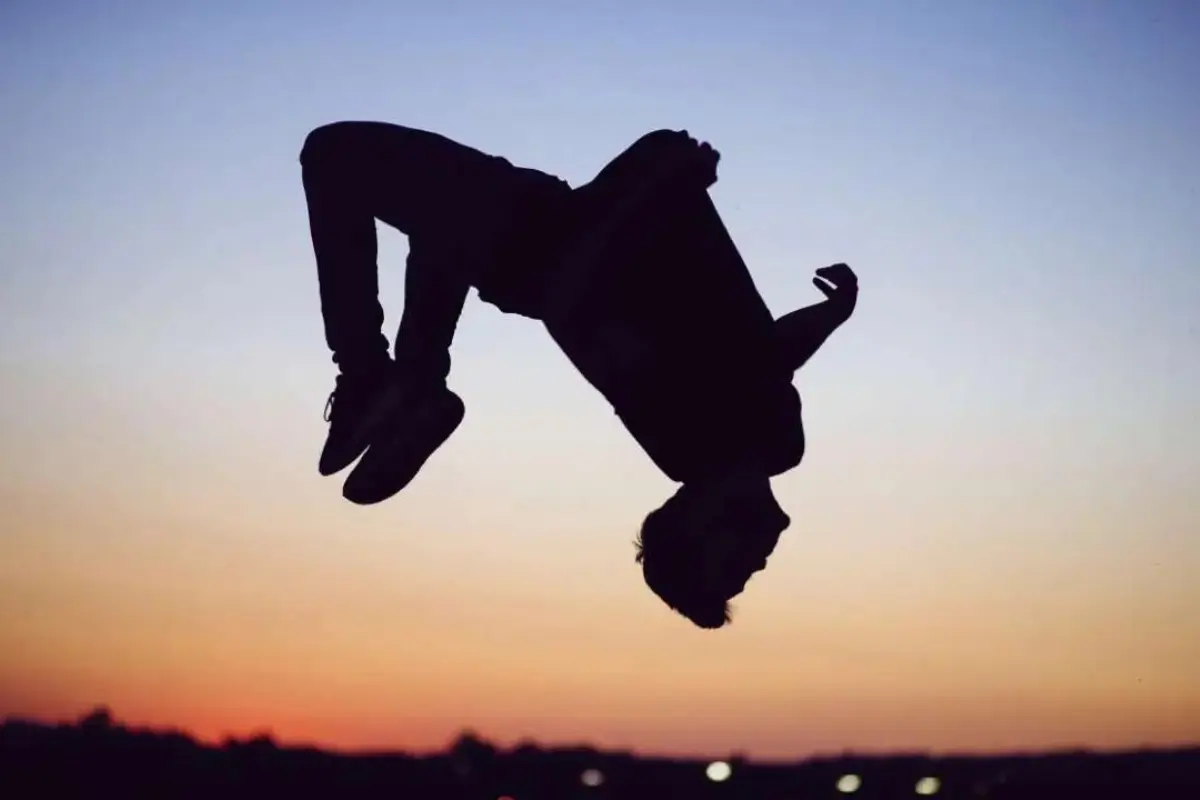
A back handspring is the skill that turns a young gymnast into a tumbler. From a standing start, the gymnast jumps backward onto the hands and snaps over to land on the feet in one quick movement. It is a staple of floor routines and of cheer tumbling, and the usual lead-in to bigger backward flips.
- What Is a Back Handspring?
- What Coaches Look For Before Teaching It
- How Gyms Teach a Back Handspring
- The Round-Off Back Handspring
- Common Back Handspring Faults and How Coaches Correct Them
- Where the Back Handspring Appears in USA Gymnastics Programs
- How to Tell a Gym and Coach Are Qualified
- Why Not at Home or on a Backyard Trampoline?
- Back Handspring FAQ
- The Short Version
It is also a skill to learn only in a gym, with a qualified coach who spots, proper matting and a step-by-step progression. The American Academy of Pediatrics (AAP) says gymnasts need proper supervision and spotting at all times, along with a gradual skill progression.
This guide explains what a back handspring is, what a coach looks for before teaching it, how the learning usually goes in class, the round-off back handspring, the faults coaches fix most often, and where the skill appears in USA Gymnastics programs. It describes what to expect. It is not a set of steps to try at home.
What Is a Back Handspring?
A back handspring is a backward tumbling skill with two short moments of flight: one from the feet onto the hands, and one from the hands back to the feet. On the way, the body passes upside down, close to a handstand.
Gymnasts and coaches often shorten it to “BHS” or just “handspring”. Rulebooks use another name. USA Gymnastics and World Gymnastics (formerly FIG) documents call it a flic-flac, so that’s the word you’ll see on score sheets and in skill lists.
When coaches talk about a back handspring, they usually split it into four phases. This table describes what each one looks like from the side of the floor, not how to do it.
| Phase | What you see | What the coach is watching |
|---|---|---|
| Take-off | The gymnast swings the arms and jumps backward from both feet | A real jump up and back, not a fall backward |
| Reach to the hands | The arms pass by the ears and the hands meet the floor | Straight arms and open shoulders |
| Upside down | The body travels over the hands, close to a handstand | Legs together, body tight |
| Snap-down and landing | The gymnast pushes from the shoulders and the feet come down together under the body | Chest lifting, knees and hips bending to absorb the landing |
The hands take a lot of force. The AAP notes that because gymnasts walk and jump on their hands, the wrists can take two to four times body weight, and one biomechanics study measured hand forces averaging more than twice body weight in the back handspring itself (Koh, Grabiner and Weiker, American Journal of Sports Medicine, 1992). That is one reason coaches want strong shoulders and wrists before the skill is taught.
Once a gymnast has it, the back handspring opens the door to bigger skills. Coaches connect it to back tucks, layouts and twisting flips on floor, and our list of artistic gymnastics moves shows where those fit. On vault, the Yurchenko family starts with a round-off onto the springboard and a back handspring onto the table. The current FIG Women’s Code of Points 2025–2028 lists these as “round-off, flic-flac on” vaults (pp. 66–67).
What Coaches Look For Before Teaching It
There is no set age or number of months that makes a child ready. The decision belongs to the coach. The American Academy of Orthopaedic Surgeons (AAOS) advises that a gymnast talk to a coach before trying any new move, and that the coach make sure the gymnast is physically prepared for it.
These are the building blocks most coaches want to see first.
| What the coach looks for | Why it matters |
|---|---|
| A strong handstand with straight arms | The skill passes through an upside-down position on the hands, and the shoulders have to hold and push the body’s weight |
| A good bridge, with straight arms and open shoulders, and a bridge kick-over | Shows the shoulder and back flexibility to reach back to the floor |
| Often, a back walkover | Gives the gymnast slow, controlled experience of going backward over the hands. Not every coach insists on it: USA Gymnastics’ compulsory program places the first back handspring at Level 3 and the back walkover at Level 4 |
| Body tension and a strong core | A loose body bends and separates in the air, which makes the skill harder to control |
| Leg power | The jump creates the height and length of the handspring |
| Confidence going backward with the coach, and the habit of listening | Fear is normal. A good coach builds trust first rather than rushing it |
| No pain in the wrists, shoulders or low back | Pain is a reason to stop and get checked, not something to push through |
A gymnast doesn’t have to be perfect at all of these. The coach is judging the whole picture: strength, flexibility, body awareness and how the child copes with going backward.
How Gyms Teach a Back Handspring
Every gym orders its progression a little differently, but the idea is the same everywhere. The coach breaks the skill into parts, uses mats and equipment to make each part easier, spots, and gives less help only when the gymnast is consistent. AAOS notes that safety harnesses, foam pits and training mats can be used when a gymnast is learning new, complex skills. USA Gymnastics’ U101 Safety and Risk Management course teaches coaches progressions and proper spotting techniques.
A typical journey looks something like this.
| Stage in class | What usually happens | What the coach waits to see before moving on |
|---|---|---|
| 1. Building blocks | Handstands, bridges, kick-overs, body shapes, jumps and strength work, often during warm-up | A solid handstand and bridge, with no pain |
| 2. Shaped mats and equipment | The gymnast goes backward over a large rounded mat or down an incline mat while the coach guides; some gyms add a tumble track, trampoline or foam pit | Arms reaching back by the ears, hands landing first, body staying tight |
| 3. Spotted back handsprings | The whole skill on soft matting, with the coach spotting every attempt | A real jump backward and straight arms |
| 4. Less help | The coach gradually lightens the spot but stays in position | The same good shape, attempt after attempt |
| 5. On the regular floor | Back handsprings on the competition-style floor, with the coach close by at first | Consistent, controlled landings |
| 6. Round-off and series | A back handspring after a round-off, then two in a row, then into other skills | Speed and rhythm without losing shape |
Some of the rounded “back handspring trainer” mats used in stage 2 are also sold for home use. Owning one doesn’t make the skill safe without a coach. A mat can’t decide when a child is ready, and it can’t catch a crooked attempt.
How long the whole process takes varies a lot. It depends on the gymnast’s strength and flexibility, how often they train, what they have learned before and how they feel about going backward. A coach moves a gymnast to less help when the skill is consistent and safe, not when a set number of weeks has passed.
Spotting Is the Coach’s Job
A spot is hands-on help from a coach who knows exactly where to stand, where to place the hands and when to support a moving body. AAOS says a coach should spot gymnasts during all practice sessions, especially on complex or challenging skills.
That is a trained skill. A parent, sibling, friend or older teammate holding a child’s back is not a substitute, however careful they are. The coach also decides when to reduce the spot, because only someone watching every attempt can tell whether the gymnast is ready for less help.
The Round-Off Back Handspring
A round-off looks a little like a cartwheel, but the legs come together in the air and the gymnast lands on both feet facing back the way they came. It turns running speed into backward motion, so a back handspring straight after it is faster and more powerful than one from a stand.
That’s why the round-off back handspring is the base of most backward tumbling passes on floor, as well as the entry for Yurchenko-style vaults.
Coaches teach it inside the same progression, with the same spotting and matting. Some start with the standing back handspring, and others move to the round-off version early because the momentum can help. Either way, the coach decides when to put the two skills together and how much help to give.
In the USA Gymnastics compulsory floor routines, the round-off and back handspring appear together from the very first back handspring at Level 3 (see the table below).
Common Back Handspring Faults and How Coaches Correct Them
Almost every gymnast shows some of these while learning. Coaches correct them in the gym, usually by going back a stage to spotted or mat-assisted versions, adding strength or flexibility work, or changing a cue.
| Fault | What it looks like | How coaches usually work on it |
|---|---|---|
| Falling instead of jumping | The gymnast leans back and drops toward the floor; the handspring is short and low | More work on the take-off, often back on a shaped mat or with a spot |
| Bent arms | The elbows buckle when the hands land | Shoulder, handstand and wrist strength, and spotted repetitions until the arms stay straight |
| Head thrown back too early | The head drops before the arms reach back, and the body shape breaks | Arm and head position worked on shaped mats with the coach |
| Legs apart or knees bent | The legs separate or bend while the gymnast is upside down | Body-tension and shape work. Tying the legs or ankles together is not a safe fix: a gymnast needs to be able to separate the feet to save a fall |
| Extra bounce before take-off | A double bounce or shuffle before the jump | Building one consistent, controlled take-off |
| Low landing, no rebound | The gymnast lands piked with the chest down and can’t connect to the next skill | Snap-down and shoulder push worked on mats, plus leg and core strength |
| Fear or balking | The gymnast stops before take-off or bails out | A normal part of learning. The coach returns to an easier or spotted version and builds confidence step by step |
When Pain Is the Problem
Pain is not a technique fault. A USA Gymnastics sports-medicine guide, Back Pain in Gymnasts, names bridges, back walkovers and back handsprings among the arching skills that hurt gymnasts with spondylolysis, a stress fracture in the low back. It says back pain is not normal for any gymnast and should be checked by a medical provider.
The AAP adds that a gymnast with low back pain lasting longer than two weeks should see a doctor, and that wrists that are swollen or painful the next day need a doctor’s check too. Tell the coach as well, so they can change the training while the problem is sorted out.
Where the Back Handspring Appears in USA Gymnastics Programs
USA Gymnastics runs two main programs in women’s gymnastics: the Development Program, with set compulsory routines at Levels 1–5 and optional routines at Levels 6–10, and Xcel, a more flexible program with divisions from Bronze to Sapphire. In both, the skill is listed as a flic-flac.
Development Program, Levels 1–5
These are the back handspring and its building blocks in the compulsory routines, from the USA Gymnastics Women’s Development Program Compulsory book (2021–2029, revised July 2026).
| Level | Event | Back handspring and building blocks |
|---|---|---|
| Level 2 | Floor | Bridge, back kick-over (no back handspring yet) |
| Level 3 | Floor | Handstand to bridge, back kick-over; round-off and one back handspring to two feet, then a rebound |
| Level 4 | Floor | Back walkover; round-off and two back handsprings in a row, finishing in a controlled stick |
| Level 5 | Floor | Round-off, back handspring, back tuck |
| Level 5 | Beam | One acrobatic skill chosen from a list. A back handspring (landing on two feet or stepping out) is one option, alongside a back walkover, front walkover, backward roll to ¾ handstand and round-off |
Level 3 is the first time the skill appears, and by Level 5 the round-off back handspring leads straight into a back tuck. Our guide to USAG skill requirements for Levels 1–10 lists the other skills at each level and event.
In the optional levels, the back handspring usually serves as a link into saltos. From Level 6, for example, the first floor pass needs at least two directly connected flight elements, one of them a salto, under the USA Gymnastics 2026–2030 Women’s Development Program Optional Code. A round-off back handspring into a backward salto is one common way to build that pass.
Xcel
Xcel sets its rules by division. The Xcel event rules charts allow Bronze floor routines no saltos or aerials and no more than two acro flight elements, the family of tumbling skills, like the back handspring, that leave the floor briefly. At Silver, the first floor pass must include at least two directly connected acrobatic skills, one of them with flight.
Beam is different. The Xcel Code of Points (revised August 2026) gives a beam back handspring a “B” value, and Bronze and Silver beam routines can’t include “B” acrobatic skills. So a back handspring on beam becomes possible from Gold upward. Our guide to the Xcel divisions explains how they compare.
Whatever the program, your child’s coach chooses the skills that fit their level or division.
How to Tell a Gym and Coach Are Qualified
USA Gymnastics is the national governing body for the sport in the United States. Membership doesn’t guarantee good coaching, but it does tell you what training and screening a coach has had.
Check the club. USA Gymnastics has a Find a Gym directory of its member clubs. USA Gymnastics itself notes that membership doesn’t imply endorsement, so treat it as a starting point.
Ask about the coach’s membership. The requirements depend on the membership type.
| USA Gymnastics membership (2026–27) | What it requires |
|---|---|
| Competitive Coach | Background screening every 2 years; the U110 U.S. Center for SafeSport course; U112 (tough coaching or emotional abuse); U100 Fundamental Gymnastics Instruction; U101 Safety Certification, renewed every 4 years; concussion education acknowledgment |
| Recreational Coach | Background screening every 2 years; U110; U112; concussion education acknowledgment. U100 and U101 are not listed |
That difference matters for parents. Many children learn back handsprings in recreational classes, and a recreational coach membership doesn’t require the U101 safety course. It’s fair to ask whether the person teaching your child’s back handsprings has the U101 certificate, which covers progressions and spotting and lasts four years.
Check names. USA Gymnastics publishes a list of permanently ineligible and ineligible members, and the U.S. Center for SafeSport has a public Centralized Disciplinary Database of adults whose participation in sport is restricted. We didn’t find a public lookup for individual coaches’ safety certificates, so ask the gym. A well-run gym will be glad you did.
Watch a class. The AAP says coaches should be experienced and familiar with how to perform moves safely, certified in CPR and first aid, and should keep apparatus and floor mats maintained and checked regularly. Look for mats under every piece of equipment, enough coaches for the group, and a coach spotting the children working on back handsprings.
A few good questions to ask:
- Who will spot my child on back handsprings, and what training do they have?
- Are your coaches USA Gymnastics members, and are they U101 safety certified?
- How do you decide a child is ready for the next stage?
- What happens if my child is scared, or says something hurts?
The same questions are worth asking at a cheer or tumbling gym, which may belong to a different organisation.
Why Not at Home or on a Backyard Trampoline?
A back handspring is a backward flipping skill, so the AAP’s trampoline advice applies to it. The AAP recommends keeping kids away from trampolines except in settings with professional coaches and specialised equipment. Its rules for any trampoline include no flips or somersaults, “since these cause the most serious neck, head and back injuries”, one jumper at a time, and no jumping at all for children under 6.
Gyms do use trampolines and tumble tracks, but in a different way. The AAP points out that coached programs have safety rules, inspected equipment and trained coaches, and coaches may use a harness to teach specific moves.
The living room and the backyard have none of that. There is no spotter, no proper matting, and plenty of furniture, walls and hard ground. A short or crooked attempt can drive the head, neck or wrists into the floor. Online videos can’t see your child or catch them, and a parent’s hands are not a coach’s spot.
If your child wants to practise between classes, ask the coach what’s suitable. The back handspring itself, and the drills that lead up to it, belong in the gym.
Back Handspring FAQ
How long does it take to learn a back handspring?
There’s no reliable timeline. Some children pick it up quickly, and others take much longer, depending on strength, flexibility, how often they train and how they feel about going backward. The coach decides when they’re ready for less help, based on how consistent and safe the skill is, not on how many months they’ve trained.
What age can a child learn a back handspring?
There’s no official minimum age for the skill itself. Readiness depends on the building blocks above, not the birthday. In USA Gymnastics’ compulsory program it first appears at Level 3. For the bigger question of when to start classes, see our guide to the best age to start gymnastics.
Can adults learn a back handspring?
Yes. Many gyms run adult gymnastics or tumbling classes, and the same rules apply: a qualified coach, proper matting and a progression. Adults may need more time to build the flexibility and strength, and anyone with a back, shoulder or wrist problem should check with a doctor first.
Is a back handspring the same as a backflip?
No. In a back handspring, the hands touch the floor halfway through. A backflip, or back tuck, turns over in the air with no hands. In USA Gymnastics’ compulsory routines the back tuck comes later, at Level 5, where it follows a round-off back handspring.
The Short Version
A back handspring is a backward jump onto the hands and back to the feet, and it is the foundation of backward tumbling. Gymnasts learn it in a gym, step by step, once a coach sees a strong handstand, a good bridge and enough strength and confidence. The coach spots, decides when to give less help, and fixes faults by going back a stage. For parents, the most useful things to check are who will be spotting your child and what safety training they have.