What Makes a Gymnastics Skill a Layout? Reading the Stretched Shape
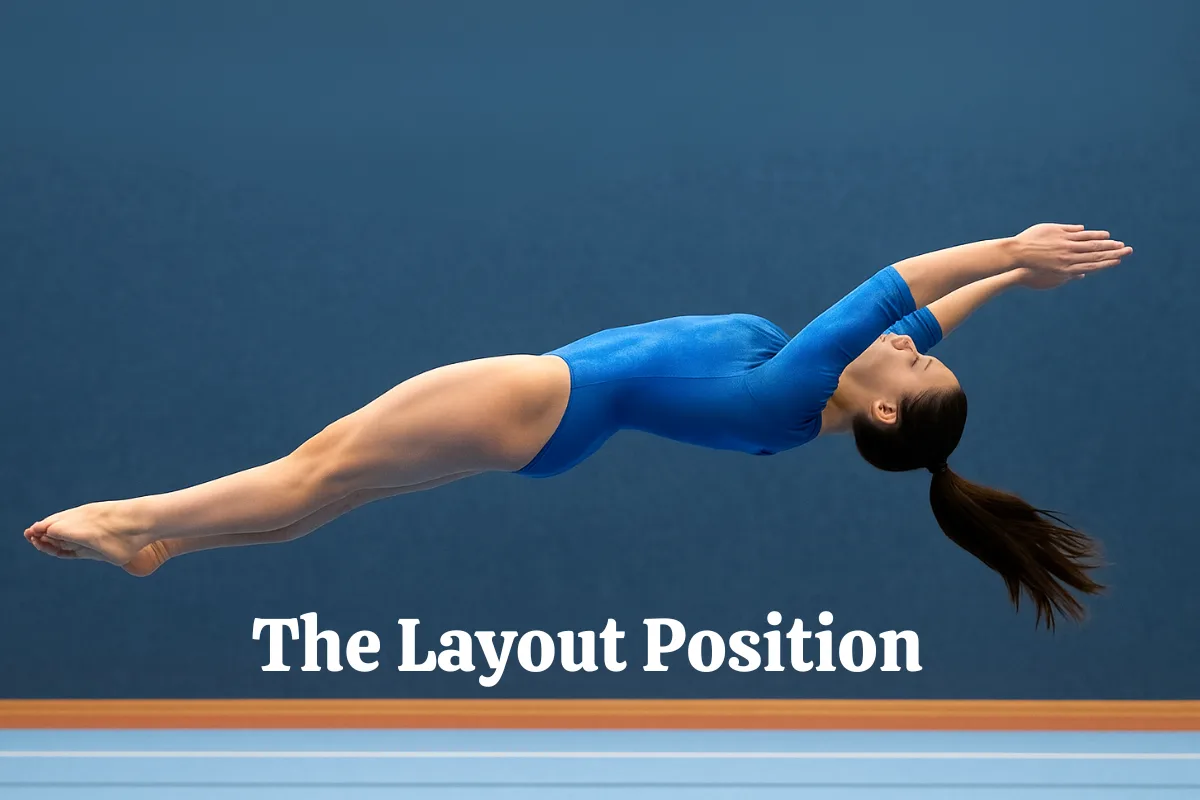
A layout is a somersault performed in an extended body position. Gymnastics rulebooks often use the word stretched for that shape. The gymnast shows a long body line rather than folding into a pike or drawing the knees into a tuck.
Contents
“Layout” describes the shape, so it needs other words to identify the complete skill. A front layout, a back layout and a full-twisting back layout are different movements even though each uses a stretched position.
Look beyond whether the knees are straight
Straight knees alone do not make a layout. The hips also need to remain extended enough for the element’s stretched shape to be recognizable. A gymnast with straight legs but a pronounced fold at the hips is showing a pike-like position.
Nor does “stretched” mean creating the biggest possible arch through the back. The defining idea is an extended, controlled line. Arm movements, takeoff and landing positions vary with the skill, so one frozen frame cannot always establish how the entire element was performed.
For a quick overview of the alternatives, see the three main gymnastics body shapes. The more focused pike explanation shows why straight legs and straight hips are separate observations.
Body orientation does not change the label. A gymnast can show a stretched position while upside down or moving through a horizontal orientation. “Straight” refers to the body line, not to standing vertically above the floor. Likewise, a horizontal athlete is not necessarily performing a layout salto; the actual movement must include the relevant somersault.
Imagine a side view of a gymnast during flight. Following a line from shoulder through hip toward ankle can help a viewer notice a pronounced fold. It is only a viewing aid. A camera looking along the gymnast’s length can hide the same fold, and an arm position can obscure the torso.
A body shape is not a single skill
| Name | What it adds to the stretched shape |
|---|---|
| Front layout | A forward somersault |
| Back layout | A backward somersault |
| Layout step-out | A landing with one foot followed by the other |
| Full-twisting back layout | A full twist combined with the backward somersault |
| Double layout | Two somersaults in the element |
Apparatus matters too. A stretched somersault within a vault, a floor skill and a bars dismount have different entries and judging contexts. Their shared shape does not give them a shared difficulty value.
The full-twisting back-layout guide follows one specific example. It explains how the words fit together without treating every use of “full twist” as the same skill.
“Step-out” adds information about the landing rather than changing layout into another body shape. “Double” adds a somersault count. “Full-twisting” adds a twist count. These words can be combined because they describe different parts of the skill. Read each part before trying to match the name to a video.
For example, a back layout and a double back layout both use a stretched shape, but the second contains an additional somersault before the landing. It would be misleading to describe the difference as merely holding the same pose for longer. The entire airborne task has changed.
How judges recognize the position
Judges consider what the gymnast actually shows, not only what the routine was intended to contain. The 2025–2028 FIG women’s Code includes stretched-position recognition rules in Section 8, alongside execution rules. Those details are specific to their competition context.
Recognizing a different element and taking a form deduction are different decisions. A small shape error should not automatically be described as a downgrade; equally, calling a skill a layout does not guarantee that judges will recognize it as one. The applicable rule and the performed element determine the result.
FIG’s recognition example for a single backward stretched salto without twist on vault identifies specific hip and knee criteria and a defined observation interval. Its examples show both recognized and unrecognized performances. This illustrates why a general word such as “straight” is not the complete judging instruction.
The scope of that example matters: it concerns the stated vault action. It should not be copied as a universal angle test for every stretched floor salto, beam element or bars dismount. A criterion for recognizing an element is also different from a promise of deduction-free execution.
Why the entry and landing frames can mislead
A skill unfolds over time. Takeoff preparation, the somersaulting phase and landing preparation do not all demand an identical body position. Selecting the frame with the most bent knees may show the gymnast absorbing the landing rather than performing the main airborne shape.
When reviewing a clip, first identify the complete skill and then follow the relevant flight. Compare frames that show the same phase instead of comparing one gymnast’s midflight position with another’s landing. This does not replace judging, but it prevents an unfair visual comparison.
Slow motion can make the shape easier to see, yet it cannot recover a body part hidden behind another or outside the frame. If the view remains unclear, say that the position cannot be confidently identified from that angle. Precision includes knowing when the available picture does not answer the question.
Why layout is not the “final” gymnastics shape
Athletes can practice a straight body line long before learning a layout salto. Performing that shape while somersaulting is a separate challenge requiring the appropriate takeoff, rotation and control.
There is also no point at which tucked and piked skills stop being useful. Elite routines include highly demanding elements in all three shapes. A layout is neither automatically the highest-valued option nor a guarantee of a safer landing.
Learning a layout salto therefore requires a coach’s skill-specific progression. A diagram of a straight body position cannot supply the timing or readiness assessment for an airborne skill.
The learning goal should therefore be attached to an actual task. Recognizing a stretched position in a basic body-shape exercise, maintaining it during a supported drill and performing it in a salto are different achievements. The same word can describe all three without making them equivalent measures of readiness.
For a spectator, this is also a reason to resist calling every tucked skill less advanced than every layout. Identify the full movement before making the comparison. The amount of rotation, apparatus and connection to surrounding elements can matter much more than the shape word alone.
What to Remember
A layout is recognized by its stretched body shape. To identify the skill accurately, add its direction, number of somersaults, twists, landing style and apparatus. That gives far more information than treating “layout” as a universal difficulty level.