What Is a Full-Twisting Back Layout? Shape, Rotation and Skill Credit
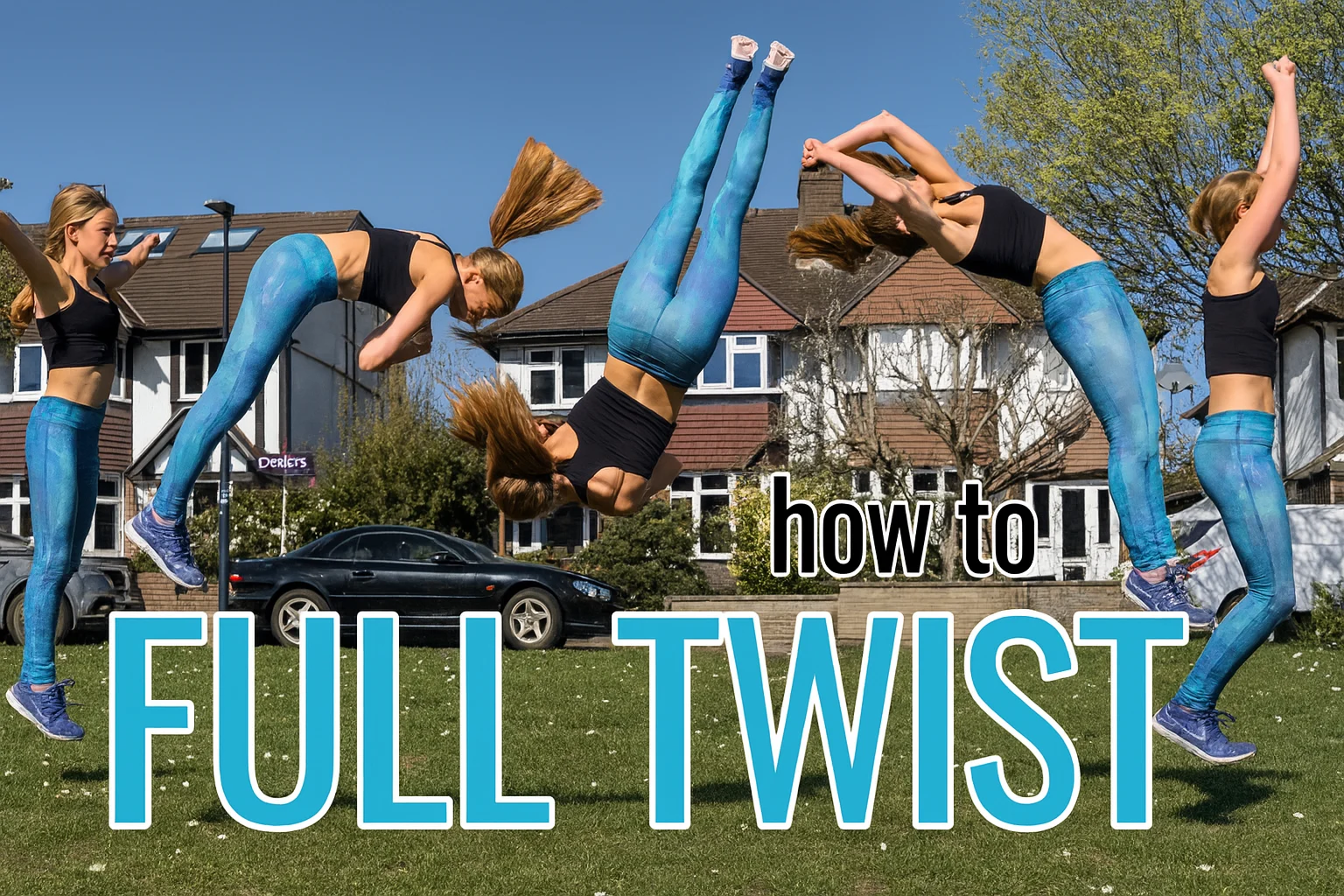
A full-twisting back layout combines one backward somersault with one full twist while the gymnast shows a stretched body position. In a floor-tumbling conversation, it is often shortened to “layout full” or simply “full.”
Contents
The phrase “full twist” by itself is broader: it means 360 degrees of twisting. It does not always mean a backward layout. A front salto, a jump or the flight phase of a vault can also include a full twist.
Read the name in three parts
| Part of the name | What it describes |
|---|---|
| Back | The direction of the somersault |
| Layout | The stretched body shape |
| Full-twisting | One complete twist around the body’s long axis |
The gymnast somersaults and twists during the same airborne skill. It is not a backflip followed by an upright spin after landing. The flip-versus-twist comparison explains those two axes of rotation.
When watching, look for the overall stretched shape and the combined rotations. A single frame may hide part of the action, especially when the gymnast is turned toward or away from the camera.
A useful replay shows the complete element, not just its most dramatic frame. First locate takeoff and landing so that an earlier round-off or handspring is not accidentally counted as part of the salto. Then watch the airborne body shape and rotation. A tumbling pass can contain several elements even when they flow together.
Imagine a pass described as round-off, back handspring, layout full. The first two names identify preceding movements; the layout full is the twisting salto that follows. Calling the whole pass “a full” may be convenient in conversation, but a detailed breakdown should preserve those separate elements.
What distinguishes the layout full from similar names?
A back layout has the stretched backward somersault without the full twist. A double full, in common backward-tumbling usage, has two twists in one layout salto. A full-in combines one full twist with a double salto, so it contains an additional somersault.
Those differences are substantial even though the names share the word “full.” The twist-naming reference explains the fractions and timing words used in more complex names.
A Yurchenko full is a vault with a different entry and apparatus context. Its shared twist count does not make it the same complete skill as a layout full on floor.
| Name heard in a routine breakdown | What changes from a layout full? |
|---|---|
| Back layout | The full twist is absent. |
| Double full | There are two twists within one stretched salto. |
| Full-in | There are two somersaults, with the full twist located in the first. |
| Front layout full | The somersault is forward rather than backward. |
| Yurchenko full | The name describes a vault, including its specific entry context. |
These are comparisons of names, not interchangeable training options. Adding a word can change the takeoff, amount of somersaulting or entire apparatus situation. A gymnast who performs one of these skills has not thereby demonstrated every part of another.
How difficult is it in competition?
Under the 2025–2028 FIG women’s floor Code of Points, the backward stretched salto with a full twist is a B element, listed under 5.201. It is not a D element in that system.
That value applies to the stated floor element and rulebook. It should not be copied to men’s gymnastics, a vault table or a domestic program without checking those rules. Nor does a B value mean that a skill is easy for a learner: difficulty letters rank elements within a competition system.
A routine’s score also depends on how its elements are performed and how the routine meets its requirements. Simply including a full twist does not guarantee a particular score or qualification level.
The B label is the element’s difficulty classification in that particular FIG table. It is not the gymnast’s final score, and it does not mean every routine containing the skill receives an identical increase. The routine’s construction and the rules determining which elements count still matter.
For a hypothetical comparison, two gymnasts may both include the same recognized layout full while receiving different overall scores. One may show cleaner execution or a stronger set of other elements. Watching only the presence of a named skill cannot explain the difference.
Shape and completion both matter
The intended layout needs to be recognizable, and the twisting action must be completed as the relevant rules require. Bent legs, a marked fold at the hips or a landing adjustment can affect how judges assess the performance.
The layout-position guide explains why stretched shape is more than straight knees. Exact recognition decisions and deductions must still be checked against the applicable event rules.
What a spectator can reasonably observe
Look first for a clear extended shape through the somersault. Next, consider whether the turning action appears complete before the landing is managed. Finally, watch the landing itself: a visible adjustment is a different observation from the twist count. Avoid turning every imperfect landing into a claim that the wrong element was performed.
A single freeze-frame can be misleading because the gymnast must take off, rotate and prepare to land. The relevant body position is evaluated within the skill’s actual movement. If the camera is looking along the gymnast’s travel direction, it may also hide a bend that a side view would show more clearly.
Describe uncertainty precisely. “The knees look bent during part of the flight” records an observation. “The judges downgraded it” claims a judging decision that requires further evidence. Keeping those statements separate makes a beginner’s analysis more accurate and more useful.
Recognizing the skill is different from learning it
A layout full needs skill-specific coaching, suitable equipment and prepared progressions. A short instruction to pull an arm across the chest or tilt the shoulders does not supply a complete method. Likewise, performing a half twist does not automatically establish readiness for every full-twisting skill.
For a gymnast discussing this skill with a coach, useful questions concern the intended shape, what the current exercise develops and how progress is assessed. The name alone supplies none of those teaching details. A floor-tumbling article can help a family understand the conversation without becoming a substitute for the coach’s progression.
For a fan, the simpler task is identification: record one backward somersault, one full twist and the stretched shape, then attach the apparatus context. Once those details are clear, comparisons with a double full or a full-in become much easier.
What You Should Know
A full-twisting back layout is one backward somersault, one full twist and a stretched shape. Keeping those three details together identifies the skill more accurately than using “full twist” as a label for every twisting movement.