
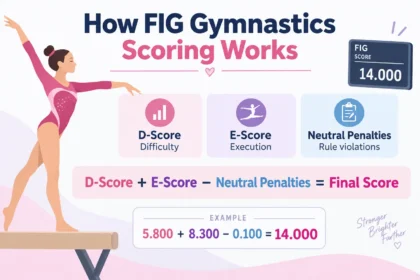
FIG Gymnastics Scoring Explained: D-Score, E-Score & Deductions
Watching elite gymnastics can be confusing at first. A gymnast finishes a…
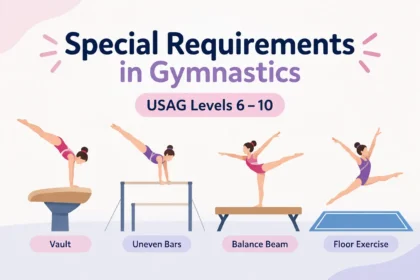
Special Requirements in Gymnastics: USAG Levels 6–10
In USA Gymnastics optional competition, performing difficult skills is only part of…
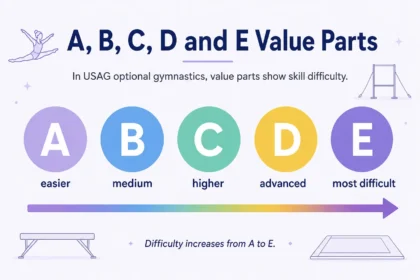
A, B, C, D and E Value Parts in USAG Gymnastics Explained
When a gymnastics coach says a skill is an A, B, C,…
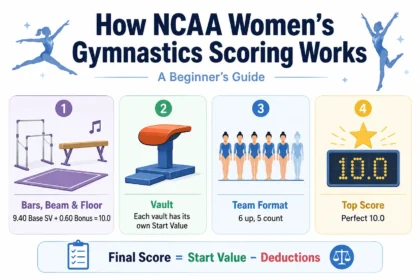
How NCAA Women’s Gymnastics Scoring Works: A Beginner’s Guide
NCAA women’s gymnastics can be confusing at first. One gymnast performs a…
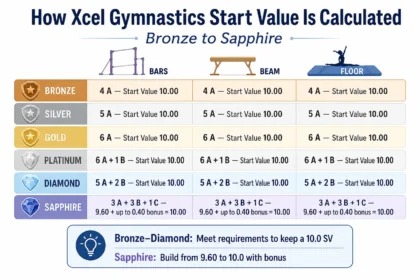
How Xcel Gymnastics Start Value Is Calculated (Bronze to Sapphire)
Two Xcel gymnasts can perform routines that look very different but still…
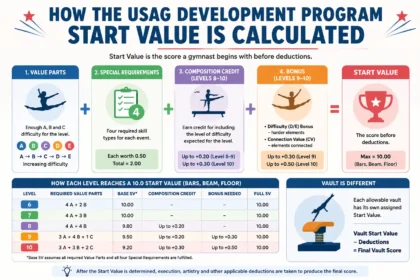
How the USAG Development Program Start Value Is Calculated (Levels 6–10)
If a Level 7 gymnast scores a 9.200 and a Level 10…
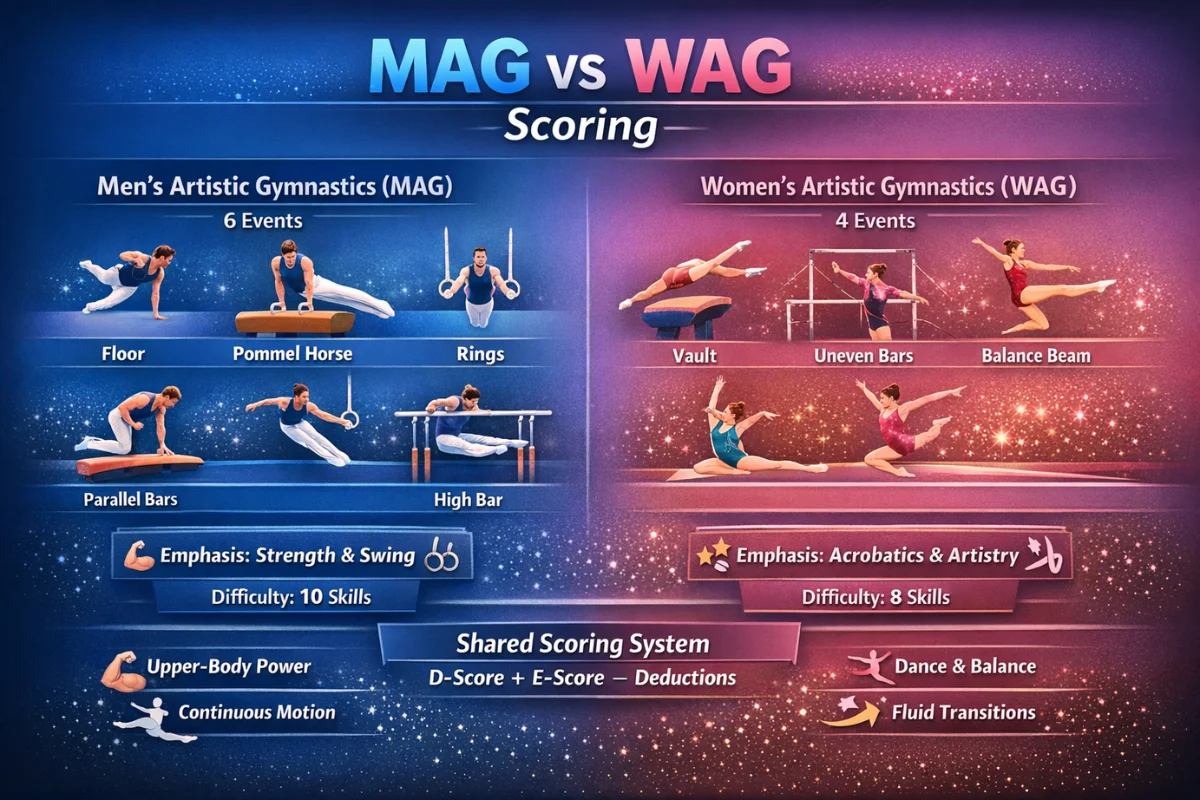
MAG vs WAG Scoring: How Men and Women Are Judged Differently
At first glance, men’s and women’s gymnastics scores can feel confusing. A…

Inside the FIG Code of Points: How Olympic Gymnasts Maximize Scores
Olympic gymnastics scores can look confusing at first. One routine earns a…
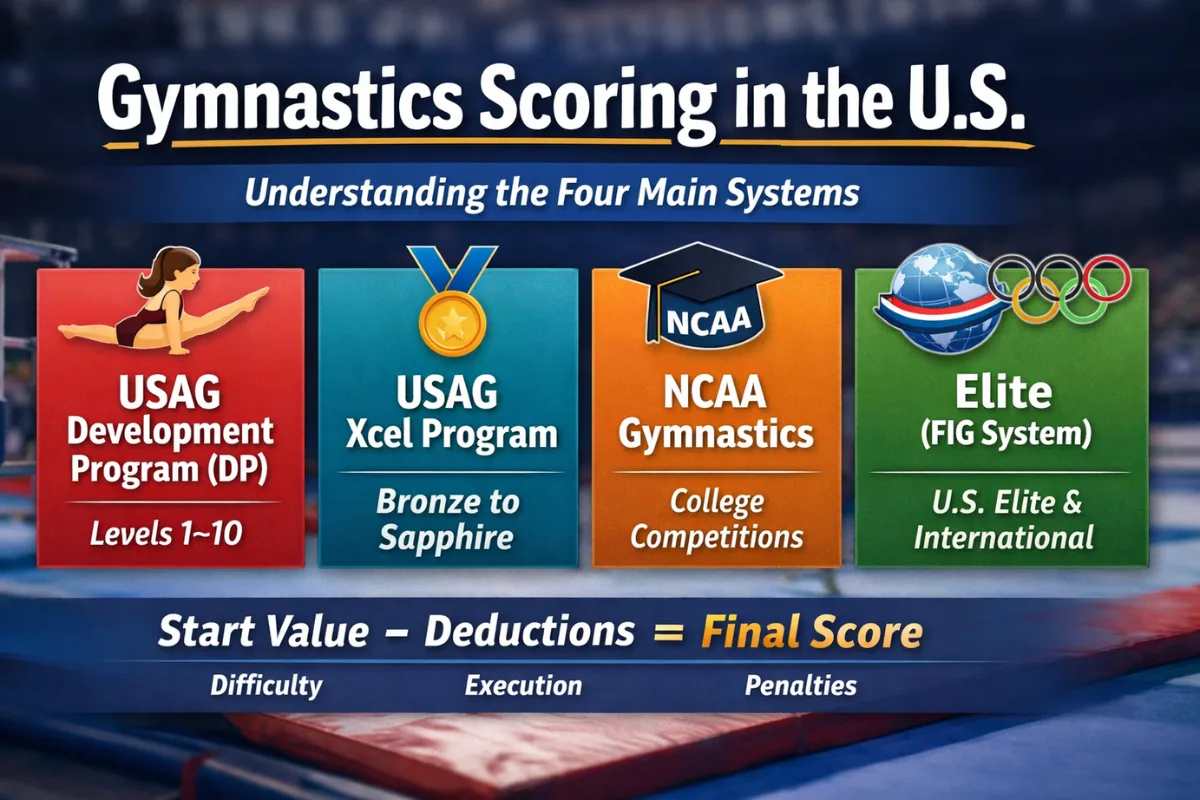
How Gymnastics Scoring Works in the USA (DP, Xcel, NCAA & Elite)
Gymnastics scoring in the United States isn’t handled by a single system.…
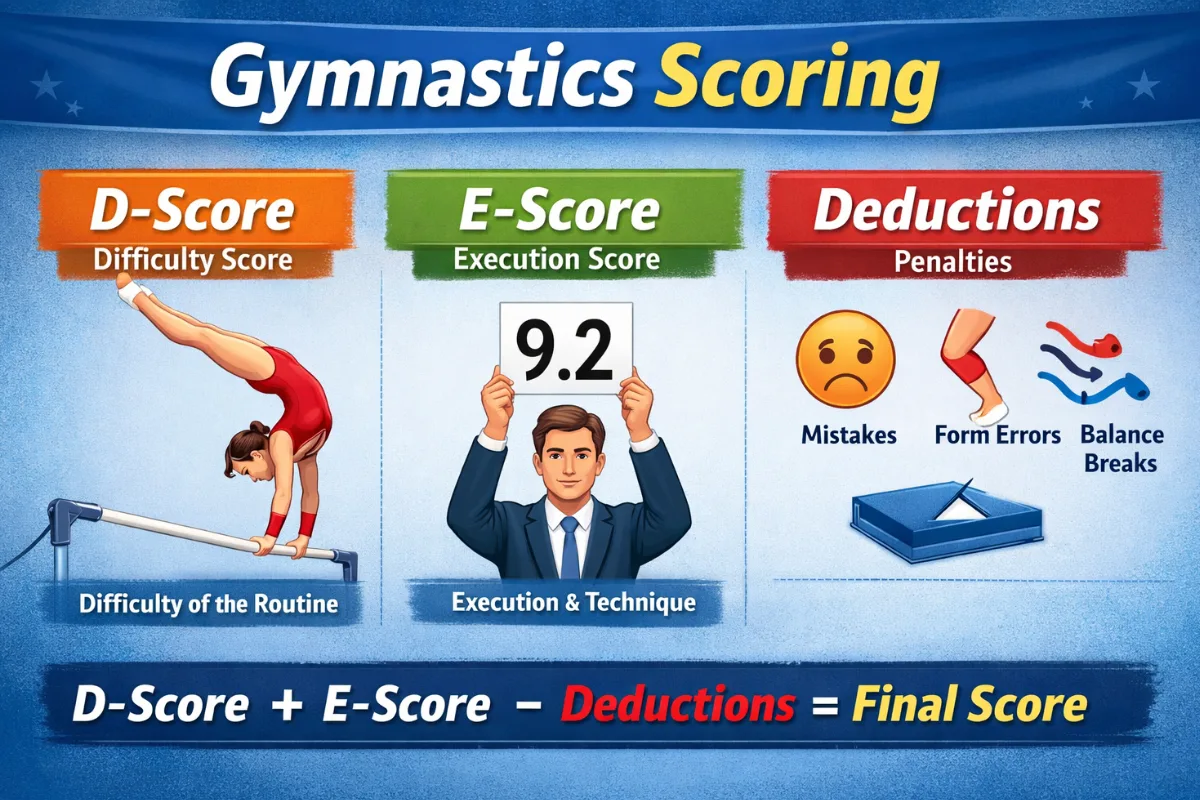
FIG Gymnastics Scoring Explained: D-Score, E-Score & Deductions (2026)
Below is a full version aimed at Gymnast Gem: beginner-friendly, focused specifically…

Why a Fall Costs 1.0: The Harshest E-Score Deduction in Gymnastics
In gymnastics, every routine begins with a perfect 10.0 execution score (E-score).…

What Is the Highest Possible Score in Women’s Gymnastics?
For decades, fans associated women’s gymnastics with the Perfect 10. Nadia Comăneci’s flawless…