Mushroom vs. Pommel Trainer vs. Full Horse: When to Progress
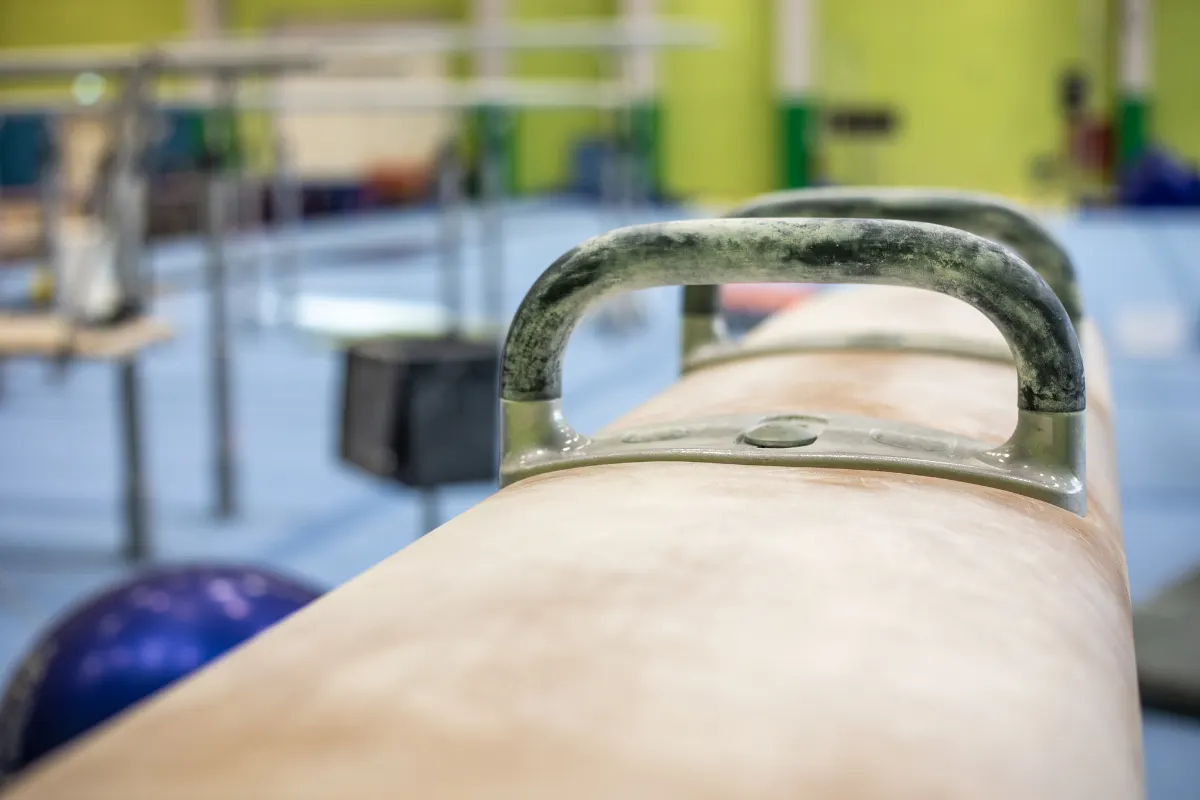
Pommel horse preparation often uses a mushroom, low trainers and a full horse. These tools can be used alongside one another rather than in a fixed sequence. Coaches choose the apparatus and progression that fit the gymnast’s preparation.
Contents
Stage 1: The Mushroom
A mushroom is a common starting apparatus for learning circular support work. It can also remain useful later for refining circles and turns.
What the Mushroom Is
A mushroom has a rounded working surface without pommels. It gives the gymnast a compact area for circular support work without the full horse’s length or pommel spacing. Its lower height does not remove the need for appropriate coaching and equipment setup.
Key Skills Taught on the Mushroom
- Single Circles: First learned in straddle, then progressed toward straight-body circles.
- Multiple Circles: Linking 5, 10, then 15–20 circles in a row with consistent rhythm.
- Hip Extension: Keeping the body long and open through the front and back of the swing.
- Pointed Toes and Tight Legs: Early introduction to form standards that will carry into competition.
When to Progress Beyond the Mushroom
A gymnast is ready to move on to the pommel trainer when they can:
- Perform 10–15 clean consecutive circles without bent knees or hip pike.
- Maintain a smooth, even rhythm from start to finish.
- Keep shoulders tall and arms locked without dropping onto forearms.
- Show control and endurance, not just “survival” through the circles.
As those foundations develop, the coach may add work on other trainers while continuing to use the mushroom. There is no single circle count that ends the mushroom’s usefulness.
Stage 2: The Pommel Trainer
Once circles are reliable, the gymnast transitions to the pommel trainer. This is the bridge between the mushroom’s rhythm work and the complexity of the full horse.
What the Pommel Trainer Is
A pommel trainer is essentially a low horse or mushroom with removable pommels. Its reduced height lowers the intimidation factor while the pommels introduce hand placement and shifting mechanics for the first time.
Key Skills Taught on the Pommel Trainer
- Circles with Pommel Shifts: Smooth transitions from one hand to the other without breaking rhythm.
- Half Travels: Moving along the horse in sections to prepare for full travels later.
- Basic Spindles and Turns: Some trainers allow athletes to experiment with quarter or half turns while keeping balance low-risk.
- Circle Endurance: Maintaining rhythm for 15–20 circles with pommel shifts included.
When to Progress Beyond the Pommel Trainer
A gymnast is ready to move on to the full horse when they can:
- Perform clean, continuous circles with hand shifts (no pauses).
- Complete basic travels from front → middle or middle → end with rhythm intact.
- Sustain 15–20 circles in a row without breaking form.
- Show comfort experimenting with turns, shifts, and rhythm under pommel conditions.
At this stage, the athlete should feel that the pommels are no longer obstacles, but part of the natural swing. Once that happens, they’re ready for the full-size horse and the demands of routine construction.
Stage 3: The Full Pommel Horse
The final step is the full competition horse, where mastery of rhythm, hand placement, and endurance all come together. Here, skills are no longer just drills—they become part of routine construction under Code of Points standards.
What the Full Horse Is
The competition pommel horse has a long, padded body and two pommels. Its height is specified relative to the floor and landing mat in the applicable apparatus rules; developmental setups may differ. Judges evaluate the circles, travels and dismount under the relevant program’s rules.
Key Skills Taught on the Full Horse
- Full-Length Travels: Magyar (forward travel) and Sivado (backward travel) from one end of the horse to the other.
- Advanced Circles: Straight-body circles, flairs, and cross-support work.
- Turns and Spindles: Learning to keep rhythm while rotating the body mid-swing.
- Russian Wendeswings: High-level turning skills that require precise rhythm.
- Dismounts: Ending the set with control and form, often through handstands or travel dismounts.
When You’re Truly Training on the Horse
A gymnast is considered ready to primarily train on the horse (instead of just the trainer) when they can:
- Perform clean circles in all three zones with consistent tempo.
- Complete D-valued travel elements (Magyar/Sivado) without breaks in rhythm.
- Sustain 20–30 circles or a full routine length without loss of form.
- Link together different element groups (circles, scissors, travels, turns, dismounts) into routine-ready sequences.
Even at this stage, the mushroom and trainer remain valuable for conditioning and drills. But the main focus shifts toward routine construction, balancing D-score (difficulty) and E-score (execution) under competition demands.
Practical Progression Timeline
Every gymnast moves through the pommel horse progressions at their own pace.
Mushroom (Beginner – Early Level)
This is the foundation stage, where gymnasts learn circles, rhythm, and body control. The focus is on keeping hips extended, legs tight, and rhythm smooth across multiple repetitions.
- Primary Goal: Build clean circles with correct body shape.
- Timeframe: Anywhere from a few months to 2+ years, depending on age and training frequency.
- Progress Check: 10–15 clean consecutive circles with no pauses, bent knees, or hip collapse.
Pommel Trainer (Intermediate)
Once circles are solid, gymnasts step up to the pommel trainer. Here, the main challenge is hand placement and travel awareness. The trainer is low and safe, but the pommels introduce complexity that prepares gymnasts for the horse.
- Primary Goal: Master hand shifts, half travels, and rhythm with pommels.
- Timeframe: Typically 6 months to 1 year once mushroom circles are reliable.
- Progress Check: 15–20 circles with smooth pommel shifts and basic travel sequences performed without rhythm breaks.
Full Horse (Advanced)
The final stage is the full pommel horse, where all the foundation work pays off. At this level, gymnasts are expected to sustain endurance, control rhythm across all zones, and build routine-ready combinations.
- Primary Goal: Develop full-length routines with advanced travels, turns, and dismounts.
- Timeframe: Once trainer work is consistent, athletes can shift to horse training fairly quickly, though mastery takes years.
- Progress Check: Clean circles across all zones, Magyar/Sivado travels without hesitation, and 20–30 circle endurance with form intact.
A gymnast is ready to move forward when they can swing with confidence, keep circles clean, and maintain rhythm under new challenges. Patience at each stage leads to stronger, more efficient routines in the long run.
The numeric drill targets above are illustrative coaching benchmarks, not official USA Gymnastics mobility requirements. For the event itself, see the pommel horse guide; the mushroom turns article explains several movement patterns.