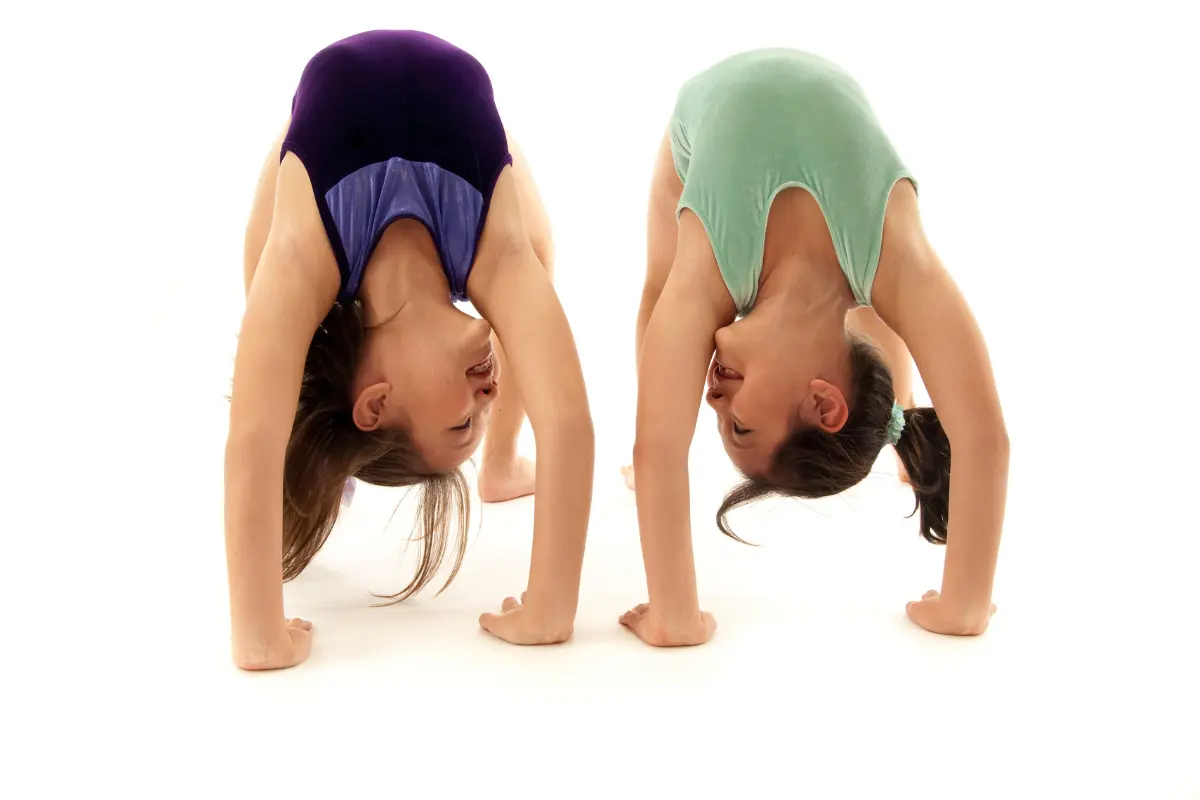
Many parents wonder when the “right time” is to put their toddler into gymnastics. The truth is, there’s no single magical age. Instead, the best starting point depends on your child’s development, the structure of the class, and what you want them to get out of the experience.
Why Toddlers Benefit from Early Gymnastics
Toddlers learn through movement. Gymnastics gives them a safe, structured place to climb, jump, roll, balance, and explore what their bodies can do. When done correctly, it supports:
Physical Development
- Stronger gross-motor skills (running, jumping, climbing)
- Better balance and body awareness
- Improved coordination and flexibility
- Early strength in core muscles and posture
Cognitive & Social Growth
- Listening and following simple instructions
- Taking turns and participating in group play
- Learning confidence and independence
- Developing problem-solving through physical challenges
Healthy Habits
Toddlers who enjoy active movement early are more likely to stay active as they grow. Gymnastics makes movement feel fun, not forced.
How Young Is Too Young? A Realistic Age Breakdown
Every child grows at their own pace, so the right starting age varies. Still, many gymnastics programs use similar age ranges for beginner classes:
⭐ 1–2 Years Old: Parent-and-Me Classes
Once a toddler walks with confidence, they can join early movement sessions. These aren’t formal gymnastics—they’re playful classes built around exploration. Activities typically include:
- Soft mats and foam blocks
- Low, ground-level beams
- Small obstacle courses
- Basic rolling and balancing
- Guided movement, songs, and games
Parents stay close, providing comfort and support. These classes are perfect for toddlers who need reassurance and benefit from hands-on guidance.
⭐ 2–3 Years Old: Toddler Gymnastics With Parent Support
In this stage, toddlers start exploring more independently but often still need a parent nearby. Classes introduce:
- Small springboard jumps
- Brief hangs on mini bars
- Walking on mini-beams
- Simple coordination and balance games
- Early movement routines
This age is still about fun and motor skills, not “training.” The focus is on movement, confidence, curiosity, and social play.
⭐ 3–4 Years Old: Independent Preschool Classes
Around age three, many children reach developmental readiness for independent gymnastics. They can follow short instructions, rotate through stations, and listen to a coach.
Skills introduced may include:
- Forward rolls
- Basic cartwheel shapes
- Safe jumping and landing
- Balance challenges
- Station rotations and simple sequences
For many families, ages 3–4 are the ideal time to begin “real” toddler gymnastics without a parent on the floor.
⭐ 4–6 Years Old: True Skill Building Begins
By this age, children have better balance, strength, and focus. Coaches can introduce foundational gymnastics skills that prepare them for recreational or future competitive programs.
This might include:
- Handstand and cartwheel development
- Beam walks with simple choreography
- Trampoline basics
- Bridge progressions
- Early strength conditioning through play
How to Know if Your Toddler Is Ready
Age is only one factor. Look for developmental indicators like:
- Confident walking and basic stability
- Enjoyment of climbing, tumbling, and physical play
- Ability to follow simple one-step or two-step instructions
- Comfort in new environments
- Interest in interacting with other children
- Natural curiosity and physical energy
If your child matches at least a few of these qualities, they’re likely ready to try a toddler or parent-and-me class.
Is Gymnastics Safe for Toddlers?
Yes—when the program is age-appropriate, low to the ground, and supervised by trained coaches. However, safety depends on choosing the right class.
❌ Avoid programs that:
- Use full-size bars or high beams
- Push advanced skills too early
- Emphasize competition for very young kids
- Use rigid structure or high-pressure teaching
- Do not have early-childhood-trained instructors
✔ Choose programs that focus on:
- Play-based learning
- Toddler-sized equipment (low beams, mini bars, foam shapes)
- Short stations to match toddler attention spans
- Basic skills like rolling, swinging, and balancing
- Safety, fun, and confidence—not perfection
Toddler gymnastics should feel playful and encouraging, not demanding or intimidating.
Tips for Choosing the Right Gymnastics Class
Here’s how to pick a high-quality toddler gymnastics program:
1. Check the Coach’s Experience
Look for coaches trained in early childhood development—not just gymnastics instruction.
2. Observe a Class Before Joining
A good toddler class will have:
- Engaged, smiling children
- Lots of movement and quick transitions
- Calm, patient instructors
- A positive, welcoming atmosphere
3. Look for Toddler-Friendly Equipment
The class should use:
- Soft mats
- Foam wedges
- Low beams
- Mini bars
- Cushioned flooring
- Small trampolines
Anything tall or intimidating is a red flag.
4. Choose Small Class Sizes
Toddlers need close supervision and individual attention.
5. Prioritize Fun Over Skills
The main goal at this age is:
- Confidence
- Coordination
- Body awareness
- Social skills
- Enjoying movement
Technical skills come later.
The Bottom Line: When Should Toddlers Start Gymnastics?
Here’s a simple breakdown:
- Ages 1–2: Great for parent-and-me movement classes
- Ages 2–3: Ideal for toddler classes with parent support
- Ages 3–4: Best time for independent preschool gymnastics
- Ages 4–6: Excellent stage for building real skills
There is no single perfect age, but there is a perfect approach:
Start when your toddler shows interest, confidence, and readiness, and choose a program that focuses on safety, fun, and developmentally appropriate movement.