What Age Do Most Female Gymnasts Start? (Real Data + Expert Insight)
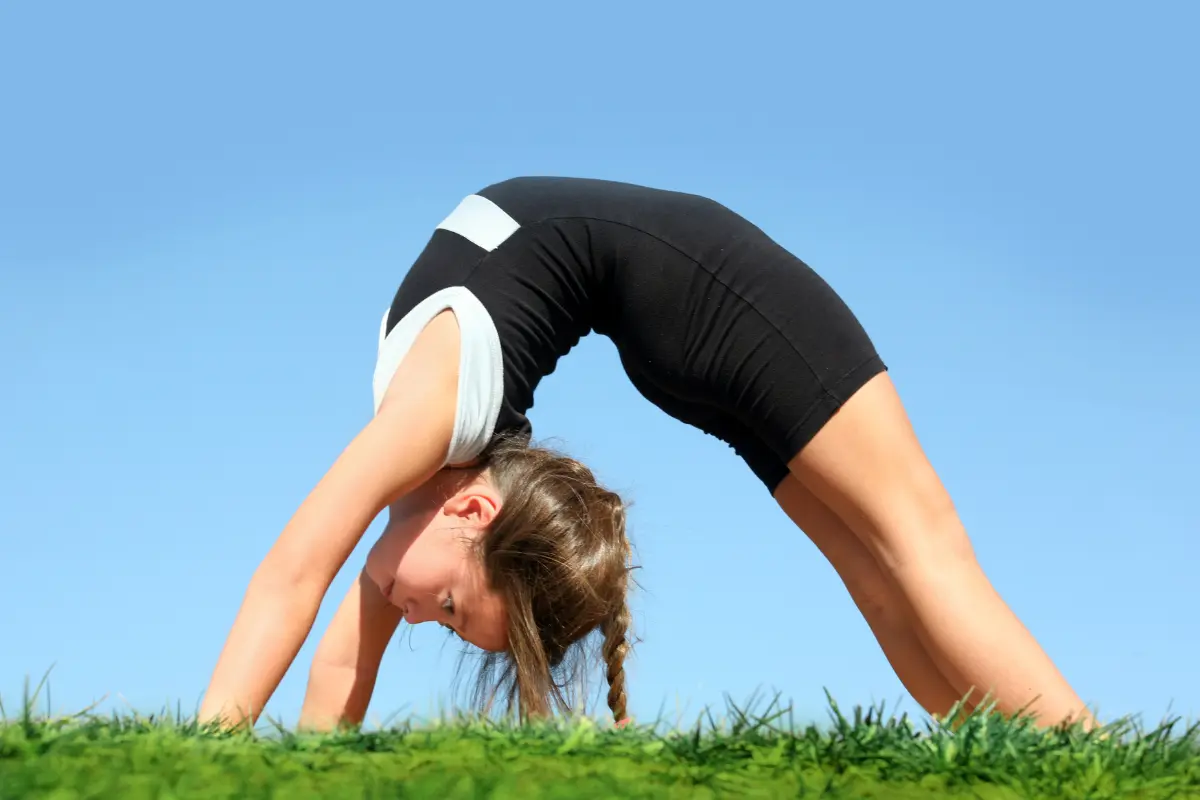
Walk into any gymnastics gym and you’ll see a mix of tiny preschoolers, energetic first-graders, and determined preteens practicing side by side. With such a wide age range, many parents wonder: What age do most female gymnasts actually start? And is there a “right” age to begin?
Contents
The truth is clearer than you might expect:
Many girls try gymnastics as preschoolers or in their first years of school. USA Gymnastics lets children compete from age 4, and the five members of the 2024 U.S. Olympic team started at roughly 2 to 6. Sports-medicine guidance still says to wait until the teen years before specializing in gymnastics alone.
What Research Shows About the Starting Age
A USA Gymnastics sports-medicine webinar on early specialization (Dr. Emily Sweeney, November 2020) sums up the research:
Gymnastics is one of the earliest-starting youth sports.
- Gymnastics is treated as an early-specialization sport: gymnasts have been found to specialize as early as age 5.
- In a study of former NCAA gymnasts, the average age of specialization was 8.
- More than 85% of the gymnasts in the research it cites were moderately or highly specialized, and over half of those aged 11 and older trained more hours a week than the American Academy of Pediatrics recommends.
The webinar presents these figures as warning signs, not targets. Specializing early raises the risk of overuse injuries and burnout, and the webinar finds no evidence that it leads to long-term success.
Starting early helps, but only when developmentally ready.
Coaches agree that early exposure helps with:
- Balance
- Flexibility
- Body control
- Learning shapes and safe landings
But none of this requires intense training at age 3. At this stage, playful movement matters more than progress.
What Elite and National Team Data Shows
When you look at future Olympians and national-team gymnasts, a clear trend appears:
Many elite gymnasts begin young, often by age 6
USA Gymnastics athlete profiles list the year each member of the 2024 Olympic team began. Subtracting the birth year gives the age reached that year, so the first class may have come a little earlier:
- Simone Biles – about 6 (began 2003)
- Jade Carey – about 2 (2002; her parents owned a gym)
- Jordan Chiles – about 6 (2007)
- Sunisa Lee – about 6 (2009)
- Hezly Rivera – 5 (2013; her profile mentions a gymnastics birthday party at five)
These ages are approximate, and five Olympians are not a research sample. Even so, all five had started gymnastics by about age 6.
But there are rare exceptions.
Some gymnasts start later and still reach a high level, often because they have:
- Exceptional natural ability
- Strong backgrounds in dance, tumbling, or similar skills
- High-level coaching early in their career
These stories are inspiring but not typical. For most gymnasts, starting earlier simply gives more time to build strength, shapes, and confidence.
What Club and College Coaches Recommend
You do not need to start at age 2 to have a successful gymnastics journey. In fact, many coaches prefer girls to start when they are developmentally ready, not merely young.
Ideal ages for recreational gymnastics:
4–7 years old
This is the range where:
- Attention span improves
- Kids follow group instructions
- They learn shapes quickly
- Coordination is rapidly developing
Most girls who join gymnastics in this window adjust easily and progress steadily.
Ideal ages for competitive readiness:
6–8 years old
USA Gymnastics sets the youngest age for each competitive level: 4 for Level 1, 5 for Level 2, 6 for Level 3 and 7 for Levels 4–7 (2026–27 Rules & Policies, p. 58). Above those minimums, each club decides when a child is ready for pre-team or the next level.
This pathway allows enough time to move through levels confidently without being rushed.
When to specialize:
Usually not before the teen years
This is when many girls naturally decide:
- Gymnastics is their primary sport
- They enjoy more structured training
- They want to compete or move up levels
Loving gymnastics most is different from specializing, which means training in one sport only, often all year. USA Gymnastics’ sports-medicine webinar advises against specializing in a single sport before adolescence, and the American Academy of Pediatrics recommends no more hours of training a week than a child’s age in years. At 8–10, more structured training is fine, but keeping other activities in the mix lowers the risk of injury and burnout.
Typical Starting Ages by Level of Aspiration
Here’s a simple breakdown of when most girls start based on their eventual goals:
Recreational Gymnastics
Most start at 4–7, but starting at 8–12+ is totally normal and extremely common.
Development Program (Compulsory Levels 1–5, Optional Levels 6–10)
Most gymnasts who enter this pathway start around 4–7 and move up level by level as their skills and scores allow.
Xcel Program
Girls often start Xcel:
- From age 5 in Xcel Bronze (each division has its own minimum age), and often at 8–14+
- After switching from another sport
- After starting gymnastics later
- When they prefer flexible training over strict levels
Xcel is the most welcoming path for later starters.
Elite Pathway or High-Level NCAA
These are two different routes. Many NCAA gymnasts come through Development Program Level 10 rather than elite, and both routes start from the same minimum competitive ages as every other level.
Only a small percentage of gymnasts follow either route.
| Age Range | What They Learn / Do | Why This Age Works | Best For |
|---|---|---|---|
| Ages 2–3Early Introduction | • Parent–child or preschool classes• Simple movement: rolling, jumping, balancing• Basic coordination play | • No pressure needed• Helps them feel comfortable in the gym• Encourages natural movement | Exploring movement, not formal training |
| Ages 4–5The Classic Starting Age | • Basic skills: rolls, cartwheel shapes, handstands• Beam walks, bar hangs• Following simple directions | • Good attention span• Learn shapes easily• Build confidence and social skills | Fun, foundation, and early readiness |
| Ages 6–7Fast Progress & Pre-Team Readiness | • Stronger handstands and cartwheels• Starting routines• More strength and flexibility work | • Very quick progress at this age• Ready for more structure• Easy to build routines | Competitive pathways (Pre-team, Levels 1–3, Xcel Bronze/Silver) |
| Ages 8–10More Structure | • Join team or move up Levels 3–6 or Xcel• Learn full routines• Improve strength and focus | • Good age for more structured training, alongside other activities• Still plenty of time to grow skills• Strong progress potential | Competitive or recreational progress |
| Ages 11+Late Starters Welcome | • Teen classes, tumbling, or Xcel• Learn skills with coaching support• Build strength and flexibility | • Good cross-training for cheer, dance, fitness• No need to keep up with younger gymnasts• Competition still possible through Xcel | Confidence, fitness, fun skills, and optional competition |
While there are patterns in the gymnastics world, the truth is simple:
The best starting age is the age when your daughter is ready, excited, and confident.
If she is:
- Happy to listen
- Excited to move
- Curious about gymnastics
- Eager to try
- Comfortable in a class setting
Then it’s the perfect time, whether she’s 3, 7, or 12.