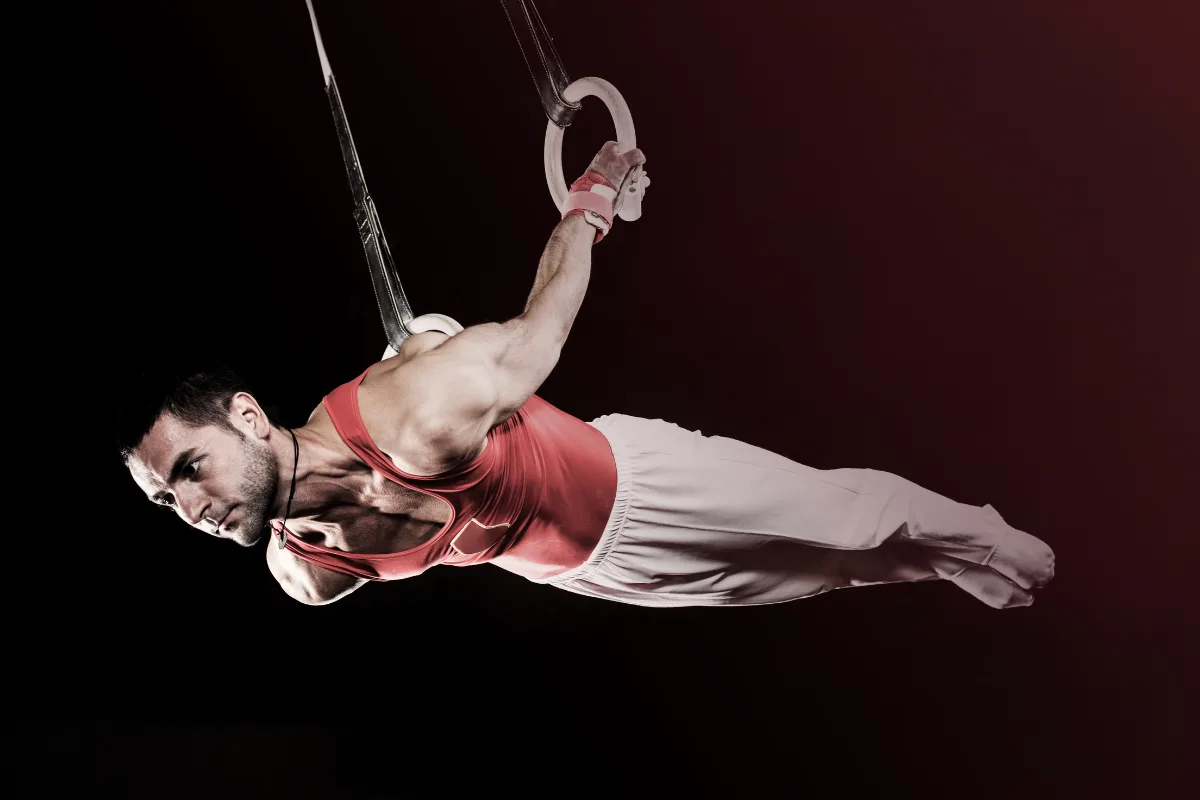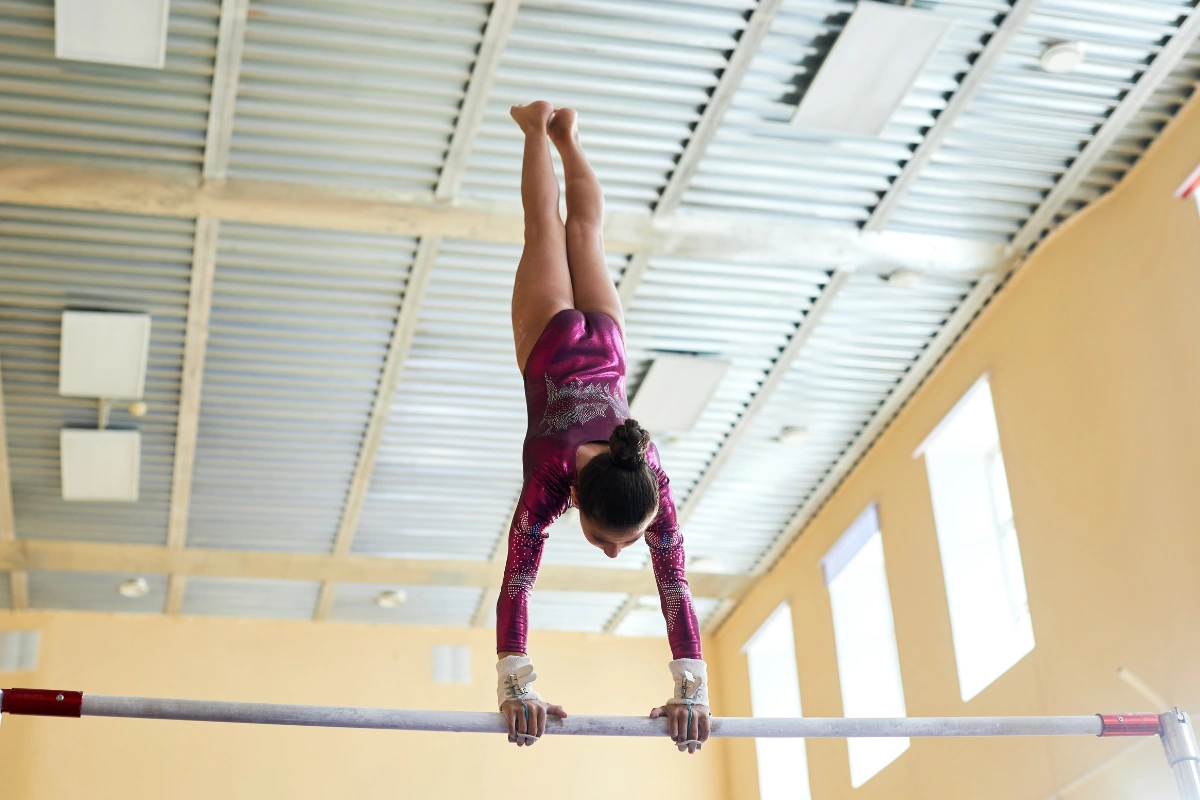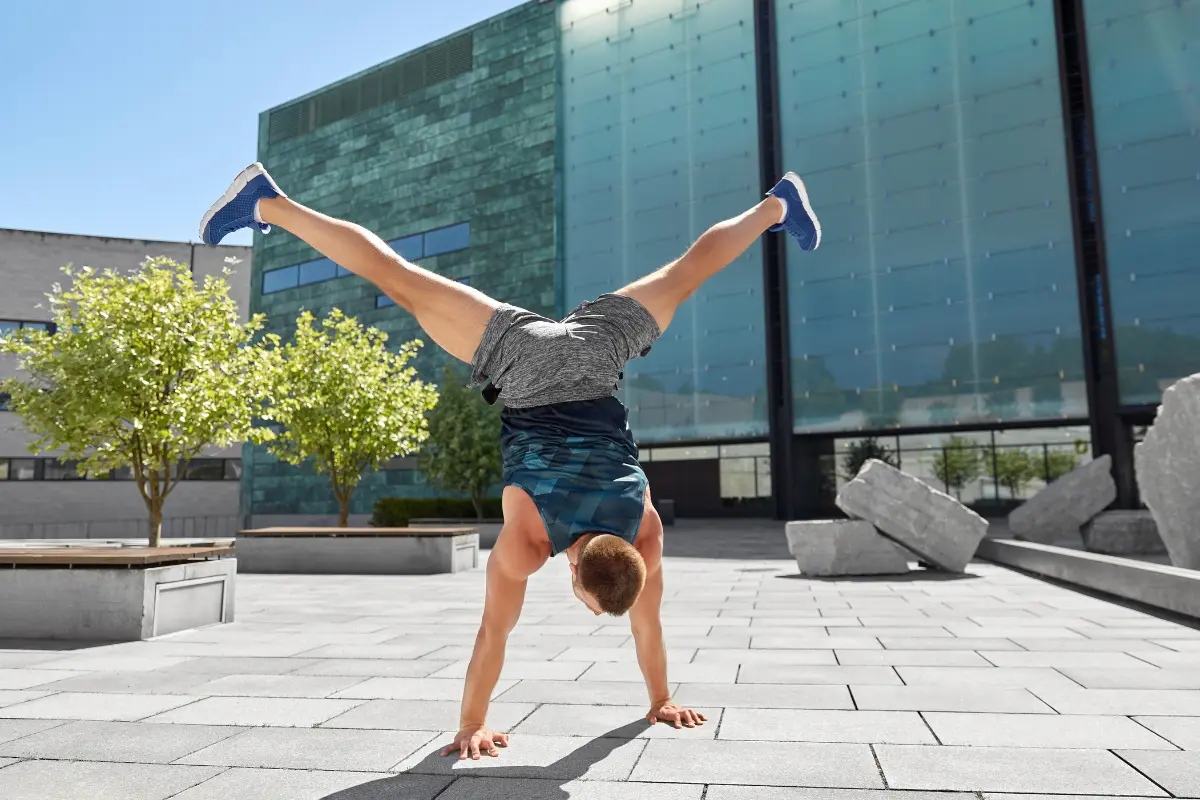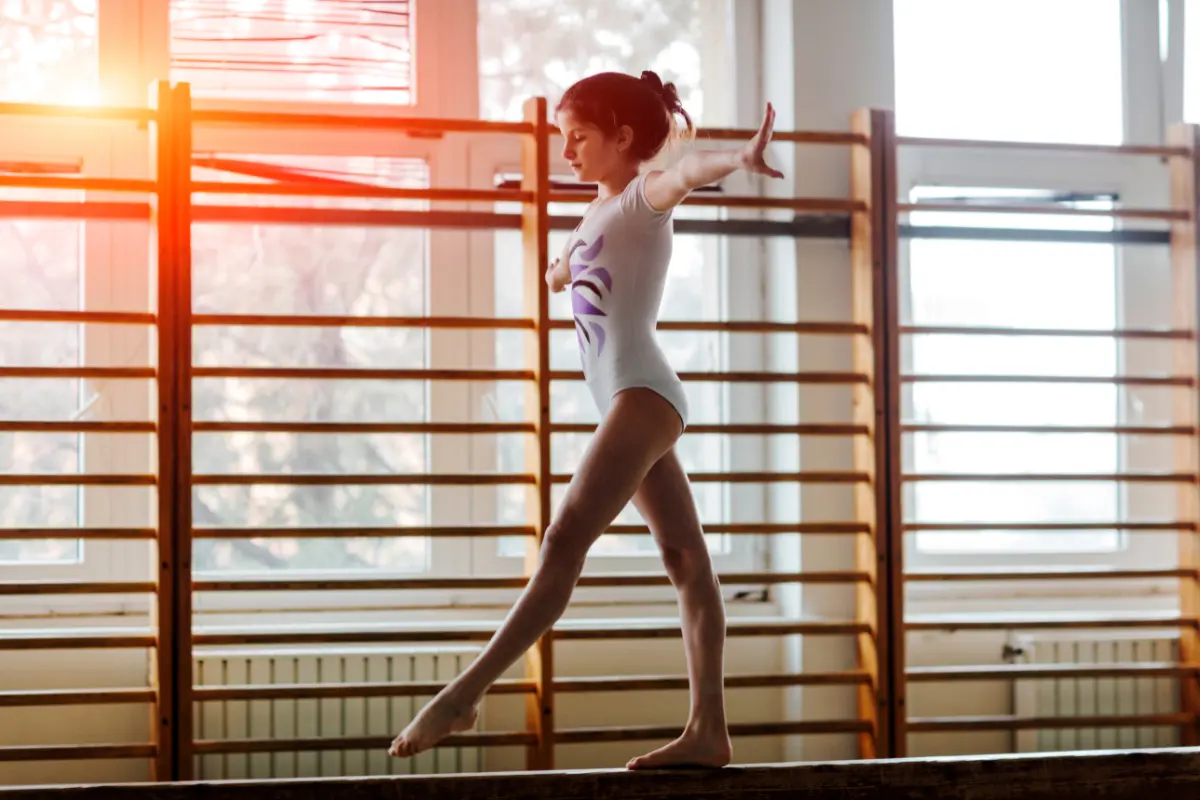


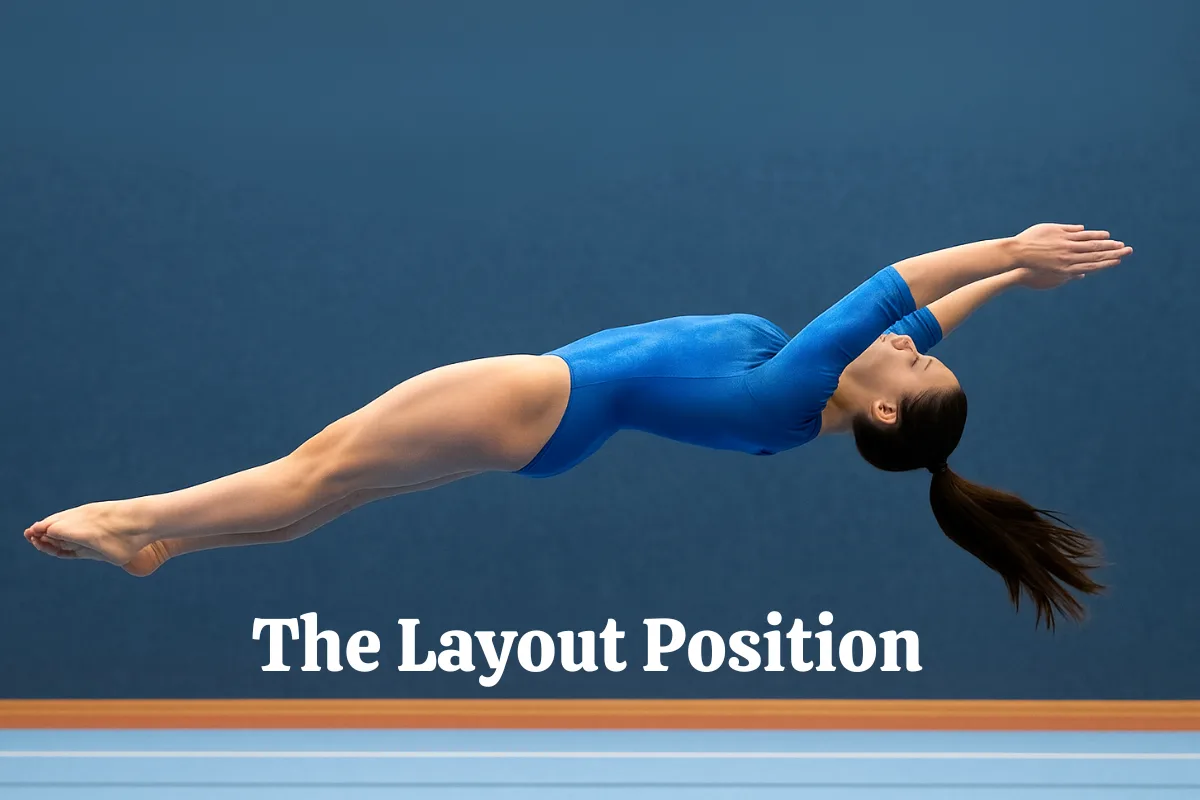
Gymnasts learn three fundamental flipping shapes—tuck, pike, and layout—each one more challenging than the last. The layout is the final step in this progression, and mastering it is a major milestone in any gymnast’s journey.
- What Is the Layout Position?
- Why It’s the Last Shape Gymnasts Learn
- Where Layouts Show Up in Competition
- How the Layout Boosts Your D-Score and Start Value
- Higher Base Value = Bigger D-Score
- More Choreography Headroom (FIG)
- 3. Connection-Bonus Flexibility (NCAA)
- Safer Dismount Choices
- Built-In Cushion for Deductions
- From Tuck to Layout: Drills to Make the Transition Safe
What Is the Layout Position?
The layout is a fully extended body position used during flips (also called saltos). While the tuck pulls the knees into the chest and the pike folds at the hips with straight legs, the layout keeps the entire body straight from head to toe.
What Counts as a True Layout?
For a shape to be considered a proper layout, it must show a clean, tight line throughout the flip. Judges and coaches look for:
- Hips and knees fully open – no bend or break in the body
- Strong core engagement – ribs pulled down, flat back, no arching
- Arms by the ears or close to the sides – depending on the skill
- Legs straight and together – knees locked and toes pointed
In short: a layout is long, straight, powerful, and controlled from takeoff to landing.
Why It’s the Last Shape Gymnasts Learn
Every gymnast’s flipping journey follows the same path: start small, build strong, finish long. That path runs through three key body shapes—tuck, pike, and layout—each one more challenging than the last.
Think of it like this:
- Tuck is your tight ball—easy to spin, forgiving in the air, and perfect for beginners learning to flip safely.
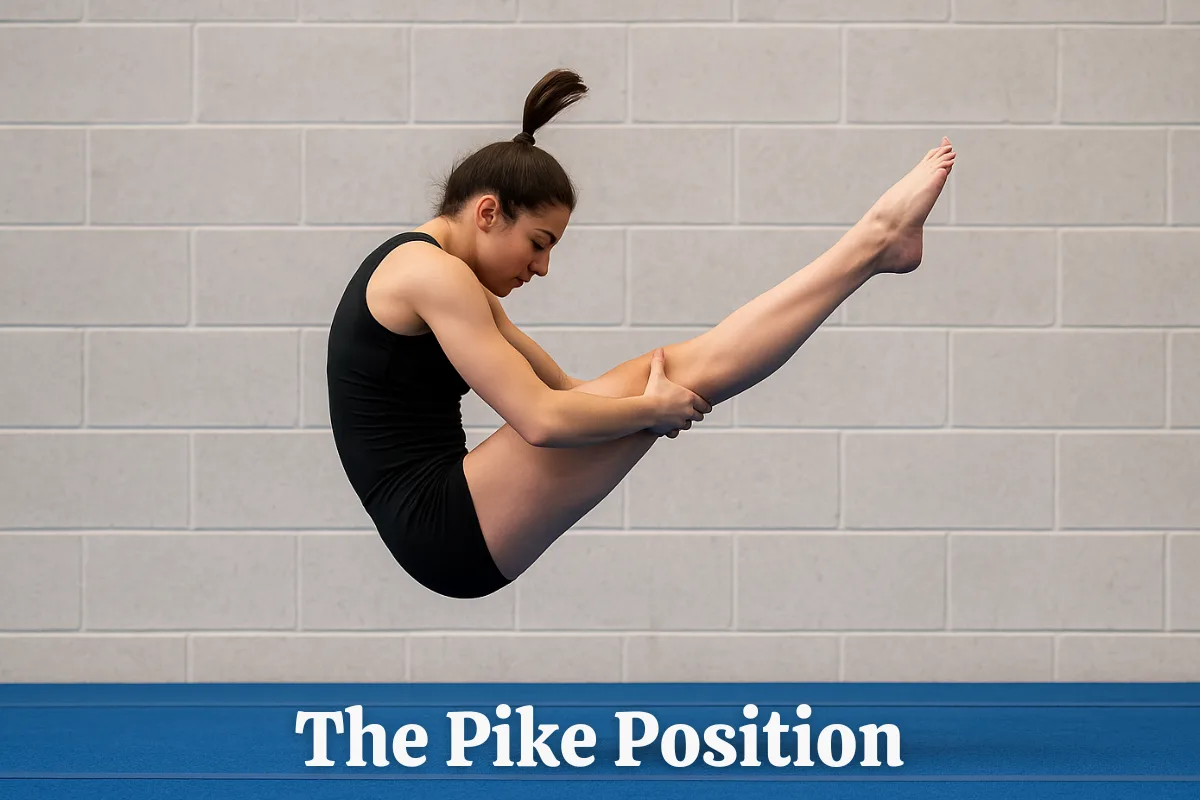
- Pike is the next stretch—you’re still folded, but with straight legs. It slows rotation a bit, so you need better jump power and form.
- Layout is the straight arrow—long, clean, and powerful. There’s no bending now, just full-body control and perfect timing.
Each shape teaches a different skill:
- Tuck builds air awareness and fast rotation.
- Pike teaches control, strength, and sharper form.
- Layout tests timing, body tension, and takeoff power.
Transitioning from tuck to layout takes more than courage—it takes control, timing, and a lot of body awareness.
Where Layouts Show Up in Competition
The layout shape appears in nearly every gymnastics discipline and at nearly every level of optional and elite gymnastics.
| Event | Examples of Layout Skills | Typical Difficulty | Notes |
|---|---|---|---|
| Floor | Round-off → back layoutFront layout step-outDouble layout | C (single) to G (double) | Power passes in Level 8–10 and elite tumbling |
| Vault | Handspring front layoutYurchenko layout halfKasamatsu layout | C–E (WAG)4.6–5.4 (MAG) | Entry into layout-family vaults |
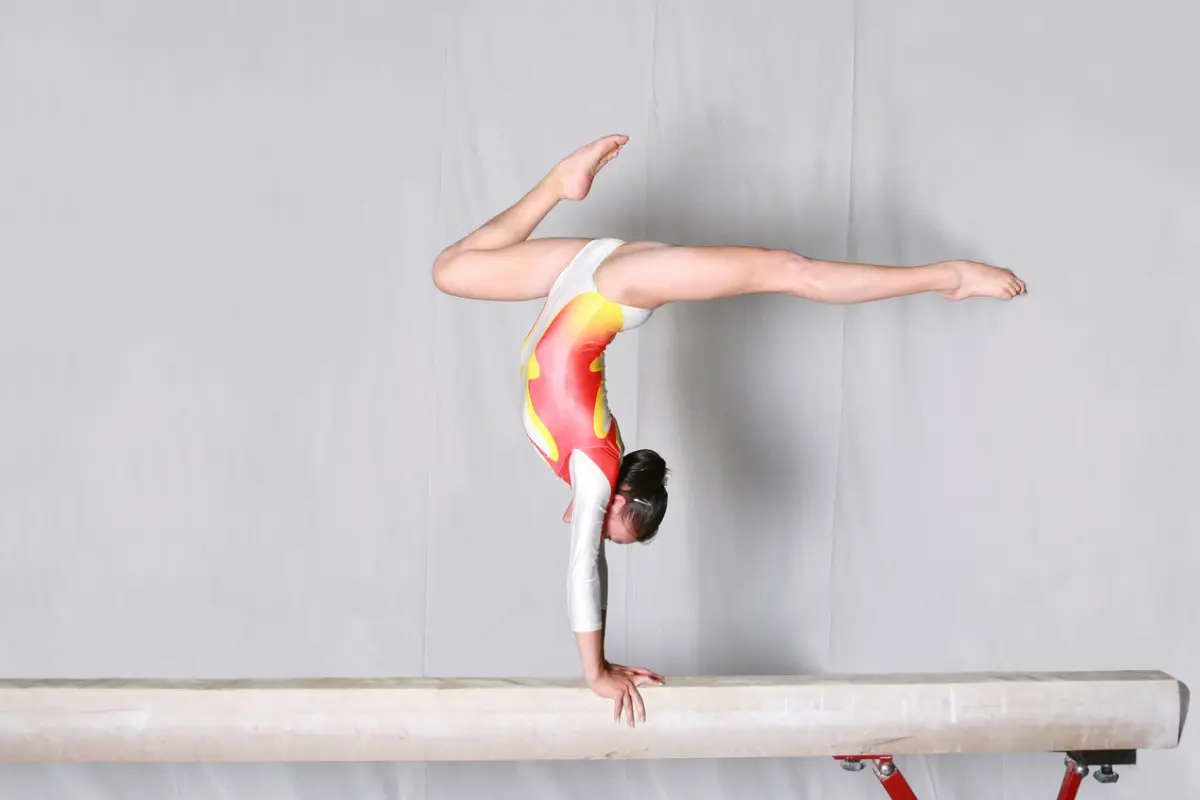
| Beam | Layout step-outGainer layoutLayout full dismount | C–E | Common for acro series bonus and clean dismounts |
| Bars / High Bar | Layout flyaway 1½Layout Jaeger (MAG) | C–E | Used for release moves and twisting dismounts |
| Trampoline / T&T | Double layoutHalf-in half-out layout | +0.5 bonus for layout | Bonus awarded for stretched shape in saltos |
*Based on 2025 FIG WAG/MAG Codes or current vault numeric tables where noted.
How the Layout Boosts Your D-Score and Start Value
The layout shape isn’t just clean—it’s smart. In both FIG and NCAA scoring systems, skills performed in a straight-body layout position are worth more than their tucked versions. That extra value creates flexibility in routine construction, reduces risk elsewhere, and helps gymnasts hit higher scores with smarter choices.
Here’s how the layout boosts your D-score or start value—and why coaches love it:
Higher Base Value = Bigger D-Score
- FIG Code: A double layout can carry an F or G rating, while the same flip in tuck may be only D or E.
- NCAA Code: A layout E-skill (like a full-in or layout dismount) instantly adds 0.20 in bonus.
That means a layout gives your score more “room to breathe”—you can afford small deductions and still score higher than a cleaner tuck.
More Choreography Headroom (FIG)
Landing a layout tumbling pass with an F value lets gymnasts skip a risky or low-value dance element elsewhere and still meet the routine requirements. That breathing room allows cleaner performance and more efficient choreography.
3. Connection-Bonus Flexibility (NCAA)
In college gymnastics, an E-level layout already earns 0.20 bonus. Add a couple of D-D or C-D combinations, and you’re at a full 10.0 start value—often without adding extra risk. Many top routines now use one standout layout line plus smart connections to maximize score and minimize deductions.
Safer Dismount Choices
On beam or bars, a layout dismount usually meets the C minimum and adds 0.20 bonus by itself. That means:
- You don’t need to throw a high-risk acro skill late in the routine.
- You preserve energy and reduce injury risk while still earning full credit.
Built-In Cushion for Deductions
Form breaks happen. But with a higher-valued layout, a small 0.10–0.30 deduction won’t hurt as much. That same error on a lower-rated tuck skill can drag the total score down even further.
From Tuck to Layout: Drills to Make the Transition Safe
These drills help gymnasts build the strength and technique needed to flip long and straight without losing form or risking injury.
1. Tuck → Pike → Layout on Trampoline
Goal: Feel the difference between shapes and control rotation speed
How: Start with tuck flips. Move to pike, then to layout—always focusing on clean landings and tight form.
2. Rebound Snap-Down to Layout Drill
Goal: Build explosive takeoff and layout shape
How: Rebound from a springboard or mat, snap into layout mid-air, land back on feet or mat. Focus on straight lines and hip tension.
3. Foam Pit Layouts
Goal: Practice layouts safely without fear of hard landings
How: Perform layout flips into a pit or resi mat. Emphasize full extension and posture.
4. Wall Hollow Holds
Goal: Strengthen the core and shape the layout position
How: Lie in a hollow hold against a wall—shoulders and feet off the ground, arms by ears. Keep ribs down and back flat.
5. Pike to Layout Snap Drill
Goal: Practice opening from pike into layout with control
How: Flip in a pike, then open gradually into a flatter layout. Use a spot or pit for safety. Helps with shaping and timing midair.
In summary, the layout is more than just the final step in body shape progression—it’s a powerful, high-scoring, and essential skill across all gymnastics events. While it takes strength, control, and timing to master, it opens the door to more advanced skills, cleaner routines, and smarter scoring choices.