Does Gymnastics Stunt Growth? What Studies Actually Show
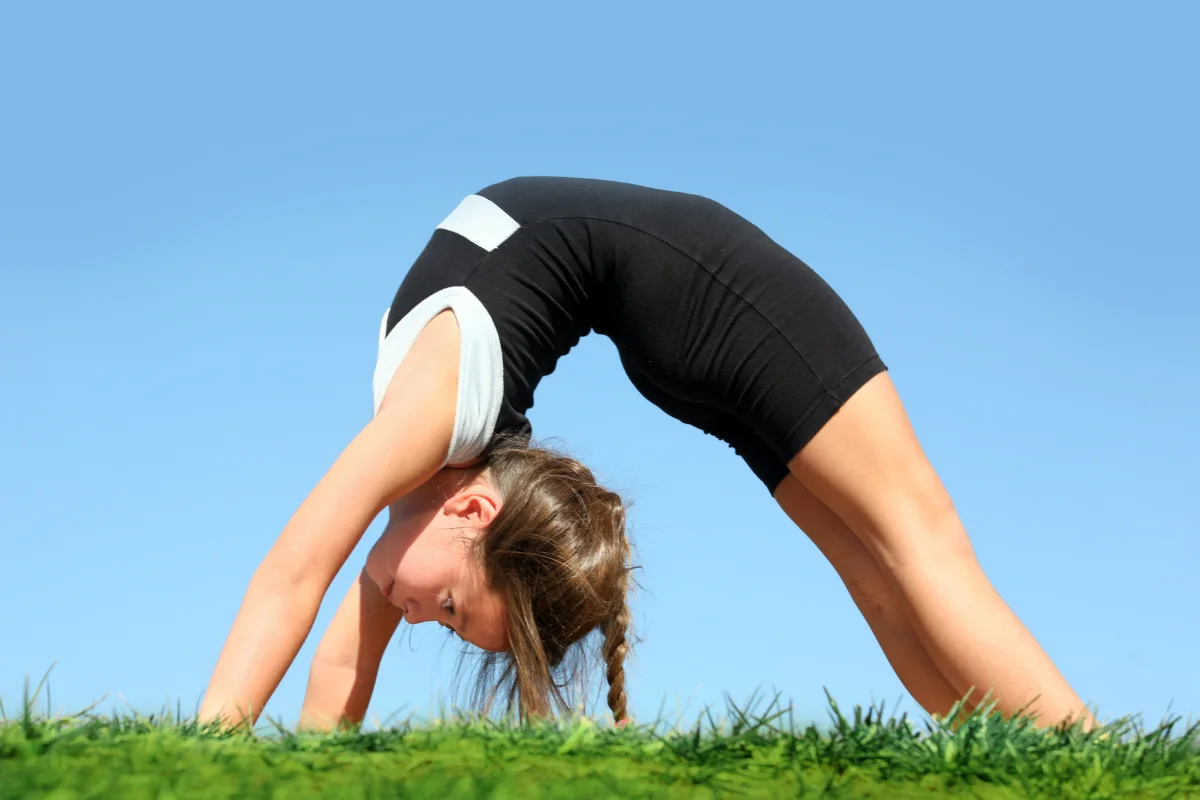
Seeing short elite gymnasts does not prove that gymnastics made them short. Genetics, maturation and selection into high-level sport complicate the relationship between training and adult height.
Contents
The available research does not justify telling families that ordinary gymnastics participation automatically stunts growth. It also does not justify dismissing a particular child’s growth concerns because they are a gymnast.
Why elite gymnasts are not a simple comparison group
Athletes who remain in elite gymnastics are a selected group. Their height, maturation and training history may differ from those of children who leave the sport or never enter it. Comparing the average height of those groups cannot, by itself, establish cause and effect.
A 2013 review of artistic gymnasts’ growth and maturation concluded that the available evidence did not show compromised adult height, while emphasising limitations in the data. That is a population-level conclusion, not a guarantee about every training programme or child.
Selection can happen at several stages. The children who enter a sport, those who continue and those who reach a major championship need not resemble one another. A photograph of a final shows only the last group. It cannot reveal how tall those athletes would have become had they chosen a different activity.
Why some studies sound different
Research has used different populations, follow-up periods and methods of estimating adult height. Some studies examined athletes before growth was complete, while others followed former gymnasts into adulthood.
For example, a study of active and retired female gymnasts reported delayed maturation and smaller measurements in active athletes, but did not find reduced adult stature in the retired group. A temporary slowdown in growth is not proof of permanent height loss.
Neither should catch-up growth be promised. A child whose growth slows needs an individual assessment, not an assumption that they will catch up after stopping gymnastics.
The active-and-retired study included 83 active gymnasts, 42 retired gymnasts and 154 comparison participants. Only smaller subsets were followed over time. The authors interpreted some findings as effects associated with training, while the later review questioned how confidently those patterns could be separated from maturation. Because the researchers disagree, one paper can’t settle the question on its own.
Height, growth rate and maturation answer different questions
| Measurement or term | Question it addresses |
|---|---|
| Current height | How tall is the child at this measurement? |
| Growth rate | How much has height changed over a defined period? |
| Maturation | Where is the child in biological development? |
| Predicted adult height | What does an estimation method suggest, with uncertainty? |
| Measured adult height | What height was reached after growth was complete? |
For instance, two children of the same calendar age can be at different stages of development. Comparing their heights today does not establish which will grow more later. Equally, a prediction is not a measurement from the future. Reporting a difference from predicted height as exact centimetres “lost to gymnastics” assigns a certainty that an estimate cannot provide.
These distinctions also explain why “all the gymnasts in the study were short” is not a sufficient conclusion. The research question must specify whether it concerns present size, the timing of growth or final height, and what comparison would help answer it.
Training, nutrition and recovery still matter
A growing athlete needs enough energy for everyday development as well as activity. Persistent under-fuelling can affect health; it should not be normalised as a way to achieve a gymnast’s appearance.
The American Academy of Pediatrics’ gymnastics guidance discusses relative energy deficiency and encourages attention to concerning eating behaviours and rapid weight loss. Training demands and recovery also deserve review.
Families should avoid treating height, weight or body-fat targets as training goals. Questions about nutrition and growth belong with the child’s clinician and, where needed, a qualified sports dietitian.
Growth-plate injuries are a different issue
Growth plates are developing areas of bone. Gymnasts can sustain injuries from trauma or repeated loading, including at the wrist. Some growth-plate injuries can affect growth locally. This is different from claiming that the sport universally reduces final adult height.
Persistent pain should be assessed rather than dismissed as normal growing pains. A coach should not use reassurance about average adult height to clear an injured child for training.
The AAOS guide to growth-plate fractures explains that an injured growth plate can affect how a particular bone grows. This is a local injury question requiring diagnosis and follow-up. It should not be confused with a theory that the normal impacts of every gymnastics class make the whole child shorter.
When parents should ask for help
Discuss a change in the child’s growth pattern, persistent fatigue, recurring injuries, concerns about puberty or restrictive eating with their healthcare professional. Growth is assessed over time using the child’s history and measurements, not by comparing them with teammates.
Parents can also ask the coach how training is adapted during growth and how medical restrictions are followed. A healthy programme should support adequate food, rest and communication.
Prepare for that conversation with information the clinician can use: previous growth records when available, the current activity schedule, recent changes in training and the concerns that prompted the appointment. Mention symptoms in everyday language rather than trying to label them as a hormone or nutritional disorder.
Useful questions include whether the existing measurements show a change that needs investigation, whether any activities need adjusting, and when growth should be reviewed again. The answer depends on the child. A generic article cannot set an appropriate testing schedule or decide that a particular growth pattern is normal.
Keep that discussion separate from team selection. A child should not be asked to stay small to retain a skill or position. Coaches can explain how technique and equipment are adapted as the gymnast develops; health professionals can assess growth and symptoms. Both conversations can support continued enjoyment of the sport without making body size the goal.
What parents should remember
Gymnastics participation is not evidence that a child will become shorter. Equally, being a gymnast is not an explanation that makes a growth concern harmless. The useful approach is to support appropriate training and monitor the individual child’s health. For practical questions about a program’s supervision and response to pain, see how to evaluate gymnastics safety.