Is Your Child Ready for More Structured Gymnastics? How to Assess the Class Fit
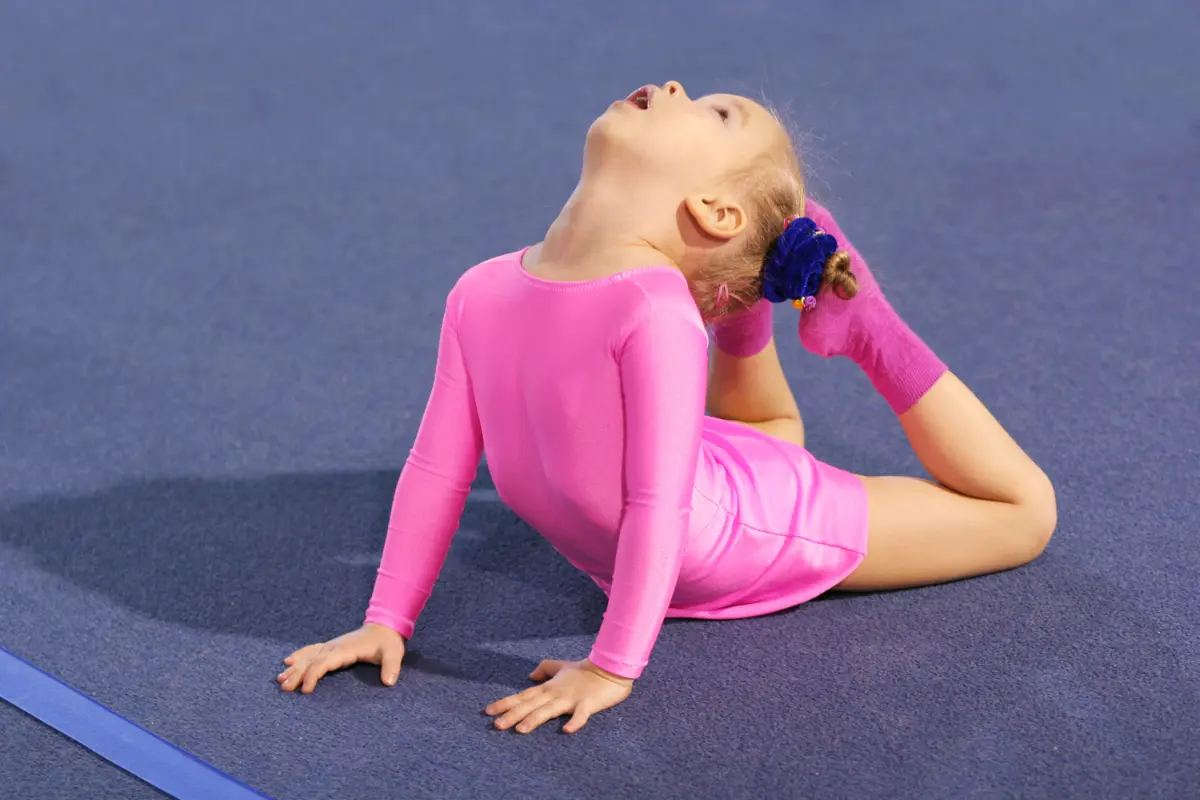
A child is ready for structured gymnastics when the class demands match their current abilities and support needs. A birthday alone cannot establish readiness for independent lessons, longer training sessions or a competitive team.
Contents
This guide focuses on the move from playful movement classes to more organised instruction. The toddler-class guide describes the earlier class environment, including the adult’s role.
What changes when training becomes more structured?
A structured class may involve listening to a demonstration, waiting for an apparatus to become clear, repeating an activity and moving between assigned stations. Those expectations should be explained and taught, rather than assumed.
Preschool lessons can still include structure, but a child should not have to manage the same instructions or repetition as an older team gymnast. The USA Gymnastics recreational coaching programme recognises preschool and school-age instruction as areas requiring appropriate teaching knowledge.
Questions to discuss with the coach
- Can the child understand the safety cues used in this class, with adaptations if needed?
- How does the coach help a child who becomes distracted, worried or tired?
- Does the group allow enough supervision at each station?
- Can activities be made easier without the child feeling punished or excluded?
- Does the child want to attend, and how do they feel afterwards?
These are discussion points, not a test that a parent must score. A child may benefit from parent participation, a smaller group or a different teaching approach rather than simply more time in the same class.
It helps to distinguish “not yet learned” from “cannot participate.” A child who has never followed a rotation may need a demonstration and practice with the class routine. A child who finds a long explanation difficult may respond to one instruction at a time. Discuss what teaching and support the class offers before treating unfamiliar behavior as a fixed lack of readiness.
Use a trial to observe the whole lesson, not one striking moment. Does the child recover from a small frustration with help? Can they find the coach when unsure? Is waiting time manageable? These observations inform placement, but they are not diagnostic signs or a scored checklist that every child must pass.
Class placement is not a race through skills
Ages do not map neatly onto compulsory levels, optional routines or particular skills. An eight-year-old beginner and an eight-year-old experienced gymnast may need different instruction. Neither should be judged against a generic age-to-level chart.
Likewise, learning a skill once does not automatically mean that a gymnast is ready for a harder class. Coaches should consider how consistently the child performs the relevant foundations and manages the whole session.
Minimum competition ages are a separate question
Competition eligibility depends on the organisation, programme, level and season. Families should use the current programme documents, such as the USA Gymnastics women’s rules and policies, with their coach. A permitted entry age is not a medical recommendation or a target for every child.
Women’s Development Program rules should not be applied to men’s gymnastics or to all international competitions. A recreational class does not need to follow a competition entry timetable.
Adding training hours
No single weekly number of hours suits every beginner. Intensity, other activities, recovery and individual circumstances all matter, and many beginners need far less than the upper limit below.
Before adding a session, families can ask what it is intended to achieve and how the coach will assess the response. The schedule should remain workable alongside school, sleep, meals, friendships and other interests.
Persistent pain, fatigue or distress calls for reassessment. A clinician should assess health concerns; moving to a lower-pressure class can also be a useful option when the current programme is a poor fit.
The AAP’s guidance on youth-sport burnout suggests that children train no more hours a week than their age in years, take one to two rest days a week and spend at least two to three months a year away from their main sport, alongside adequate sleep and nutrition. These are upper limits to discuss with the coach, not targets to work toward. A child can need a lighter schedule than the guideline allows.
Make the actual week visible before agreeing to an extra session. Include school, travel, homework, other sports and unstructured time. Two gymnastics schedules with the same weekly hours can feel very different if one involves late finishes and long journeys. Ask what an extra session would replace, rather than treating it as free time that has no other purpose.
Compare the current and proposed class
| Change | Question to resolve |
|---|---|
| Longer lesson | How are instruction, activity, waiting and breaks organized? |
| More independent work | How does the coach check that each child understands the task? |
| Harder skills | Which foundations demonstrate readiness, and what support is available? |
| More weekly sessions | What is the purpose, and how will recovery and enjoyment be reviewed? |
| Competition preparation | What new commitments, rules and costs come with that choice? |
For example, a child might be comfortable with the skills in the next group but find its longer session tiring. That does not reduce the decision to “move up” or “give up.” Ask whether a trial, an adapted transition or staying in the current group for now is possible. The available options depend on the club, so agree on them directly.
At a review, seek the child’s view as well as the coach’s. Ask about particular parts of class instead of only “Do you like gymnastics?” They may enjoy the apparatus but worry about a noisy transition, or enjoy friends while finding the physical workload too much. Specific feedback gives the adults a clearer problem to address.
A reasonable next step
Try the proposed class, agree on a review point and keep the conversation open. Readiness can change, and returning to a more supportive class is a placement decision rather than a failure.
Agree on what you will review and when: participation, comfort with the class routine, recovery between sessions and the child’s desire to continue. A review date is not a deadline to master a skill. It is a chance to decide whether the new arrangement is doing what it was intended to do.
Keep the language neutral if a change is needed. “We are choosing a class that fits you better” is clearer than describing a return to the previous group as being left behind. A useful placement supports learning over time, including the freedom to revise a plan when the evidence from actual lessons changes.