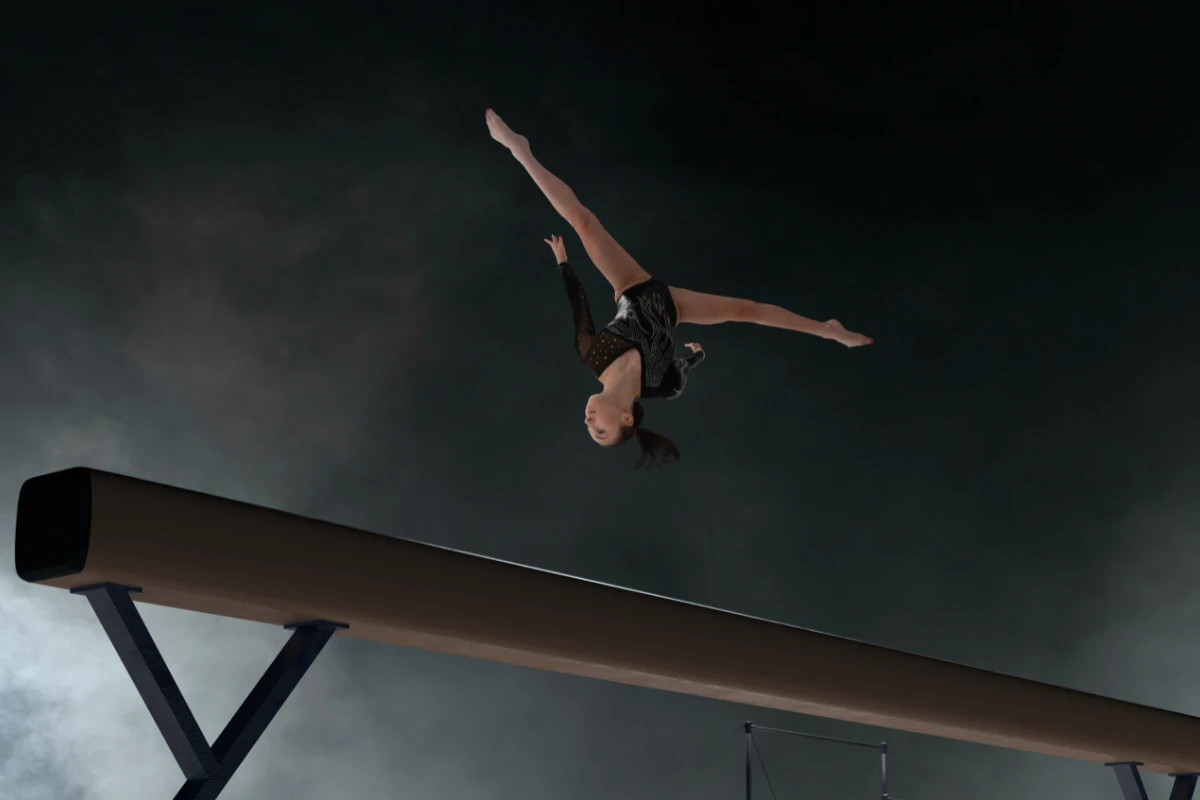
Gymnastics is often called the ultimate test of the human body. It demands grace, strength, flexibility, timing, fearlessness—and a willingness to defy gravity. But ask any gymnast or coach, and you’ll quickly discover that not all apparatuses are created equal. Each one tests a different set of physical and mental skills. So, which one is the hardest?
Let’s explore the details, breaking it down by women’s, men’s, and rhythmic gymnastics.
Women’s Artistic Gymnastics: The Hardest Apparatus
In women’s gymnastics, there are four core events: Vault, Uneven Bars, Balance Beam, and Floor Exercise. While the Vault is a thrilling event that requires explosive power and speed, the Balance Beam is widely regarded as the most difficult apparatus in women’s gymnastics.
Balance Beam: The Mental and Physical Tightrope
Widely considered the hardest apparatus in women’s gymnastics, the Balance Beam is only 10 cm (4 inches) wide, yet gymnasts must perform flips, turns, and leaps on it—often in rapid succession.
What makes beam so brutal?
Tiny Space, Big Skills: The Balance Beam is only 10 cm (4 inches) wide, making it very narrow to perform complex moves. Unlike the Vault, where gymnasts spend only a few seconds in the air, the Beam requires gymnasts to do flips, turns, and acrobatics on a small surface. Any slight mistake can cause a fall, so precision is key.
Physical Control and Endurance: The Balance Beam requires strong control over your body. Gymnasts need to maintain their balance and perform moves that require flexibility, strength, and precision. Holding poses like a split leap or arabesque takes endurance, and there’s no room for mistakes. In comparison, the Vault is quick and doesn’t require the same level of sustained control.
Combination of Elements: The Balance Beam includes a mix of difficult acrobatics and graceful dance moves. Gymnasts need to combine skills like back handsprings and leaps with spins and artistic movements. This combination of power, flexibility, and style makes the Beam much harder than the Vault, which is mostly about speed and power.
Harsh Deductions: On the Balance Beam, even small mistakes can lead to big penalties. A slight wobble, a bent knee, or a misstep can lower your score. Judges watch every movement closely, so gymnasts must be very precise. On the Vault, while form is important, it’s a one-time explosive move, and the risk of error is more contained.
Beam isn’t just hard—it’s unforgiving. It combines elegance with fear and leaves no room to hide.
Men’s Artistic Gymnastics: The Hardest Apparatus
Men’s gymnastics includes six events: Floor, Pommel Horse, Rings, Vault, Parallel Bars, and High Bar. While rings is certainly one of the most physically demanding events in men’s gymnastics, the pommel horse is often considered the most difficult.
Pommel Horse: The Ultimate Test of Balance and Strength
The Pommel Horse is infamous among male gymnasts for its tough physical demands. It’s all about combining strength, balance, and control while your body swings around the apparatus.
Here’s why it stands out:
Unyielding Precision: The Pommel Horse routine requires flawless technique and rhythm throughout the performance. A slight lapse in form can lead to a fall or a deduction, as there is no time for recovery once a mistake is made. Gymnasts must execute their movements with absolute control, making the Pommel Horse unforgiving.
Intense Physical Demands: The apparatus engages the shoulders, core, and arms in continuous, circular movements. This places immense strain on the upper body and can lead to overuse injuries from the constant motion. Additionally, the repetitive nature of the routine means gymnasts often face bruises and scrapes as part of the process.
Slow Skill Acquisition: Mastering the Pommel Horse takes time. The foundational skill—performing a smooth circle—can take months or even years to perfect. Progress feels slow, and beginners may face a long road to even execute the basic movements, which can be discouraging at times.
Mental Toughness: Beyond physical strength, the Pommel Horse requires exceptional mental focus. The constant risk of falling and the need for unwavering concentration throughout the routine can be mentally taxing. Gymnasts must maintain their composure, managing both the physical and psychological pressure to execute a flawless performance.
In short, the Pommel Horse is a real test of a gymnast’s technique and physical limits. It’s the ultimate challenge, showing just how well you can control your body under pressure.
Rhythmic Gymnastics: The Hardest Apparatus
Rhythmic gymnastics is an entirely different world. It blends ballet, dance, and gymnastics, with senior individual gymnasts using four apparatus: ribbon, hoop, ball and clubs. (Rope is no longer part of the senior individual program.) While all are elegant and challenging, one apparatus is often seen as the most complex.
Ribbon: The Most Demanding Dance
The Ribbon may look light and flowing, but don’t be fooled—it requires constant, precise motion, without tangling or stalling.
What makes ribbon so difficult?
- Fluid, continuous movement: The ribbon must never stop twirling.
- Arm and shoulder endurance: Maintaining flow for up to 90 seconds is exhausting.
- Synchronization with choreography: Movements must match the music perfectly.
Ribbon routines are both graceful and taxing, where one missed beat can unravel the entire performance.
Comparison: What Makes an Apparatus Truly Difficult?
| Apparatus | Strength & Endurance | Technical Complexity | Risk Factor | Mental Pressure | Overall Challenge |
|---|---|---|---|---|---|
| Balance Beam (W) | ⭐⭐⭐⭐☆ | ⭐⭐⭐⭐⭐ | ⭐⭐⭐⭐☆ | ⭐⭐⭐⭐⭐ | ⭐⭐⭐⭐⭐ |
| Uneven Bars (W) | ⭐⭐⭐⭐☆ | ⭐⭐⭐⭐⭐ | ⭐⭐⭐⭐☆ | ⭐⭐⭐⭐☆ | ⭐⭐⭐⭐⭐ |
| Vault (W/M) | ⭐⭐⭐⭐☆ | ⭐⭐⭐⭐☆ | ⭐⭐⭐⭐⭐ | ⭐⭐⭐⭐☆ | ⭐⭐⭐⭐☆ |
| Floor Exercise (W) | ⭐⭐⭐⭐☆ | ⭐⭐⭐⭐☆ | ⭐⭐⭐☆☆ | ⭐⭐⭐⭐☆ | ⭐⭐⭐⭐☆ |
| Still Rings (M) | ⭐⭐⭐⭐⭐ | ⭐⭐⭐⭐⭐ | ⭐⭐⭐⭐⭐ | ⭐⭐⭐⭐☆ | ⭐⭐⭐⭐⭐ |
| Pommel Horse (M) | ⭐⭐⭐⭐☆ | ⭐⭐⭐⭐⭐ | ⭐⭐⭐⭐☆ | ⭐⭐⭐⭐☆ | ⭐⭐⭐⭐⭐ |
| High Bar (M) | ⭐⭐⭐⭐☆ | ⭐⭐⭐⭐⭐ | ⭐⭐⭐⭐⭐ | ⭐⭐⭐⭐☆ | ⭐⭐⭐⭐⭐ |
| Ribbon (RG) | ⭐⭐⭐☆☆ | ⭐⭐⭐⭐⭐ | ⭐⭐☆☆☆ | ⭐⭐⭐⭐☆ | ⭐⭐⭐⭐☆ |
⭐ = Low
⭐⭐⭐ = Moderate
⭐⭐⭐⭐⭐ = Extreme
Final Thoughts
At the end of the day, the hardest apparatus in gymnastics is the one that forces you to grow the most.
Some apparatus test your strength, while others challenge your mind or your precision. The hardest apparatus is the one that challenges you to become a better gymnast—physically, mentally, and emotionally.