How to Start Gymnastics as an Adult Without Prior Experience
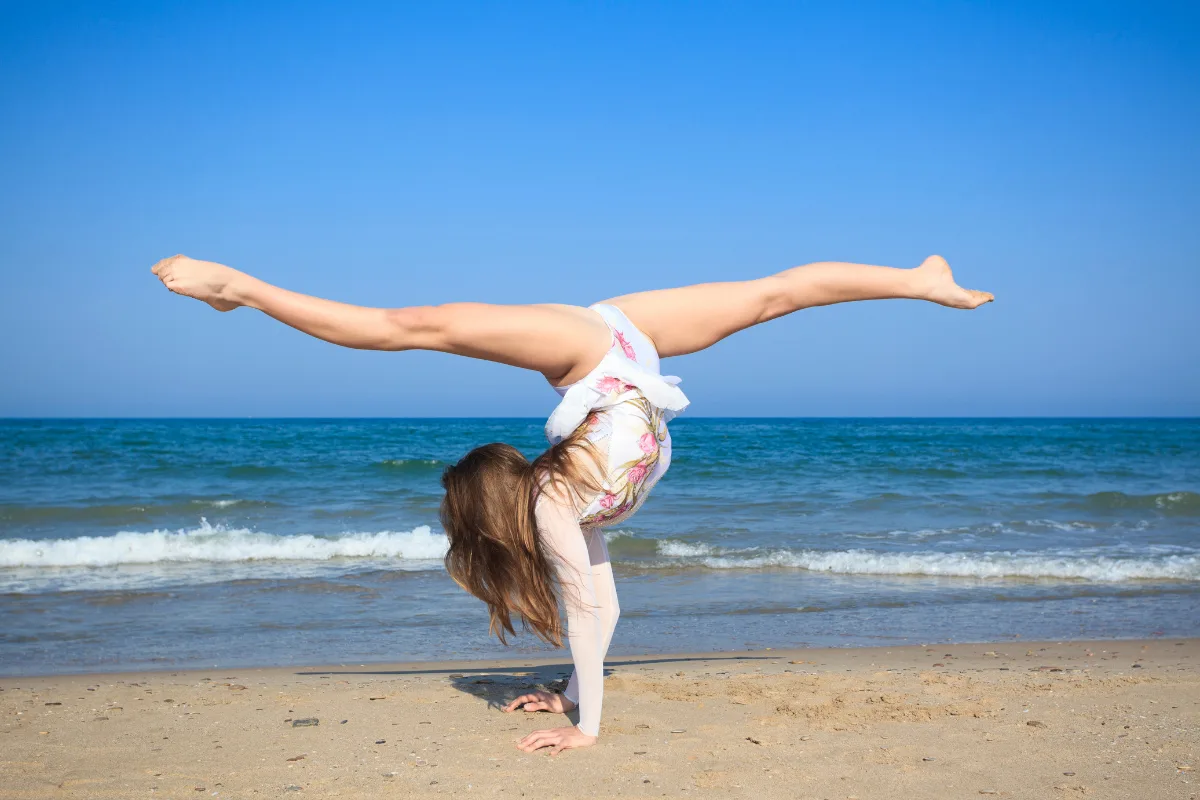
Adults can begin gymnastics without previous experience. The practical first step is finding coached instruction that starts at the participant’s current level, rather than trying to follow the training of a child competitor or an experienced adult gymnast.
Contents
Find a class that actually teaches beginners
Ask whether the session includes a coach-led lesson, how beginners are grouped and which apparatus are available. An open gym may provide access to equipment without providing individual instruction. That difference matters when learning a new movement.
A beginner class can introduce body shapes, balance, controlled landing activities and appropriately scaled strength work. A tumbling-only class has a narrower focus than artistic gymnastics across several apparatus. The tumbling comparison explains that distinction.
There are real programs for complete beginners. For example, Interstellar Gymnastics in Santa Clara, California describes coached classes for people aged 16 and over, including newcomers, returning athletes and cross-trainers. Its published class outline includes preparation, small-group skill instruction, an event rotation and conditioning. That is one club’s offering, checked in September 2026, rather than a national class standard.
Look for similarly specific information near home. A listing that says only “adult gymnastics” leaves several questions unanswered. Before booking, ask how much of the session is taught, whether the instructor regularly works with adults who have never done gymnastics, and whether attendance requires an assessment.
| Session description | What to clarify before attending |
|---|---|
| Coached beginner class | Does the lesson start without prior skills, and how are activities adapted? |
| Mixed-ability adult class | How does the coach divide attention and tasks between different starting levels? |
| Open gym | Is instruction included, and which equipment may a newcomer use? |
| Private lesson | What will the assessment and teaching cover, and what does the fee include? |
Tell the coach where the starting point is
Previous sport experience, current activity, old injuries and confidence with being upside down can all affect the lesson. Being strong in a gym does not automatically establish readiness for swinging or impact skills. Returning gymnasts should also avoid assuming they can immediately repeat skills learned years earlier.
Existing pain, a relevant medical condition or uncertainty about exercise restrictions is a reason to consult an appropriate clinician. A coach can adapt instruction but cannot diagnose an injury or provide medical clearance.
Give concrete information rather than describing fitness as “good” or “bad.” A runner might have plenty of endurance but little experience supporting weight through the hands. A lifter may be comfortable with resistance training but unfamiliar with balance on apparatus. These are useful starting points for a coach, not reasons to pass or fail a self-administered gymnastics test.
Confidence also deserves a practical description. Someone may enjoy low balance activities while feeling uneasy about leaving the floor. Mention that before the exercise starts. Ask the instructor to explain the task, the help available and how to stop or choose an alternative.
Choose a first goal
Useful early goals might include understanding a basic shape, learning how to leave an activity safely or completing a lesson at a manageable intensity. The coach should choose progressions based on observation.
There is no universal first-month requirement to perform rolls, wall handstands, bridges or cartwheels. These movements place different demands on the body. An alternative exercise can serve the lesson when a particular movement is unsuitable.
A goal becomes easier to review when it names something observable. “Understand the coach’s starting and finishing positions for this activity” is more useful during a first lesson than “become flexible.” Later, the gymnast and coach can choose a particular movement to develop. The goal can change as the participant discovers which events are enjoyable.
Returning athletes need a fresh baseline too. Remembering how a skill feels is valuable experience, but it does not show how the current body will respond to the old workload. Tell the coach both what was previously learned and how long it has been since regular practice.
Build a schedule that can be reviewed
The best starting frequency depends on the class, the person’s other activities and how they respond. A generic recommendation of two or three sessions each week is not necessary for every beginner.
After the first sessions, discuss what felt manageable and what needs adjusting. Persistent pain, unusual fatigue or worsening symptoms should not be treated as proof of a productive workout. The USA Gymnastics injury and recovery resources provide further context for conversations with a qualified professional.
Consider the whole week when discussing that response: gymnastics, other exercise, physical work and opportunities to recover. A class that is manageable by itself may feel different when added to a busy schedule. Make the next attendance decision with that context instead of copying the routine of the strongest person in the group.
It can help to keep a short lesson note: the task practiced, one coaching cue worth remembering and one question for next time. This records learning without turning every session into a test of how many skills were gained. Persistent symptoms belong in a separate conversation with an appropriate healthcare professional.
What can be done at home?
Ask the coach for a small amount of appropriate work and a clear demonstration. Home activity should be selected for the individual and the space available. It should not become an unsupervised progression towards walkovers, handsprings, inversions or ring skills.
A yoga mat, carpet or bed is not a substitute for gymnastics flooring and landing equipment. Purchasing apparatus is not necessary before beginning lessons.
Clothing and equipment
Follow the gym’s clothing and footwear rules. Fitted athletic clothing or a suitable leotard should permit movement without loose fabric catching on equipment. Remove jewellery as required and secure long hair. Grip socks are not automatically appropriate on every surface.
Grips, supports and other specialist equipment should be discussed with the coach rather than bought as a starter kit. The clothing guide covers the practical checks.
A useful starting point
Adult gymnastics can be recreational, skill-focused or eventually competitive, depending on the options available. A rewarding class does not require an elite goal. Consistent, appropriate instruction and an enjoyable learning environment give progress a useful direction.