Starting Gymnastics Rings: What Beginners Should Learn First
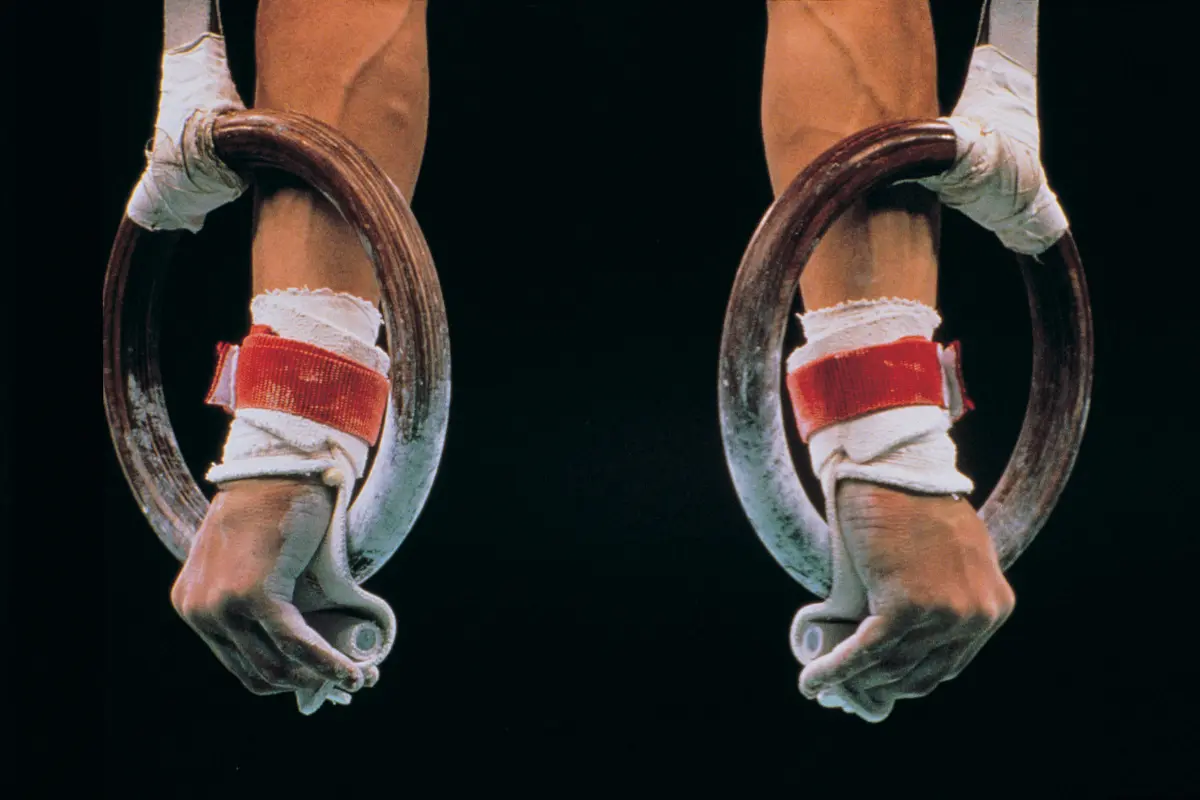
Starting on gymnastics rings does not require an iron cross, a muscle-up or a set of ten dips. A useful introduction teaches the gymnast how to hold the rings, control a manageable position and finish the exercise deliberately. Feet-supported work can be a legitimate first step rather than a temporary version to rush through.
Contents
- First understand hanging, support and assistance
- Use equipment intended for the gymnast
- Learn an ordinary grip before adding special grips
- A supported row can teach more than a repetition count
- Support work needs its own progression
- Keep advanced movements out of the first-session checklist
- Measure a useful first stage of progress
Rings move independently, so even someone who is strong on a fixed bar may need time to understand the new task. Begin with a qualified coach, suitable apparatus and a clear assignment. The aim of the first sessions is to establish repeatable control, not to discover the hardest position the gymnast can survive.
First understand hanging, support and assistance
In a hang, the body is below the hands. In a support, the body is held above the hands, with the arms carrying load down toward the rings. These are different relationships with the apparatus and should not be treated as interchangeable beginner skills.
Assistance means reducing or controlling the demand so the gymnast can learn the intended action. It may include keeping the feet on the floor or using a coach-selected support arrangement. The exact assistance matters: a lightly supported row and a full-bodyweight pull-up are different exercises, even if both involve bending the elbows.
| Early learning task | What the gymnast is learning |
|---|---|
| Secure grip with feet supported | How the hands contact and control the rings. |
| Manageable supported row | Pulling while keeping a consistent body position. |
| Coach-selected support preparation | Controlling load above the hands with suitable assistance. |
| Deliberate entry and exit | Starting and finishing without a sudden drop or improvised swing. |
These are categories for discussing an introductory session, not a requirement to perform all four immediately. The coach may choose different exercises or spend more time on one basic task.
Use equipment intended for the gymnast
A rings station includes the supporting structure, attachment, straps, rings and working area. A portable set is not automatically appropriate for a child or for the movements performed on competition apparatus. Product restrictions and suitable supervision still apply.
Our rings setup guide covers the installation questions. The coach should establish the working height and clearance for the particular exercise. There is no single correct ring height for beginners.
USA Gymnastics’ Safety and Risk Management course treats apparatus, supervision, preparation and progressions as connected topics. That is the relevant approach here: correct equipment does not replace appropriate teaching, and good teaching does not make an unsuitable installation acceptable.
Learn an ordinary grip before adding special grips
For many introductory pulling exercises, the coach can teach an ordinary secure grip with the hand wrapped around the ring. The gymnast should understand how to maintain contact without constantly readjusting during the movement.
A false grip places the hand and wrist differently relative to the ring and has a specific role in some advanced transitions. It is not a requirement for every row, nor is a timed false-grip hang a universal entry test for rings training.
If a coach introduces that grip, the amount of loading and the position should be taught deliberately. Do not force the wrist into an unfamiliar position because an online program labels it essential. Skin discomfort, joint pain and simple difficulty holding the position are different observations that should be reported rather than dismissed.
A supported row can teach more than a repetition count
In a coach-selected row, the gymnast keeps dependable foot contact and leans back into a manageable position. The exercise involves drawing the body toward the hands and returning with control while maintaining the intended body shape.
The important teaching questions are whether the gymnast keeps a consistent line, moves both arms as intended and controls the return. Pulling only the head forward, folding at the hips or finishing in a different position each time makes it difficult to judge progress.
TRX’s introductory coaching guidance uses the low row to teach body control and adjustment through body angle. Its suspension trainer differs from gymnastics rings, but the teaching principle is useful: choose a manageable version before asking for a more demanding one.
A more upright row is often easier to control than a deeply reclined version. The coach should adjust the actual position rather than prescribing a universal number of steps, since stride length, ring height and anchor position vary.
Support work needs its own progression
Holding the body above freely moving rings can be surprisingly demanding. Being able to perform pull-ups does not automatically mean the gymnast can control an unsupported support, and being able to hold a support does not automatically establish readiness for dips.
Early support preparation may keep meaningful assistance from the feet. The gymnast learns to maintain the assigned position without the rings escaping outward or the body sinking unexpectedly. The coach decides how much load to transfer and how the gymnast should exit.
A short, controlled attempt can provide more useful practice than a longer attempt that deteriorates. There is no universal fifteen-second threshold that clears a beginner for every next skill. Ring turnout, deeper elbow bending and removal of assistance each change the task and should be introduced purposefully.
Keep advanced movements out of the first-session checklist
Inverted hangs, skin-the-cat movements, deep dips, muscle-ups, levers and strength holds are not interchangeable with introductory supported work. Each introduces particular position, loading or control demands. Their place in a progression depends on the gymnast and the coaching setting.
A study comparing ring and bar muscle-ups examined experienced adult men performing an advanced exercise. Its findings cannot justify placing muscle-ups in a beginner session. Research about what trained adults can do is different from evidence of readiness in a new gymnast.
The same applies to online demonstrations. A movement may look slow and calm because the athlete has already developed the necessary capacity. The absence of a dramatic swing does not make the skill easy.
Measure a useful first stage of progress
Record the exercise, ring height, foot position, assistance and the coach’s quality standard. Progress may mean repeating the same shape more consistently, needing fewer corrections or finishing the task with better control. Those changes matter before adding repetitions or difficulty.
The NSCA’s long-term development guidance supports an individual approach to youth training. Children do not need to match an adult challenge or move through an arbitrary rings checklist at the same pace.
Stop painful work and report recurring wrist, elbow or shoulder symptoms. Also tell the coach when an assignment leaves unusual fatigue that affects the rest of practice. Ring conditioning belongs within the full workload, not outside it.
Once the introductory positions are familiar, our rings pulling guide explains how rows and assisted vertical pulling differ. The next step should follow the gymnast’s demonstrated control and the coach’s goal, rather than the excitement of a more impressive exercise name.