Handstands on Still Rings: Balance Demands and Coach-Led Preparation
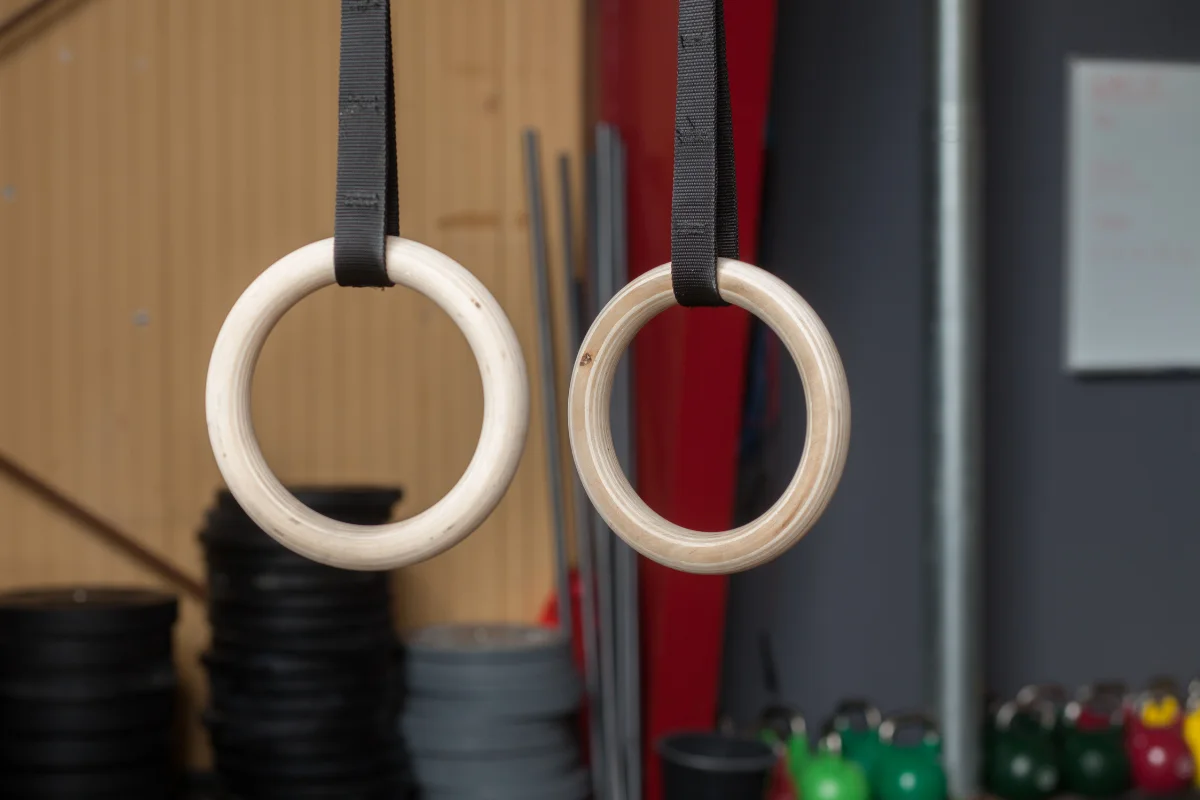
A handstand on still rings is an advanced apparatus skill. The gymnast supports an inverted body above two suspended rings while controlling both body position and the moving supports. A comfortable floor handstand is useful background, but it does not make a rings handstand an appropriate next experiment at home.
Contents
- Why “still” rings can move
- What research says about the apparatus difference
- The competition skill includes more than a pose
- What a coach assesses before progressing
- Entry, hold and exit need separate plans
- Why specialist training aids need specialist judgment
- What useful early progress can look like
- Managing load and discomfort
The main difference is the support. The floor stays in place when the hands press against it; rings can move and rotate. Learning to manage that arrangement requires apparatus-specific preparation, a suitable facility and a coach who can organize assistance and exits.
Why “still” rings can move
The event’s name describes the aim of controlled work, not an apparatus that is physically fixed beneath the gymnast. The rings hang from a suspension system. Forces applied through the hands can change their position relative to each other and to the athlete.
In handstand, the gymnast therefore has two related problems: keeping the body arranged over the support and controlling where that support goes. An outward drift or change in ring orientation can require a response even when the athlete’s body looked well aligned a moment earlier.
Our explanation of the demands of still rings places that challenge alongside the event’s swings and strength holds. The handstand is one part of a larger apparatus system rather than an isolated test of courage.
What research says about the apparatus difference
A study comparing handstands on floor, parallel bars and rings measured muscle activity in 10 adult and 15 young gymnasts. Muscle-activation patterns changed with the apparatus: many measured muscles showed greater activity on rings, while wrist-flexor activity was lower than on the floor and triceps activity did not show the same apparatus change.
The finding supports treating rings as a different coordination task. It does not mean every muscle works harder, nor does it establish a safe progression for an untrained beginner. The participants were gymnasts, and the experiment measured short-term activity rather than the results of a long training program.
General strength is relevant, but the ability to produce force must be combined with control of the suspended support. Simply extending the duration of a floor handstand does not reproduce that requirement.
The competition skill includes more than a pose
In men’s artistic gymnastics, the route into a handstand can matter as well as the finished position. A swing to handstand and a strength press to handstand are different elements. A gymnast may be prepared for one type of assisted exercise while remaining unprepared for another entry.
The current FIG men’s Code of Points includes a requirement for a swing-to-handstand element held for two seconds among the counting rings elements. That is a competition requirement within a broader code, not an instruction for beginners to begin swinging into an inversion.
A judged hold also needs a recognizable position and control. Merely passing through an upside-down shape is different from establishing the required hold. Coaches build toward those demands through appropriate preparation rather than asking an athlete to imitate a competition routine in full.
What a coach assesses before progressing
Readiness includes the gymnast’s existing hand-support skills, ability to manage the chosen rings setup, understanding of the task and response to assistance. Previous shoulder or wrist symptoms and the current training load also matter.
A coach may examine floor or parallel-bar work, basic rings support and appropriately assisted positions. These observations answer different questions. A good floor line says something about body organization; controlled rings support says something about managing the apparatus. Neither observation alone settles the decision.
There is no universal rule that a 30-second floor handstand, a particular number of dips or a fixed body-weight strength score makes the next inversion safe. A checklist of numbers cannot replace observation of the actual movement and the available safety arrangements.
Entry, hold and exit need separate plans
Entering the position
The entry determines how much movement the gymnast must control on arrival. A heavily assisted placement, a press and a swing each introduce different forces and timing. Preparation for one should not be interpreted as permission to attempt the others.
Maintaining the handstand
Once inverted, the gymnast must maintain active support and manage changes in ring position. Coaching cues should match the athlete and the particular exercise. Forcing a ring rotation or adding an unfamiliar arm position simply because it appears in a video can change the task substantially.
Leaving the position
The exit must be planned before the attempt. A coach needs to consider apparatus height, assistance, matting and where the athlete will go if the hold cannot be maintained. Falling repeatedly is not an acceptable teaching method, and additional mats do not solve every problem created by an unsuitable setup.
Why specialist training aids need specialist judgment
Coaches sometimes use purpose-built aids to change the rings’ freedom of movement or provide support. Their purpose is to create a manageable task with a useful relationship to the final skill.
A published engineering study of a rings-handstand training aid used coach input and biomechanical comparisons to evaluate a designed apparatus. Its results do not validate tying household bands between rings or copying an untested restraint seen online.
Improvised connections can behave unpredictably, interfere with an exit or introduce entanglement. Wrapping legs around straps also changes the support problem and may create a different hazard. These are decisions for qualified coaching and appropriate equipment design, not shortcuts for independent practice.
What useful early progress can look like
Progress may include understanding the coach’s cues, approaching an assisted position calmly or maintaining the intended shape with less help. It can also mean finishing a planned exit more consistently. Those improvements can be meaningful before an independent rings handstand appears.
Record the actual exercise and assistance. “Held for five seconds” is incomplete if the amount of external support changed. A shorter, more controlled attempt with a clearly defined setup may provide better information than a longer hold that depends on substantial assistance.
Athletes should understand what they are practicing and which part the coach is supporting. This prevents a successful drill from being mistaken for proof that the entire competition skill is ready.
Managing load and discomfort
Rings training adds to the work already performed on other apparatus. A session that includes floor handstands, parallel-bar support and rings inversions should be considered as a whole when the coach plans loading and recovery.
The American Academy of Pediatrics’ gymnastics guidance emphasizes appropriate supervision and attention to pain. Wrist or shoulder symptoms should be reported early rather than hidden to preserve a progression. Persistent pain or loss of normal function warrants assessment by a qualified clinician.
For athletes beginning on the apparatus, our guide to starting rings explains more suitable foundations and the questions to ask a coach. A rings handstand can remain a longer-term goal while current training develops the support, coordination and judgment needed to approach it responsibly.