Pulling Exercises on Rings: Rows, Assistance and Progression for Gymnasts
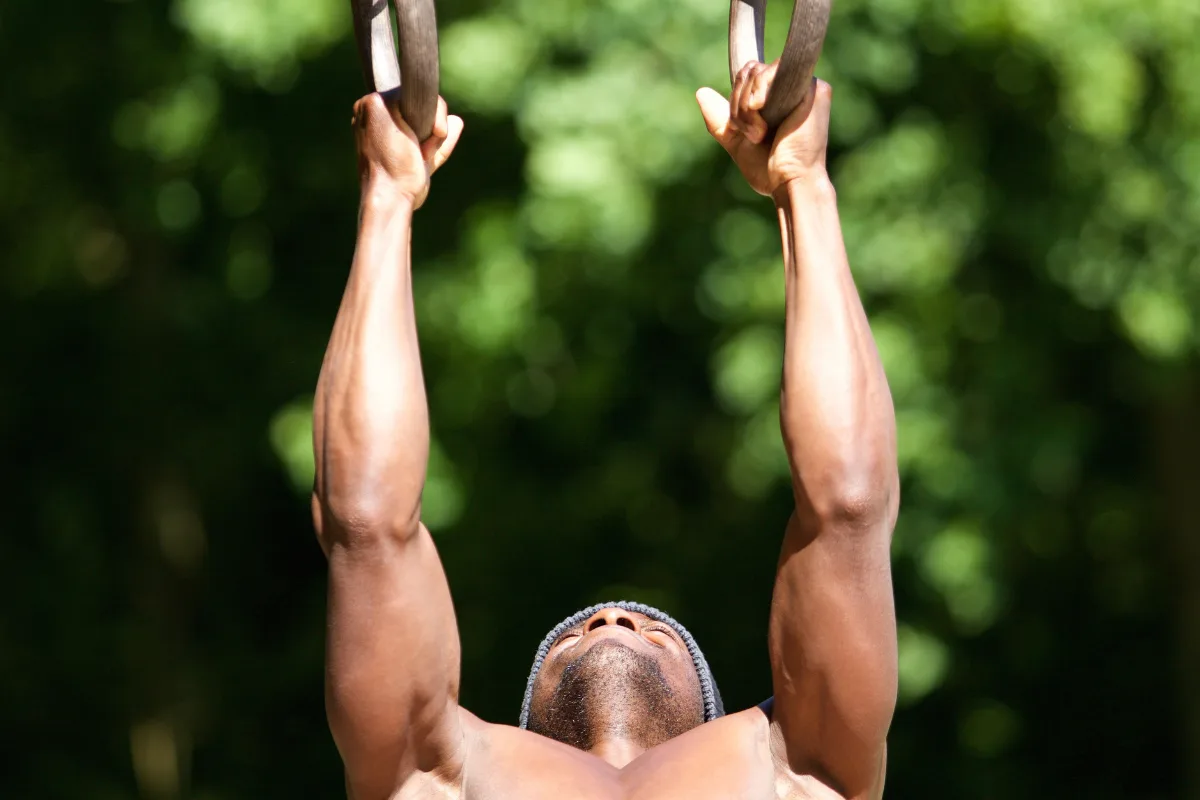
Pulling work on rings can help a gymnast develop strength and control through several movement patterns. The most useful starting distinction is between a row, where the body moves toward the hands from a reclined position, and a pull-up, where the body rises from below the hands.
Contents
- Separate horizontal and vertical pulling
- Prepare for the exercise you intend to perform
- Build a repeatable two-arm row
- Why “take three steps back” is an unreliable instruction
- Introduce assisted vertical pulling deliberately
- Decide what counts before counting repetitions
- Keep pulling work inside the full training week
A beginner does not need a long circuit containing both patterns plus inverted hangs, one-arm rows and advanced core exercises. Choose a manageable task, define what a good repetition looks like and adjust it gradually. This guide focuses on those decisions rather than assigning the same workout to every gymnast.
Separate horizontal and vertical pulling
In a supported ring row, the feet usually remain on the floor and the body is inclined. The angle and support arrangement help determine how demanding the movement is. In a full pull-up, the hands support the hanging body and the gymnast lifts against that load.
The two exercises overlap in the muscles they use, but they are not identical training tasks. A row can provide useful pulling practice before a full pull-up is available. It should not be dismissed as ineffective simply because the feet are involved.
| Pattern | Possible starting arrangement | What to observe |
|---|---|---|
| Row | Feet supported, manageable recline | Body line, arm coordination and controlled return. |
| Vertical pull | Coach-selected assistance on suitable apparatus | Consistent assistance and deliberate movement. |
| Full pull-up | Bodyweight hanging task when ready | Repeatable range without rescuing the repetition with a swing. |
These are options within a progression, not three exercises that must all appear in each session. The coach may prioritize one pattern according to the gymnast’s current needs.
Prepare for the exercise you intend to perform
Start with the gym’s warm-up and then rehearse an easier version of the assigned movement. A few controlled introductory repetitions can reveal whether the setup and task are appropriate before the working sets begin.
Do not make the warm-up harder than the planned exercise. Long passive hangs, high repetition shoulder movements or forcing a stick behind the body are not universal prerequisites for ring rows. Shoulder preparation should match the gymnast’s current movement and loading needs.
The NSCA youth resistance-training position statement emphasizes qualified supervision, manageable initial loading and correct technique. Its general guidance is not a rings-specific prescription and should be adapted to the gymnast’s existing practice.
Build a repeatable two-arm row
Use equipment that has been installed and checked for the task. Establish a secure grip and dependable foot contact, then take the coach-selected starting position. The body should maintain the intended relationship between shoulders, trunk and hips as the arms pull.
Move toward the rings without leading with the chin or throwing the ribs upward. Return deliberately to the agreed starting position. The shoulder blades should be allowed to move with the action; do not interpret “control the shoulders” as a requirement to freeze them in one position.
TRX’s beginner teaching guidance uses a suspended row to develop body control and introduces changes in angle as a way to adjust difficulty. Gymnastics rings have their own handling characteristics, so the coach should check the actual movement rather than transferring every detail from another device.
If the row becomes a hip thrust followed by an arm pull, reduce the demand. A more upright position or another suitable adjustment can help the gymnast repeat the intended action. Making the task manageable is a training decision, not a failure.
Why “take three steps back” is an unreliable instruction
Steps are not a consistent unit of exercise load. Two gymnasts have different leg lengths, and the same person may take different-sized steps. Ring height, strap length, anchor location and the direction of movement all affect the resulting position.
Instead, record a recognizable setup: the ring height, where the feet are placed and the body position at the start. The coach can then alter one feature and observe the effect. A small change is easier to evaluate than moving the rings and feet at the same time.
A 2023 study of 12 trained adult men measured loading and muscle activity in suspension push-up and row variations. Different support arrangements changed the task. The study used TRX equipment and did not establish a beginner gymnastics program, but it reinforces the need to describe the setup rather than treating all suspended rows as equivalent.
Introduce assisted vertical pulling deliberately
A coach can select assistance that allows the gymnast to practice the desired pulling pattern without relying on an uncontrolled jump or large swing. The assistance must be appropriate for the apparatus and should remain reasonably consistent from repetition to repetition.
Record how the assistance is provided. A set in which the feet push increasingly hard as fatigue develops is not directly comparable with an earlier set using lighter support. That does not make assisted training useless; it means the assistance is part of the exercise description.
When using rings, the hands may rotate through the movement. That can feel comfortable, but it does not guarantee protection from joint problems. The chin-up and pull-up comparison explains why grip changes alter emphasis without creating a universally superior exercise.
Decide what counts before counting repetitions
The coach should define the starting position, intended finish and return. The gymnast should also know when to stop: for example, when the body position changes substantially, assistance becomes inconsistent or the next repetition cannot follow the agreed standard.
A strict strength set should not quietly turn into a swinging drill to reach the target number. Gymnastics uses deliberate swing in other contexts, but it needs its own instruction and suitable apparatus. A change in movement changes what the set is training.
One-arm rows, prolonged lowering-only work and added weight are additional loading choices. They are not compulsory milestones after a particular number of ordinary rows. The coach should select them only when they serve a clear purpose and the gymnast is prepared.
Keep pulling work inside the full training week
Bars, rings and other apparatus already involve substantial gripping and upper-body loading. Extra pulling sets should be counted alongside that work. Avoid adding a separate internet workout merely because the exercises look different from the team’s conditioning.
Use a simple log: exercise, setup, assistance, quality repetitions and how the gymnast responded. Note whether the work affected later practice or caused symptoms. This provides better information than recording only a total number of repetitions.
Stop painful work and seek appropriate advice for recurring or persistent symptoms. A different grip or a new variation should not be used to disguise a problem. Comfortable muscular effort and joint pain are not the same training signal.
For the wider session, see our rings workout planning guide. Pulling is one component of preparation. Choose the version that the gymnast can practice consistently, then let progress come from a clear task and thoughtful adjustments.