Wall-Assisted Press Handstands: Purpose, Limitations and Progression
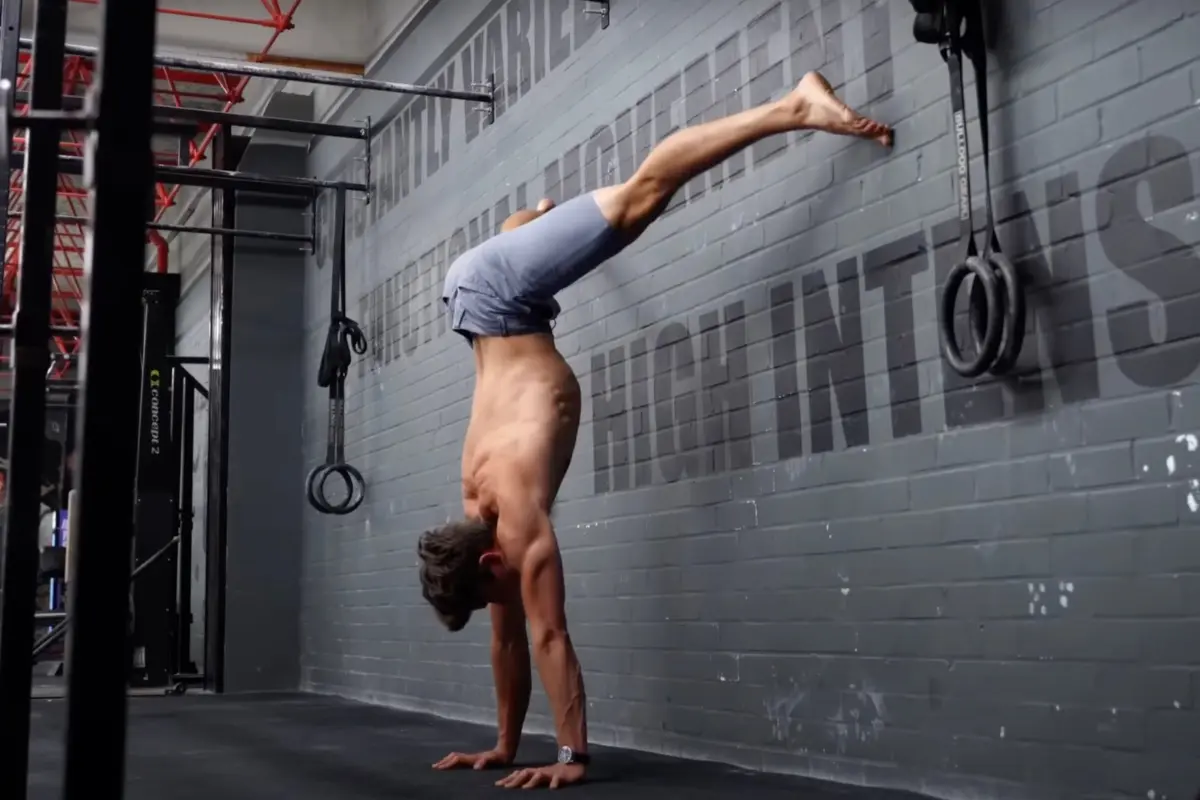
A wall-assisted press handstand uses contact with a wall during some part of a controlled rise toward handstand. It can help a coach simplify a difficult movement or provide a position reference. Its usefulness depends on what the wall is doing: supplying balance assistance, supporting some body weight or limiting the path of the movement.
Contents
- A press is different from getting upside down
- What assistance actually changes
- Three related tasks with different purposes
- Why body position deserves attention
- Useful preparation before an assisted inversion
- Wall geometry can restrict the movement
- How a coach can make the drill measurable
- When repeating the drill stops helping
The label covers several different drills. A wall-supported handstand, a controlled lowering from handstand and an assisted upward press are related activities, but they are not interchangeable. Before adding repetitions, establish which task is being practiced and why it fits the gymnast’s current needs.
A press is different from getting upside down
A press raises the body onto the hands without a jump supplying the entry. It requires a coordinated transfer of support as the hips and legs move relative to the hands. Reaching handstand through a kick-up may demonstrate a useful entry skill, but it does not demonstrate the same controlled rise.
A supported handstand starts after the rise has already happened. Holding that position can develop familiarity with inverted support, yet it leaves the hardest lifting phase unpracticed. A wall walk likewise changes body position through steps and changing contacts rather than reproducing a free press.
Our straddle-press guide explains the relationship between compression, shoulder control and the movement of the hips. That broader skill is the reference point when deciding whether a particular wall exercise transfers usefully.
What assistance actually changes
The floor supports the hands, and the wall introduces another contact with the environment. Depending on the arrangement, that contact can alter balance, friction and the forces the gymnast must produce. A claim that the wall “takes all balance away” or places “all the weight on the shoulders” oversimplifies the situation.
Consider two attempts that look similar from the side. In one, the athlete lightly touches the wall as a position reference. In the other, substantial pressure and friction help support the rise. The second attempt may require different effort even though both are called a wall press.
This is why counting repetitions without describing assistance can be misleading. Contact location, equipment height, body position and the coach’s help should be consistent enough to make comparisons meaningful.
Three related tasks with different purposes
| Task | Possible purpose | What it does not establish |
|---|---|---|
| Wall-supported handstand | Practice a selected inverted support position | The ability to lift into that position |
| Assisted lowering from handstand | Explore a controlled descent through part of the press path | The ability to reverse the movement independently |
| Wall-assisted upward press | Practice a rise with a defined form of assistance | An unassisted press with the same technique |
A coach might use all three, one of them or a different preparation entirely. The appropriate choice depends on whether the present difficulty concerns support, active leg control, the initial lift, balance near the finish or confidence with the movement.
Why body position deserves attention
Moving the legs farther from the support can change how demanding the movement becomes. Folding at the hips and placing the body effectively are therefore part of press technique, not decorative details added after sufficient strength develops.
A biomechanical study of 59 trained male gymnasts examined a piked straight-arm press using video and force measurements. More skilled and less skilled performers showed different patterns of body positioning and estimated joint moments. The study did not test wall training, so it cannot establish a best wall distance or a superior assisted exercise.
The practical implication is to observe how the gymnast moves through the exercise. Finishing at the wall after hopping, bending the arms unexpectedly or changing the intended leg position may bypass the problem the drill was meant to address.
Useful preparation before an assisted inversion
Preparation should include a support position the athlete can manage, an entry suited to the setup and a planned way down. The gymnast also needs to understand what assistance will be available and what to do if the movement stops partway.
This does not create a universal rule that everyone must first hold a freestanding handstand for a set duration. Readiness is broader than a stopwatch result. A gymnast might balance briefly while lacking the load tolerance or movement control needed for repeated press work.
The wall should be clear of shelves, sockets, projecting fixtures and nearby furniture. Equipment must stay stable under the intended forces. The athlete’s head should not become a prop for pushing the body upward, and a coach should not rely on friction against clothing to prevent an uncontrolled descent.
Wall geometry can restrict the movement
The legs need space to move, particularly in straddle variations. A narrow corner or a badly chosen distance may obstruct the intended path. If the athlete keeps changing the movement to avoid an obstacle, the setup is no longer teaching the assigned skill cleanly.
Raising the feet changes the starting arrangement; raising the hands changes available clearance. Those modifications are different and need stable, suitable equipment. They should not be improvised with stacks of cushions or chairs that can slide apart.
The orientation of a supported hold also matters. Our wall-handstand comparison explains why chest-to-wall and back-to-wall positions create different practical demands for entering, maintaining and leaving the handstand.
How a coach can make the drill measurable
Choose one clear objective. For example, the athlete might work on initiating the rise without a hop, maintaining the assigned arm position or controlling a selected portion of the descent. “Do more presses” is less informative than identifying the movement that should improve.
Keep the assistance description with the training record. Note whether a coach supplied help, which body part contacted the wall and whether the exercise used an elevated start. A video taken with appropriate consent can help compare the same task across sessions.
Reduce assistance only when the existing version is repeatable and manageable. Removing support and increasing range simultaneously makes it harder to identify why a new version fails. A coach may change one feature at a time or temporarily return to a simpler task.
When repeating the drill stops helping
Repeated unsuccessful attempts can rehearse the same workaround. If every repetition begins with a jump, consider whether the task needs more assistance or separate preparation for the initial lift. If the final handstand is unstable, address the finish without assuming the entire press needs more strength.
Fatigue can also make an otherwise useful exercise unproductive. Unexpected elbow bending, loss of the planned exit or discomfort should prompt a pause and reassessment. Pain is not a milestone on the way to a successful press.
The American Academy of Pediatrics discusses pain and overuse concerns in gymnastics, where the upper limbs repeatedly support body weight. Press preparation should fit alongside existing handstand, bars, vault and tumbling work rather than being added without regard to the total load.
A successful wall drill has a clear purpose and a clear next decision. The important question is which part of the eventual press is improving under consistent conditions. That gives the wall a useful role while keeping independent movement, safe exits and individual readiness at the center of the learning process.