Learning to Walk on a Balance Beam: Foot Placement, Pace and Control
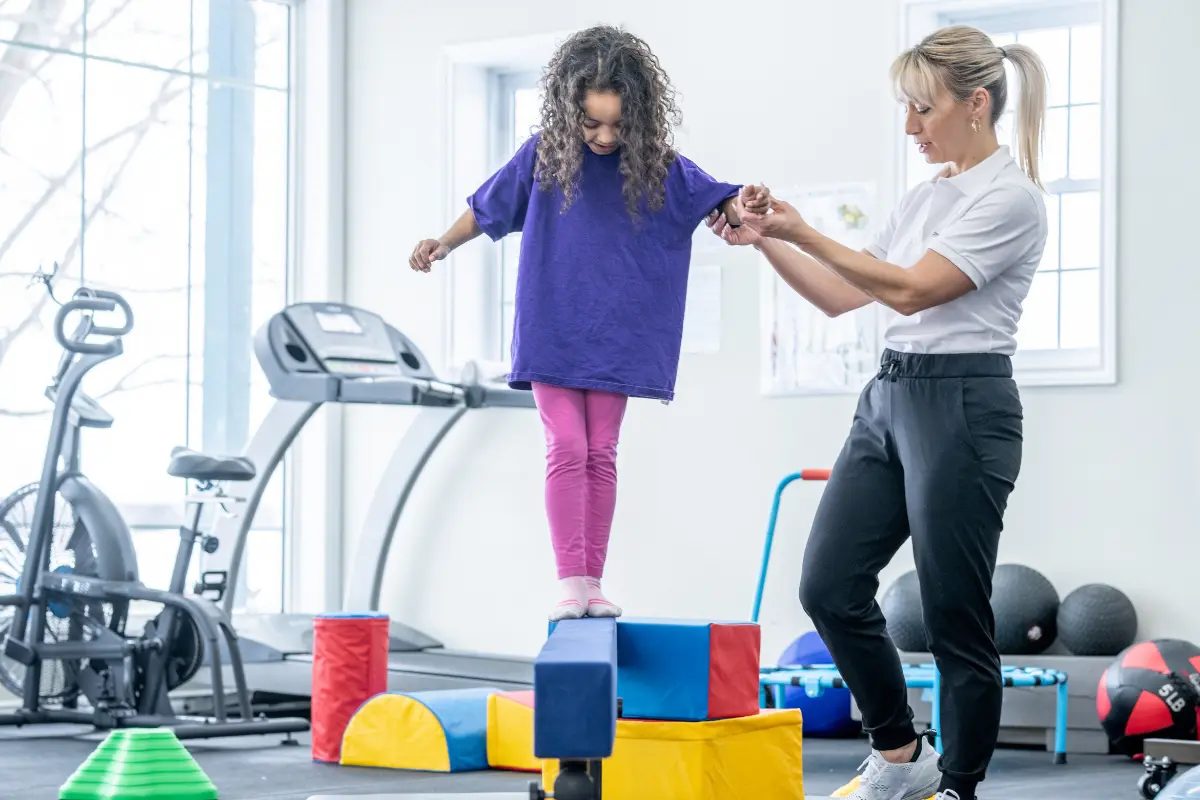
Learning to walk on a balance beam involves placing the feet on a narrow surface, transferring weight and making small adjustments while moving. The useful beginner goal is a controlled task with a clear start and finish. A promise to cross “without wobbling” sets a less helpful standard: some adjustment is part of balancing.
Contents
This guide concerns introductory walking in a coached gymnastics setting. It is not a test for moving to high beam or a prescription for practicing on furniture at home. The instructor chooses the equipment, matting and movement that suit the participant.
Start with the surface and the task
A competition beam is 10 centimetres wide under the FIG apparatus norms, but training beams vary. A soft floor beam, a rigid low beam and a marked line do not feel identical. Learn on the actual setup selected for the lesson rather than assuming every product called a beginner beam reproduces competition equipment.
Before the first attempt, the gymnast should know where to step on, how far to travel and how to leave the surface as demonstrated. Other children need a clear waiting area. A crossing is not finished simply because the gymnast reaches the far end; the planned stop and exit are part of the activity.
For the equipment distinctions and the role of low practice stations, see the guide to starting on low beam. A line on the floor can help someone understand a path, but it cannot teach the feeling of a raised edge.
Learn weight transfer before chasing speed
A step changes which foot supports the body and where the next support will be. On a narrow surface, the gymnast has less room to place that next foot. Rushing can make the sequence harder to observe, so a coach may use a short, deliberate walk with an agreed pause.
One illustrative task is to take a few familiar steps, stop at the designated point and finish as taught. The instructor can watch whether the gymnast places the foot before moving on, understands the pause and retains control at the end. This is an example of organizing a lesson, not a fixed number of repetitions for every learner.
Foot placement should match the walking exercise. A close heel-to-toe walk, a more ordinary forward walk and a raised-heel walk are different tasks. There is no need to present one as the only correct form of all beam walking, or to invent a universal rule that a particular toe must follow the centre line.
If the step is unclear, ask the coach to demonstrate it again on the selected surface. Watching the intended movement is more useful than trying to follow several conflicting descriptions at once.
Use arms and gaze for the movement being learned
The arms can contribute to balance. A study involving 18 young female gymnasts and 18 comparison participants found benefits from free arm movement in several balance tasks, including narrower backward beam walks. The beams used for that test were low and narrower than a competition beam.
That research does not prescribe a compulsory arm position for a gymnastics routine. It does challenge the idea that every beginner should immobilize the arms to demonstrate balance. The instructor may choose an arm position for a particular exercise or later teach the presentation required by a routine.
Gaze also belongs to the task. Ask where the coach wants the gymnast to look during the specific walk, pause or change of direction. “Never look down” is too absolute to serve as an instruction for every beam activity. Adding a cone or object on the beam should not become an improvised obstacle.
Use precise language when discussing help. In a gymnastics lesson, a coach may use “spotting” to describe physical assistance or protection. Looking toward a visual reference is a different idea. If the instruction is ambiguous, clarify it before the attempt.
Interpret a wobble instead of diagnosing it
A wobble does not identify one cause. The gymnast may be adjusting to a new surface, placing a foot differently, rushing a transition or misunderstanding the task. Watching what happened immediately before the loss of control gives the coach more information than saying the child has a weak core or stiff ankles.
| What is observed | A useful question for the instructor |
|---|---|
| The gymnast hurries near the end | Is the stopping point and exit clear? |
| Control changes during a pause | Would practicing the pause separately make the task clearer? |
| A new direction feels unfamiliar | Should the orientation be demonstrated before another crossing? |
| The same spot causes repeated difficulty | Does the equipment need checking, or does the task need adjusting? |
These questions help describe practice; they are not automatic fixes. A slipping or unstable piece of equipment needs attention before another attempt. Pain or a concerning symptom requires appropriate assessment rather than a technique cue from an article.
Make progress specific
Progress can be a more deliberate first step, a controlled stop or understanding how two familiar movements connect. It need not involve height, longer crossings or a new variation at every lesson. Comparing the same task under similar conditions makes improvement easier to recognize.
Forward, backward and sideways walking should be introduced as distinct tasks. The instructor decides which belongs in the lesson and demonstrates its start, movement and finish. Completing one direction comfortably does not automatically establish readiness for another.
Nor do three successful crossings provide universal clearance for high beam. The separate explanation of moving from low beam to high beam covers why readiness belongs to a particular gymnast, skill and setup. A child may use a higher beam for one familiar activity while learning another close to the floor.
Keep feedback manageable. After an attempt, one clearly demonstrated adjustment is easier to work on than a list of simultaneous changes to the head, shoulders, feet and knees. Ask which detail matters for the next attempt and let the instructor review that specific change.
What to Remember
Useful beam walking practice develops control of an understandable task. Start with appropriate equipment, follow the instructor’s cues and judge progress through movement and confidence within that task. The aim is purposeful balance practice, not a deadline for eliminating every wobble.