Moving From Low Beam to High Beam: What Changes for the Gymnast?
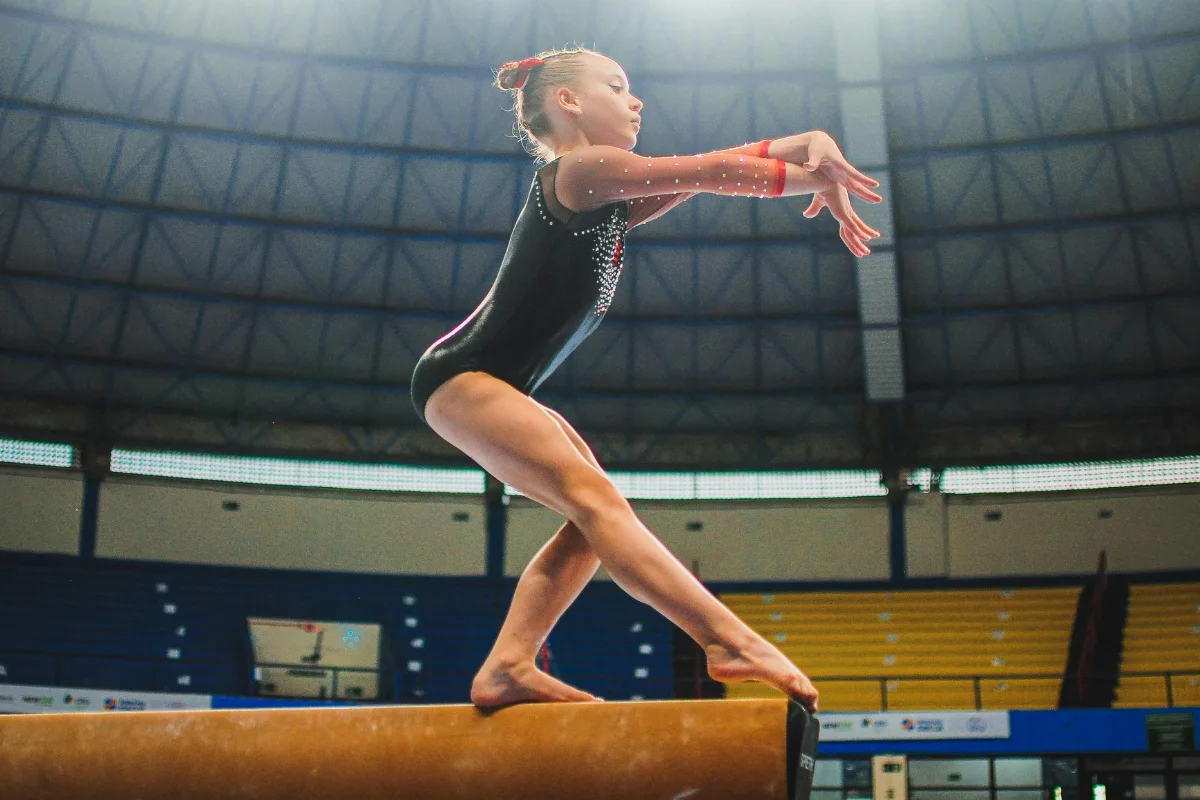
Moving a skill from low beam to high beam changes the task even when the movement has the same name. The gymnast has to perform it on a different setup, manage the greater height and use the exits and landing arrangements taught for that apparatus.
Contents
There is no universal number of successful repetitions that makes every gymnast ready. A coach assesses the particular athlete, skill and equipment together. This guide explains that transition; the introduction to low-beam training covers the earlier work close to the floor.
Readiness belongs to a skill, not just a height
A gymnast may be ready to walk or hold a simple balance on a raised beam while still practicing a turn or acrobatic element on a lower setup. Moving up for one exercise does not move the whole routine up automatically.
Coaches can consider whether the gymnast understands the movement, performs it with repeatable control and can follow the planned response when it goes wrong. They also need to know how the gymnast feels about the change. Hesitation can call for a smaller step or a different exercise, rather than an instruction to be braver.
These are considerations for coaching, not a self-assessment that clears an athlete for high-beam work. USA Gymnastics includes apparatus safety, supervision, progressions and spotting in its safety education because those decisions belong together.
It helps to name the exact movement under discussion. “Ready for high beam” is a much broader claim than “ready to try this familiar walk on the coach’s selected setup.” A useful plan states the task, the assistance or supervision involved and what would lead the coach to simplify it again.
Preparation also includes understanding the station. The gymnast needs to know where the activity starts and finishes, when it is their turn and how to respond to the coach’s stop instruction. Those practical details can become less familiar when the beam and surrounding mats change.
Change the setup without changing everything at once
A transition can involve a change in height, available support, mat arrangement or the way movements are connected. The coach chooses which change is appropriate. Introducing unfamiliar height and a new skill at the same time can make it harder to tell what the gymnast needs help with.
For example, a gymnast who is working on a low-beam turn might first become familiar with standing and walking on the coach’s chosen raised setup. The turn itself can remain on low beam until the coach is satisfied with both the movement and the next setup. This is an illustration of separating tasks, not a required progression for every athlete.
Any height adjustment must use equipment designed for that purpose. A low beam should not be raised on household blocks, chairs or an improvised stack to create an unofficial high beam.
| Feature being changed | Question for the coaching plan |
|---|---|
| Height | Is the movement already familiar on the previous setup? |
| Surface or padding | Does the gymnast understand how the new contact surface feels? |
| Assistance | What support is available, and what part will the gymnast manage? |
| Connection | Are separate movements now being joined without a pause? |
| Practice context | Is this a new lesson task, a routine run-through or competition preparation? |
This is a way to describe a transition, not an instruction to change every row in sequence. A coach may keep most features the same while reviewing one. If an attempt becomes uncertain, that clearer description helps identify what changed.
Matting remains part of beam training
Progress does not mean gradually removing all the mats. Competition beam is also used with specified matting: the USAG women’s apparatus rules set requirements for base and supplemental mats.
Training arrangements depend on the exercise, beam, surrounding area and coach’s assessment. Adding a random soft surface is not a substitute for choosing suitable matting, and a thick mat does not make an unprepared skill appropriate. The coach must also be able to supervise and spot as the exercise requires.
The SPIETH beam training pad, for example, is designed to attach to a beam’s upper surface. It is not the same item as surrounding landing matting. Calling both simply “extra padding” hides their different jobs. Any training arrangement needs to be considered as a complete setup.
How confidence fits into the move
Confidence is useful information, but it is not the only measure of preparation. An enthusiastic gymnast can still need more technical work; a technically prepared gymnast can still need time to adjust to height.
A helpful conversation is specific: “Which part feels different?” or “What is the next smaller step?” That gives the coach something to address. Comparing the gymnast with a teammate, or setting a deadline based only on a competition date, does not answer those questions.
Returning to low beam can be part of productive training. It can give the coach a better place to refine a movement or let the gymnast practice a connection without adding the demands of height.
Keep the conversation tied to the part that feels different. The gymnast may be comfortable once standing on the beam but unsure about getting onto it. Another may understand the entry but lose concentration near the end. Those are different problems; neither is solved by a general demand to stop being nervous.
A parent can support that discussion by asking what the next agreed task is and letting the coach give the technical cues. Repeatedly asking when a child will move higher can turn apparatus height into a status marker. Progress may instead be a calmer entry, a more controlled finish or a familiar movement performed consistently in its new setting.
After time away, the previous setup should be reviewed again. The fact that a gymnast once completed a skill does not describe today’s preparation or comfort. A return to a lower station can help establish the current starting point before the coach decides what to restore.
What You Should Know
The transition to high beam is planned around the gymnast and the skill. Suitable equipment, matting, supervision and repeatable movement all matter. The next step should make the training task manageable, not simply make the beam taller.