USAG Uneven Bars Skill Requirements (Levels 1–5)
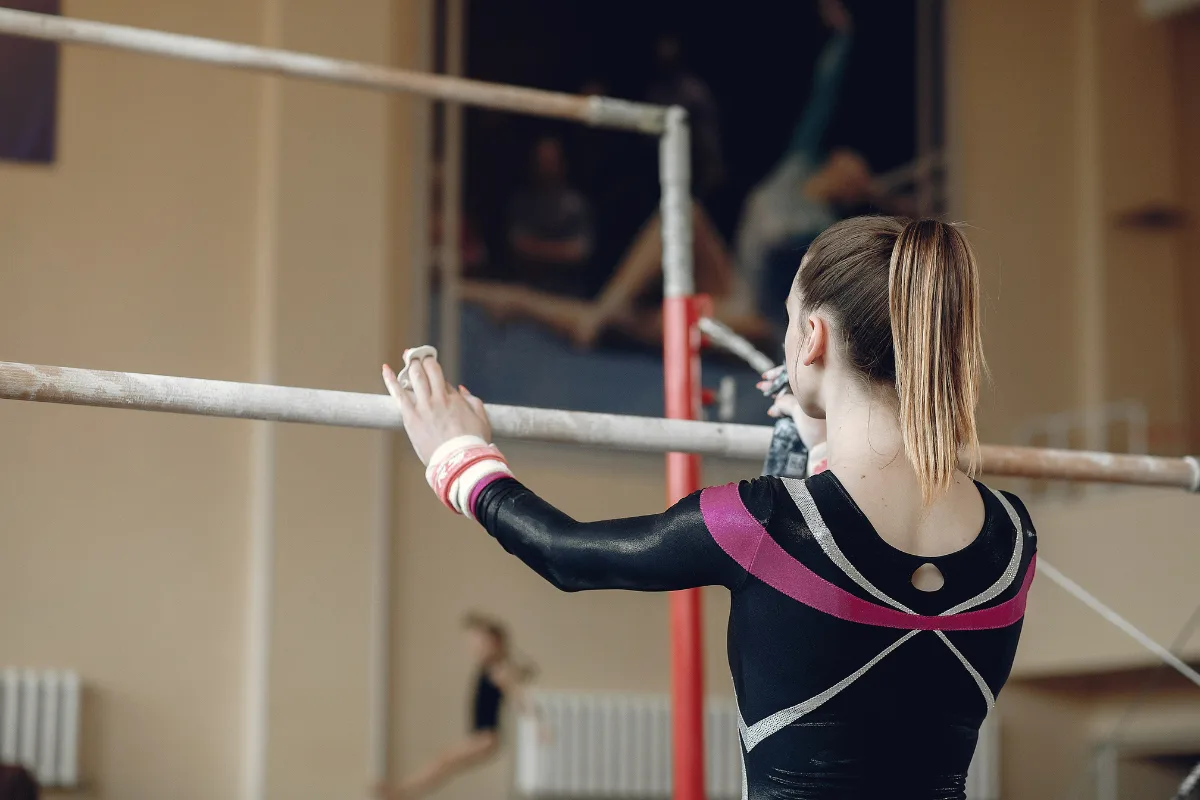
Early uneven bars routines can be hard to follow: a gymnast may circle the bar, swing away from it, then return to almost the same position. Each action has a different purpose. Across USAG Women’s Development Program Levels 1–5, gymnasts build support, swing and timing before combining more demanding skills.
Contents
This guide explains the main progression in the 2021–2029 compulsory program. It summarizes selected major elements and important distinctions; it is not the complete routine text or a coaching lesson.
For a particular level, use the Requirements Explorer. Select women’s USAG DP, the level and uneven bars, then choose Get info. For example, compare Level 2 with Level 3 to see the different mounts and dismounts. Read the result’s scope and review date: the tool uses our reviewed records, not an automatic live feed from USAG.
The bars progression at a glance
| Level | Main change to recognize |
|---|---|
| 1 | Pullover, cast and back hip circle, with prescribed low-bar dismount alternatives |
| 2 | Glide swing and return before the pullover; two casts; underswing dismount |
| 3 | A glide kip mount alternative, linked back hip circles, a front hip circle and a squat-on or pike-on jump dismount |
| 4 | Kips, casts to horizontal, work on both bars and a half-turn dismount |
| 5 | A more demanding compulsory routine, with a flyaway or the specified lower-start-value dismount alternative |
These are compulsory exercises: the gymnast follows prescribed content and allowed choices. “Developmental” does not mean that Levels 1–3 are freestyle routines. The Development Program guide explains where these levels fit.
First, a few bar terms in plain language
Front support is the upright position above the bar with the hands supporting the body and the bar near the hips. A pullover brings the legs up and over the bar so the gymnast can arrive in that position.
In a cast, the gymnast pushes away from support and lifts the body behind the bar. “Horizontal” means level with the floor. Judges use the prescribed body-line measurement, so feet that rise high while the hips stay low do not automatically make a horizontal cast.
A back hip circle goes backward around the bar while maintaining the required hip or upper-thigh contact. A glide travels outward under the low bar. A kip combines the swing and coordinated body action to reach support; it is different from pulling over the bar.
On the high bar, a tap swing uses timed body-shape changes to develop the swing. A flyaway is a release into a backward somersault dismount. These definitions help you recognize skills; learning them requires appropriate coaching and equipment.
Levels 1 and 2: support and control
Level 1 begins with a back hip pullover. The cast and back hip circle introduce moving away from the bar and circling back to support while keeping the intended shape. The published penalties identify a cast to straddle-on and sole-circle dismount branch, or an underswing dismount alternative. Those alternatives should not be combined into one mandatory sequence.
Even at this first level, simply getting around the bar is not the whole task. The gymnast should finish the pullover in extended support, control the return from the cast and maintain the prescribed shape during the circle.
Level 2 adds a glide swing and return before the pullover. Its major-element table lists two casts, followed by the back hip circle and underswing dismount. A short list that mentions only one cast can therefore leave a misleading picture of the exercise.
The glide introduces a new challenge: stretching away from the bar with the feet leading, then returning with control. It is preparation for later bar work, even though a kip is not the prescribed Level 2 mount.
Level 3: connecting circles and choosing the mount
Level 3 allows the glide-and-return with pullover route or the straddle or pike glide kip mount. A kip is therefore an allowed alternative here, rather than a skill every Level 3 gymnast must use.
The routine includes two back hip circles with attention to their continuity. It also includes a front hip circle followed by a small cast and return to front support. The small cast is part of the prescribed section, not merely an optional way to tidy up the circle.
The dismount section uses a cast to squat-on or pike-on and a stretch jump. That differs from the earlier underswing finish. For the other three events at this level, see USAG Level 3 skill requirements.
Level 4: kips and work on both bars
Level 4 starts with a straddle or pike glide kip. Its cast-to-horizontal requirement gives the gymnast a clear height target while still requiring the correct body shape and a controlled return.
The low-bar section includes the prescribed squat-on or pike-on route, or the allowed backward sole-circle alternative. Work on the high bar includes a long-hang kip, a cast to horizontal and the required swing sequence, ending with the tap swing forward with a half-turn dismount.
This is a substantial change from circling and dismounting from the low bar. The gymnast must manage the transfer, develop the swing and time the release. However, there is no separate vague penalty for looking “less advanced.” Scores come from the applicable compulsory rules and observed faults.
Level 5: understand the dismount choice
The Level 5 exercise adds more demanding bar work. One especially useful distinction for spectators is its finish: the prescribed flyaway can be performed in a tuck, pike or stretched position. The official replacement pages describe the required height and shape for these alternatives.
There is also a permitted routine option using the specified half-turn dismount with a 9.50 start value, compared with the standard 10.00 start value routine with flyaway. Start value is the score from which applicable deductions are taken; it is not the gymnast’s guaranteed final score.
A Level 5 gymnast using the allowed half-turn option is therefore not automatically performing an illegal routine. The selected option changes the scoring ceiling. For the complete sequence between the mount and dismount, consult the current compulsory manual: the publicly available replacement pages are amendments, not a complete substitute for that book.
What to watch without trying to judge every tenth
Look for controlled support positions, the required cast heights, straight arms and legs where prescribed, and a steady connection between skills. A pause, extra swing or shape error may have a different treatment depending on where it occurs.
A completed skill can still lose execution points. A missing element, an unauthorized change and a fall are different situations, so a single generic deduction list cannot reliably calculate every routine. The gymnast’s coach can explain which part of the exercise is currently being developed.
To recognize more of the movements you see, explore our Gymnastics Skill Explorer.
Reviewed September 28, 2026. Selected major-element overview; use the current USAG manual for the complete prescribed exercises.