When a Gymnastics Leotard Pinches, Rides Up or Bunches: A Practical Fit Check
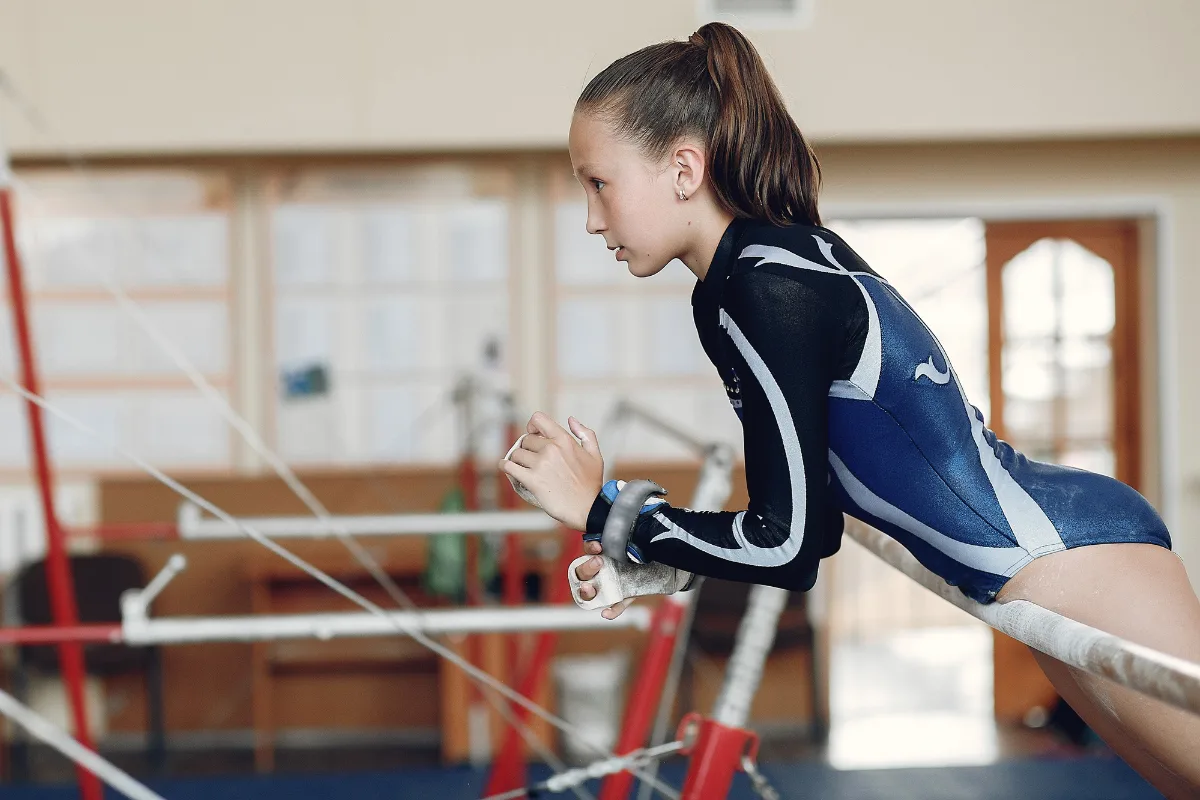
A leotard that repeatedly pinches, rides up or bunches at the front needs a fit review. The gymnast should not be expected to tolerate pain or embarrassment to keep wearing it.
Contents
- Why leotards ride up
- Check where the pressure comes from
- Measure the garment choice, not just the age label
- Try ordinary movement before training
- Uncomfortable bunching at the front
- Review the whole outfit
- Adhesives are not the first answer
- Prepare the outfit before meet day
- Competition rules need a separate check
- Separate wear problems from sizing problems
- When the problem persists
- Final Takeaway
The checks below work for all three: find where the pressure comes from, compare size and cut, then test the whole outfit before meet day.
Why leotards ride up
Gymnasts get wedgies and need clothing adjustments, even at a high level, just like anyone wearing close-fitting sports clothing. A televised routine does not show every adjustment made before or after it.
Cut, torso length, leg elastic, fabric condition and underlayers all affect how a garment sits during movement. A style that works for one athlete may not fit another the same way. Body control does not prevent it, and a higher leg cut is not a guaranteed fix.
Recurring ride-up is a reason to review the garment, not evidence that the gymnast lacks discipline or has the wrong body shape.
Check where the pressure comes from
Notice whether discomfort occurs at a leg opening, seam, shoulder strap or through the torso. A garment can fit around the chest and still be too short through the body. Another style can pinch at the leg elastic even when its overall length is suitable.
Use the manufacturer’s current size chart. GK’s measuring guide, for example, includes torso measurements rather than relying on age alone.
The following observations can make a conversation with the supplier more specific. They are starting points for a fitting check, not guarantees about which size will solve the problem.
| What the gymnast notices | What to check | A useful next step |
|---|---|---|
| Pulling at the shoulders and through the body | Torso measurement and the garment’s length | Compare the current measurements with the chart for that exact style. |
| Pressure around one or both leg openings | The shape and position of leg elastic or seams | Try another cut rather than assume the entire garment must be tighter. |
| Bunching or uncomfortable pressure at the front | Torso length, front panel, seams and underlayers together | Compare another style privately and check comfort during ordinary movement. |
| Repeated slipping or loose areas | Overall size, neckline and condition of the garment | Ask the supplier to assess the fit instead of automatically sizing down. |
Measure the garment choice, not just the age label
Check the chart for the exact product you are considering and use its stated units. A child-medium label in one range does not establish the right size in another. If measurements point to different sizes, follow the maker’s instructions or request fitting help rather than choosing the smallest number.
GK’s guide treats the torso measurement as particularly important. Its method follows a complete loop from the shoulder, down through the legs and back to the starting point. That is different from measuring only the front of the body. A trusted adult can help if the gymnast wants assistance, with privacy and comfortable fitted clothing maintained.
Record current measurements instead of reusing an old order form. Growth is one possible reason a previously comfortable garment feels different, but a change in style, underlayers or the garment’s condition may also matter. Compare those factors before assuming every problem needs the same size adjustment.
Try ordinary movement before training
With privacy and the gymnast’s comfort respected, check the outfit while raising the arms, bending and moving through comfortable positions. The fabric should remain comfortable without repeated pulling at the neckline or leg openings.
Compare one change at a time when possible. Try the same style in the supplier-recommended size, then a different cut if the pressure remains. Changing the leotard, underwear and fastening method simultaneously makes it harder to identify what helped.
A different size, cut or brand may work better. Buying a much smaller garment to prevent movement can create pressure, while a much larger one can create loose areas.
Uncomfortable bunching at the front
Fabric can bunch or press at the front of a leotard when its size, cut, seams or underlayers do not suit the wearer. It is a clothing-fit issue, not a fault in the gymnast’s body.
A torso that is too short can pull fabric upward, and a seam or narrow panel may sit uncomfortably even when the labelled size seems right. Try another cut rather than assume tighter fabric will help. Underwear can also change where seams and pressure fall, so check the complete outfit.
A different seam arrangement may feel better, but no particular fabric, lining or insert can promise the same result for everyone. Extra inserts are not necessary beginner equipment and can add new pressure. Keep the conversation private, ask where the garment feels uncomfortable and offer a chance to change. Comments about how a child’s body looks do not help resolve the fit.
Review the whole outfit
Underwear seams, a waistband or a support garment may change the fit. Try the actual combination that will be worn rather than assess the leotard alone.
Fitted shorts, a biketard or another permitted option can provide preferred coverage. The underlayer guide discusses those choices.
Adhesives are not the first answer
Some athletes use adhesive products made for skin, but beginners don’t need them. Craft glue, household adhesive and hairspray aren’t made for skin, so don’t use them to hold a leotard in place. Products designed for skin come with their own directions and may not suit every person or garment. If the skin reacts, stop and talk to your child’s doctor.
Using adhesive does not correct a wrong size or uncomfortable cut. A child should never be pressured to accept it to meet an appearance expectation.
Prepare the outfit before meet day
With the coach’s agreement, try the competition leotard and intended underlayers during a suitable practice. Check the complete combination early enough to discuss another size or permitted alternative before the meet. No outfit or product can guarantee that fabric will remain perfectly still throughout every routine.
Follow the team’s kit list and keep permitted spare clothing and underlayers accessible. The gymnast should know whom to tell if a seam tears, something slips or discomfort develops, and raise it before the next event rather than after. After use, follow the garment label; the leotard care guide explains how to approach washing and decorated fabrics.
Competition rules need a separate check
Permitted coverage and attire penalties vary by organisation. The coach should check the current rules, such as USAG women’s programme documents, before a meet. Whether a visible underlayer leads to a deduction depends on the program’s rules.
A quick clothing adjustment is not automatically a deduction either; it depends on the program’s rules and on what happens during the routine. The guide to wardrobe malfunctions explains what FIG, USA Gymnastics, Xcel and NCAA rules say.
Separate wear problems from sizing problems
Lay the clean garment out and look at the elastic, seams and straps. A twisted seam, damaged fastening or stretched section is a different issue from an otherwise intact garment that no longer suits the gymnast’s measurements.
Tell the supplier when the problem started and whether it occurs in every leotard or only this one. For example, pulling at both shoulders after a growth period suggests a different fitting conversation from a single seam rubbing from the first wear. These observations do not diagnose the cause, but they make an exchange or repair discussion more precise.
For a team order, ask whether sizing samples are available and confirm the exchange or alteration arrangements before personalisation. Check the actual sample style where possible; a comfortable practice leotard may use a different cut or fabric from the competition design.
Do not try to correct fit by deliberately overheating, soaking or stretching the garment against its care instructions. A laundering experiment may damage the finish without solving the original pressure or coverage problem.
When the problem persists
Stop using an outfit that causes ongoing pain or skin irritation and seek appropriate advice. Discuss a different uniform size or style with the coach or supplier. The practical goal is a comfortable garment that permits movement, not a gymnast who has learned to ignore discomfort.
Final Takeaway
Pinching, riding up and front bunching are fit problems with practical fixes: check where the pressure comes from, compare size and cut with the maker’s chart, and test the complete outfit before meet day.
By the meet, the gymnast should move comfortably, know whom to tell about a problem and wear an outfit that follows the program’s rules, without tolerating pain or losing privacy.