Why Gymnasts Use Chalk and How to Choose the Right Form
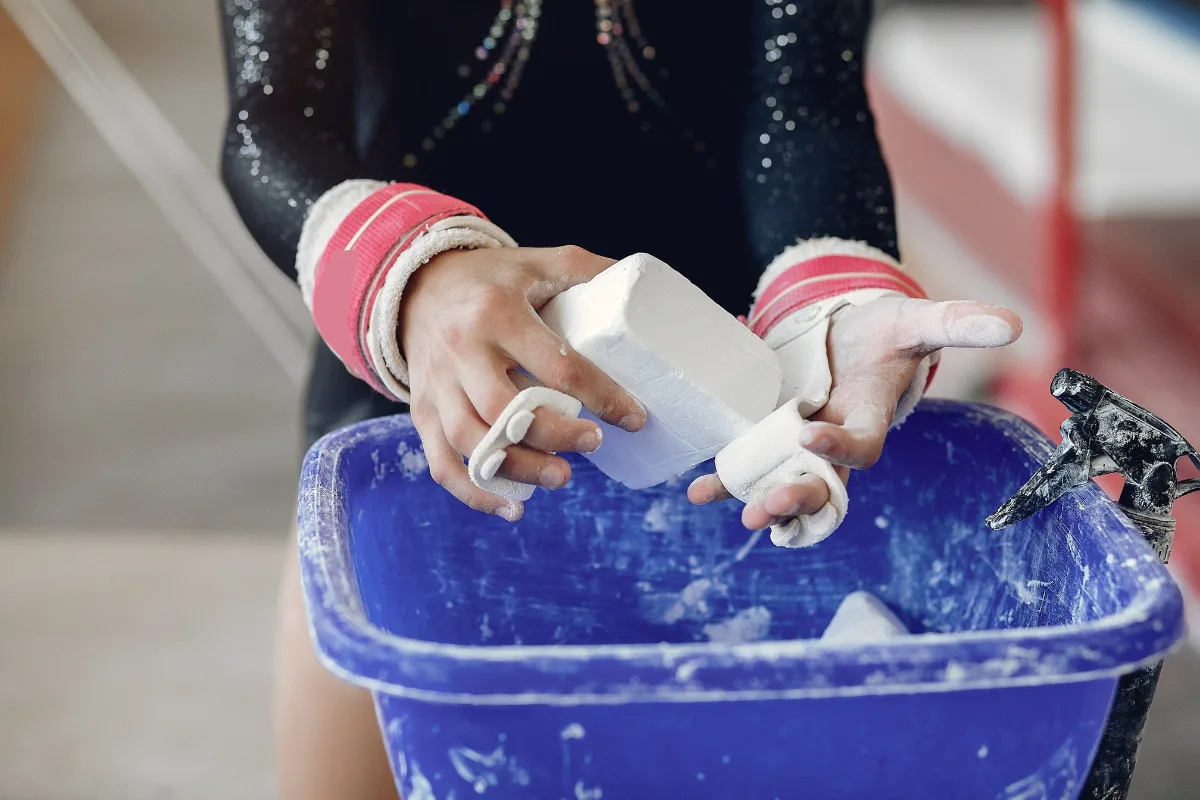
Gymnasts use chalk to help manage moisture and prepare a familiar contact between their hands, grips and apparatus. It is a useful part of training and competition, but it is not glue, a strength supplement or a guarantee against slipping.
Contents
For a beginner, the practical question is not which product creates the biggest white cloud. It is which form the gym permits, how the coach wants it used and whether it suits the equipment. Powder, blocks and liquid products differ in handling and ingredients, and competition rules can limit what reaches the apparatus.
What gymnastics chalk is made from
The white sports chalk used in gymnastics is generally based on magnesium carbonate. For example, Gibson identifies magnesium carbonate as the composition of its block chalk. “Chalk” is a product category as well as an everyday word, so a classroom or sidewalk product should not be assumed to be a suitable substitute.
Dry chalk may arrive as a solid block, broken chunks or loose powder. A block is not a different training method: rubbing or breaking it produces material that can be distributed over the hands. Packaging affects storage and application, while the full formulation determines what the product contains.
Liquid chalk combines chalk with a liquid carrier and may contain additional ingredients. Read the actual label. Two bottles with similar names need not have the same alcohol content, additives or intended use. A product sold for lifting or climbing is not automatically approved for a gymnastics rail.
Powder, blocks and liquid chalk compared
| Form | Practical difference | Question to ask before using it |
|---|---|---|
| Block | Can be rubbed onto the hands or broken into smaller pieces; still produces loose material | Does the gym provide blocks, and where should they be used? |
| Loose powder or chunks | Easy to distribute, but handling can spread dust and spills | Is there a designated bowl or container and an application routine? |
| Liquid or cream | Applied from a bottle; the carrier dries and leaves a coating | Are the ingredients, apparatus use and competition use approved? |
A liquid format does not mean the bar should be left wet. Nor does less visible dust prove that a product is better for every gymnast. The handling advantage of one format may be irrelevant if the gym or competition does not permit that formulation.
As a product-specific example, SPIETH’s magnesia range includes blocks, nuggets and an alcohol-based cream. That range demonstrates why “chalk” alone is an incomplete description. It is not a recommendation to replace the product already used by your club.
Does chalk always increase grip?
The effect depends on the contact being tested. Moisture, the amount of material, the surface and the movement all matter. “More chalk means more friction” is too simple, particularly when comparing a hand on a climbing hold with a gymnast moving around a rail.
One 2018 study of nine recreational male climbers found that participants completed more weight-assisted pull-ups with chalk in the tested open-handed and pinch-grip conditions. That is evidence for a specific task with a small group. It is not a test of children’s uneven-bar routines, gymnastics handguards or injury prevention.
A separate study of fingertip contact with different rock surfaces found that chalk’s effect on friction varied with the conditions. Most of its friction testing used a single participant, and the authors did not support a universal claim that chalk always increases or always decreases friction.
For gymnastics, the useful lesson from those limitations is to avoid oversized promises. Chalk preparation should support a trained activity on the actual apparatus. It cannot establish that an athlete is ready for a release skill, make an unsuitable handguard fit or turn damaged equipment into sound equipment.
Why the rules depend on the apparatus
Competition permission is separate from product availability. A material can be sold for sports use and still be unsuitable for a particular apparatus or prohibited in a particular program. Check the organization, season and event rather than relying on a video from an unrelated meet.
For instance, the 2026–2027 USA Gymnastics women’s Rules and Policies limit substances placed on uneven-bar rails to chalk and water. They also restrict adding chalk or water while the gymnast is actively competing on the equipment, with a separate provision after a fall when the athlete is off it.
That is a rule for that setting, not permission to introduce any liquid product that has “chalk” in its name. Ingredients and intended application still need review. It also does not tell you what is permitted on every men’s apparatus, on beam or under another organization’s rules.
Our guide to why gymnasts spray uneven bars explains the water-and-chalk preparation question in more detail. Keeping that specific setup separate from general chalk advice prevents a common mistake: copying a preparation routine onto a different surface.
Chalk, handguards and equipment care do different jobs
Chalk changes the material at the contact surface. A gymnastics handguard is a fitted piece of equipment selected for the athlete and apparatus. One does not replace the other. A beginner should not buy advanced dowel grips simply because elite gymnasts use chalk and grips together.
Cleaning is another separate task. A chalk coating does not show whether the rail has been inspected or whether the facility’s cleaning procedure has been completed. Likewise, an alcohol-containing product should not be treated as proof that a shared chalk bowl or apparatus is disinfected.
Follow the facility’s process for the equipment it owns. Do not scrub a rail, add a cleaner or spray another athlete’s grips as an improvised solution. If the surface or a handguard feels different, describe the change to the coach before continuing: slippery, unusually rough or uncomfortable are more useful descriptions than “I need more chalk.”
What to ask before buying a personal supply
Start with three questions: does the class provide chalk, are personal products allowed, and does the coach recommend a particular form for this athlete? A family may discover that nothing needs to be purchased yet. If a product is required, ask for the exact specification rather than choosing by a professional athlete’s endorsement.
Keep any approved supply in its intended container and follow the club’s storage rules. Apply it at the designated station without deliberately making dust clouds. Tell the coach about irritation or breathing discomfort instead of assuming that it is a normal part of using chalk.
The goal is a consistent preparation routine that fits the gymnast, apparatus and rules. A bigger quantity, a more expensive bottle or a stronger marketing claim is not a substitute for that match.