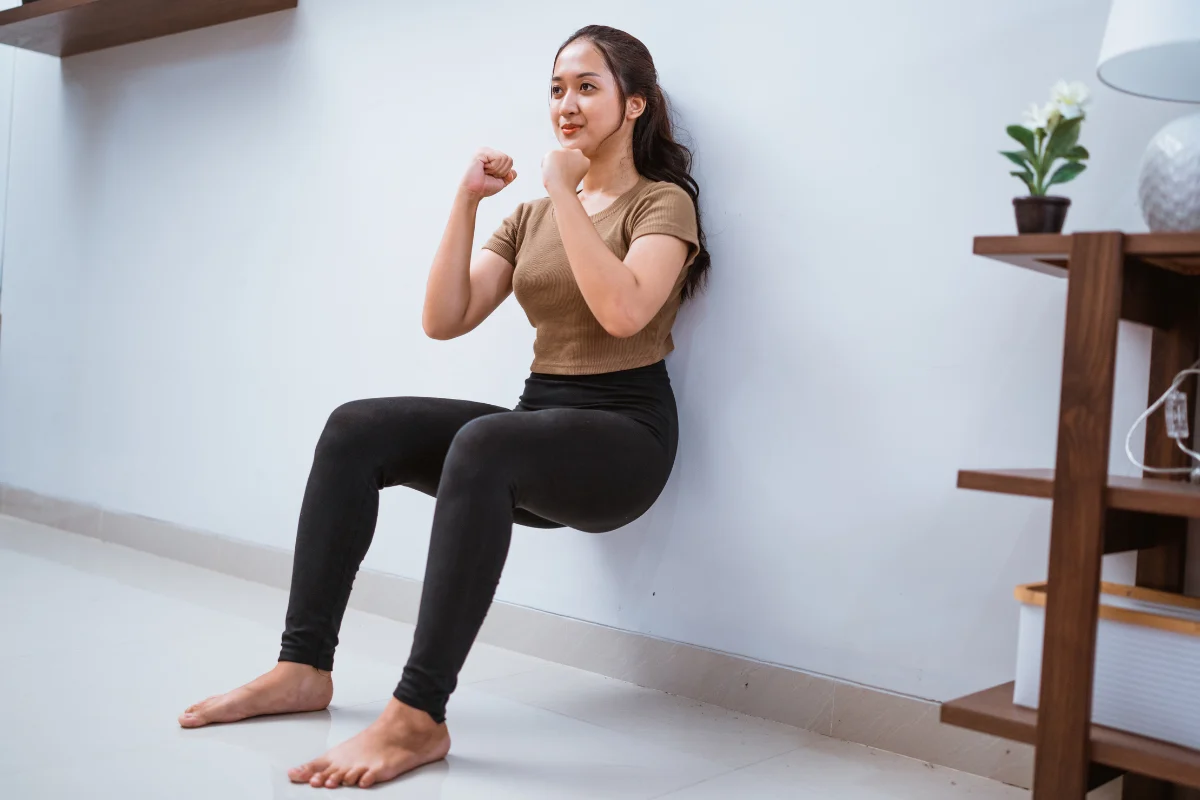
Home conditioning can support gymnastics when it reinforces suitable exercises the athlete already understands. It should have a clear purpose and fit the work performed in the gym. A demanding circuit added to every rest day can undermine recovery rather than improve preparation.
The six movements below provide a starting menu for discussion with a coach. They emphasize basic strength and control without requiring a bar, rings or an inverted position. They are not a complete gymnastics program, a rehabilitation plan or a requirement to complete all six every session.
Agree on the assignment first
The coach should know the gymnast’s current schedule, experience and any symptoms before recommending extra work. A recreational beginner and a competitive athlete training several days each week may need very different home assignments.
The NSCA’s guidance on youth development emphasizes progressive movement skills and foundational strength within a balanced program. That approach is more useful than assuming that every child needs the same timer, exercise difficulty or number of rounds.
Use clear space and a surface appropriate for the movements. An adult supervising a child should understand the assigned exercises and stopping rules. Begin with the coach’s warm-up, building gradually from comfortable movement rather than starting with maximum-effort holds.
1. Bodyweight squat
A squat provides a basic task for coordinating the hips, knees and ankles. Begin in a comfortable standing position, bend through the hips and knees to a manageable depth, then return to standing with control. Keep the feet stable and allow the knees to follow the direction of the toes.
The American Council on Exercise’s squat guide emphasizes controlled movement and consistent alignment. The appropriate depth depends on the athlete’s ability to maintain the task comfortably; forcing every gymnast into an identical position is unnecessary.
Make it easier: reduce the range or use a coach-approved supported version. Quality check: the gymnast rises without rushing, collapsing inward or losing balance. This is strength preparation, not permission to add repeated jump landings in a confined room.
2. A suitable push-up variation
Choose a version the gymnast can perform smoothly. An inclined push-up against a stable, suitable support or a knee-supported floor version can reduce the demand compared with a full push-up. The exact variation should be demonstrated by the coach.
Lower and press through a comfortable range while keeping the trunk organized with the movement. Avoid choosing a difficult version that produces only a small head dip or an uncontrolled collapse. The shoulders should move naturally with the exercise rather than being forced into a rigid position.
Make it easier: use the coach’s lower-load version or reduce the assigned amount. Quality check: the whole repetition remains controlled and comfortable. Wrist pain is a reason to stop and reassess, not to finish the target through a different, improvised movement.
3. Glute bridge
This is a lying hip-extension exercise, distinct from a gymnastics back bridge. Start on the back with the knees bent and feet on the floor. Raise the pelvis through a comfortable range, then lower with control.
The ACE glute-bridge instructions caution against pushing so high that the movement becomes excessive lower-back arching. The goal is to use the hips while managing the trunk, not to make the largest possible arch.
Make it easier: use a smaller range and fewer controlled repetitions. Quality check: the athlete can raise and lower without pain or an abrupt change in trunk position. A single-leg version is a separate progression rather than a compulsory next step.
4. Bird dog
The bird dog starts on hands and knees and challenges trunk control while the limbs move. In the familiar version, one arm and the opposite leg extend, then return before the sides change.
NASM’s exercise description emphasizes deliberate movement and a stable trunk. Reaching farther is not automatically better if the gymnast twists the pelvis or arches the back to create extra height.
Make it easier: a coach may begin with one limb moving at a time or a shorter reach. Quality check: the return is as controlled as the extension, and breathing continues. The exercise is useful as a coordination task even when the movement is small.
5. A lying trunk-control exercise
A coach may assign a simple lying exercise in which the athlete maintains a chosen trunk position while one leg or arm moves. A bent-knee variation often makes the task more manageable than extending both legs far from the body.
The important feature is the relationship between the limb movement and the trunk. If the athlete must substantially change the assigned position to complete the repetition, the range or difficulty may need adjustment.
Make it easier: shorten the movement or keep more support on the floor. Quality check: the athlete follows the demonstrated version without holding the breath or straining the neck. Progress toward more demanding hollow-body work should come from the coach’s assessment, not a generic maximum-time challenge.
6. Controlled calf raises
With both feet on the floor and light support for balance when appropriate, rise onto the balls of the feet and lower smoothly. Begin with the version already taught by the coach; there is no need to use a stair edge or add weights to make the exercise count.
Keep the movement controlled through both the rise and descent. Rolling abruptly to the outside of the feet or bouncing through the repetitions changes the task and can hide a loss of control.
Make it easier: reduce the range or use more appropriate balance support. Quality check: both sides participate as intended without pain. Our ankle-strength and control guide explains how this work differs from learning landings or treating an injury.
How to turn the menu into a session
Select the exercises with the coach, then write down the variation, amount and rest. The plan should specify what a good repetition looks like and when to stop. A short set performed with attention can be more useful than continuing until the timer ends after technique has deteriorated.
A 50-seconds-on, 10-seconds-off format doesn’t suit every exercise or every gymnast. Some tasks need time for instruction and repositioning. Others may already duplicate substantial work in the athlete’s normal sessions.
For illustration, a coach might select a leg exercise, a suitable push-up and a trunk-control task for one home assignment. That is a planning example, not a prescribed dose. More exercises or additional rounds should have a reason beyond making the session feel harder.
Recovery is part of the plan
Home work counts as training. Tell the coach what was completed and report unusual soreness, persistent pain or fatigue that affects the next session. A planned rest day should not automatically become a conditioning day.
The American Academy of Pediatrics’ overuse guidance emphasizes balancing activity with recovery. Exercises that provoke pain should stop, and ongoing symptoms need appropriate assessment.
Use the broader conditioning guide to understand how these tasks support a program. Progress can mean a more consistent movement, a suitable increase in difficulty or better control with the same workload. Exhaustion is not the only evidence that a session was useful.