Home Equipment for Gymnastics Conditioning: What Is Worth Buying?
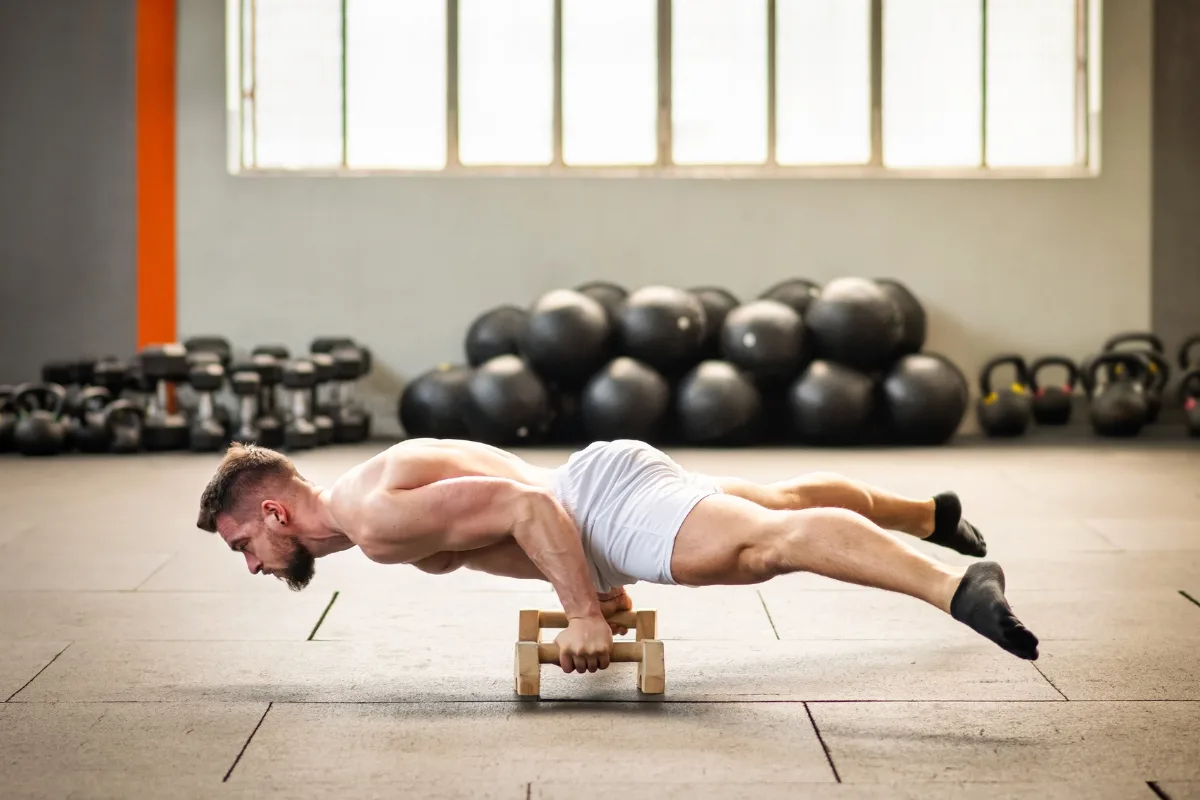
The most useful home equipment for a gymnast is equipment that supports a specific, appropriate training assignment. A mat for comfortable floor conditioning may be worthwhile. Rings without a suitable anchor, a bar without adequate clearance or a weighted vest without a training purpose may create expense and problems without improving the program.
Contents
- Buy for an exercise, not a future skill
- First purchase: an appropriate exercise surface
- Resistance bands: useful when the exercise is defined
- Parallettes and push-up handles
- Pull-up bars: installation is part of the product
- Rings: portable equipment with substantial setup demands
- Weighted vests and extra loading
- Compare purchases with a simple decision table
- Plan storage and supervision as carefully as training
Start with the gymnast’s coach: what should be practiced at home, how often and with what supervision? That answer should guide the purchase. A small conditioning space can be useful without attempting to reproduce the apparatus and landing areas of a gymnastics facility.
Buy for an exercise, not a future skill
Make a short list of the exercises the gymnast already understands and has been assigned. Identify which genuinely need equipment. Bodyweight squats, suitable lying trunk-control exercises and many basic mobility tasks may need little beyond clear space and a comfortable surface.
Equipment becomes useful when it solves a defined problem. A suitable band might provide a specific resistance exercise; stable low handles might support a prescribed grip position. Buying advanced equipment in the hope that it will teach a skill reverses that decision.
Our home-conditioning guide offers examples to discuss with a coach. It also explains why home work should fit the existing training load rather than automatically fill every rest day.
First purchase: an appropriate exercise surface
For lying, kneeling and other low-level conditioning, a mat may improve comfort and define the exercise area. It should lie securely, provide enough space for the assigned movement and suit the floor beneath it.
A soft yoga mat, a folding gymnastics mat and a landing mat are different products. Thickness alone does not tell you which impacts or activities a product is designed to handle. Follow the manufacturer’s intended use and ask the coach what surface the assignment requires.
A mat does not convert a living room into a suitable place to learn flips, handsprings or unfamiliar inversions. Furniture, ceiling height and the absence of professional assistance remain relevant even when the floor feels padded.
Resistance bands: useful when the exercise is defined
Bands can provide resistance for selected strength exercises, but the size, length and resistance profile need to match the task. A thicker band is not automatically the next progression for every movement. Some exercises use bands for resistance, while others use them to assist body weight.
Inspect the material for damage and follow the product instructions for attachments and stretching limits. Keep the line of pull away from the face. A door handle or furniture leg should not be assumed to be a suitable anchor simply because a band can loop around it.
For a child, the coach should demonstrate the exact exercise and an adult should understand the setup. A band is inexpensive and portable, but those qualities do not remove the need for supervision or make an improvised suspended skill appropriate.
Parallettes and push-up handles
Low parallel handles change the hand position and provide clearance above the floor. They may be useful for selected supports or strength exercises when the gymnast is ready for those tasks.
A more neutral wrist position can feel different from placing the palms on the floor, but handles are not a treatment for unexplained wrist pain. Their height also changes the consequences of losing support. Elevated equipment should not be introduced solely to bypass discomfort.
Check stability, base width, grip condition and the surface beneath the handles. The equipment must suit the intended user and exercise. Deeper push-ups, handstands and advanced straight-arm holds are not automatic benefits that every owner should attempt.
Pull-up bars: installation is part of the product
A bar is only as useful as its installation and the activities the complete setup permits. Doorway, wall-mounted and freestanding products have different structural requirements, clearances and limitations.
A manufacturer’s weight limit does not establish that any doorway or wall can support the product. Nor does it authorize swinging, kipping or attaching other equipment. Read the actual instructions for the model, including permitted uses, installation checks and restrictions.
For example, GORNATION’s Extend-It instructions specify installation conditions and locking checks for that particular doorway product. Those requirements cannot be generalized to every doorway bar. A renter also needs permission for any structural alteration required by the chosen installation.
For young gymnasts, a suitable pulling exercise may be better completed at the gym. Home ownership is not necessary for progress, especially when secure installation or sufficient space cannot be established.
Rings: portable equipment with substantial setup demands
Rings can support a variety of strength exercises, but they need appropriate anchors, straps, clearance and inspection. A tree branch, ceiling feature or existing pull-up bar should not be assumed suitable without establishing that the complete arrangement is intended for the load and movement.
Product restrictions matter. GORNATION’s workout-rings manual, for example, includes age restrictions, inspection instructions and storage guidance. Retail rings marketed to adult exercisers are not automatically appropriate equipment for a child.
Our rings setup guide explains the checks involved. The separate rings-versus-bar comparison helps distinguish their training uses. Neither piece of equipment is a universal first purchase for gymnastics conditioning.
Weighted vests and extra loading
Additional weight should follow a specific training decision. It changes the total load the athlete must control, even when the exercise looks similar. It can also change balance, fit and comfort.
A gymnast who finds one bodyweight exercise easy may benefit from a different variation, a more appropriate resistance exercise or a revised program. That does not automatically mean a vest is needed. Young athletes should not add external load independently because an online routine recommends it.
Leave advanced weighted work to a program designed by a suitably qualified coach. Equipment that can become loose during movement is particularly unsuitable for improvised gymnastics skills.
Compare purchases with a simple decision table
| Item | Useful when | Reason to wait |
|---|---|---|
| Exercise mat | Assigned floor work needs a comfortable, secure surface | The intended activity requires specialized landing equipment |
| Resistance band | The coach has specified the exercise and suitable resistance | No reliable attachment or instruction is available |
| Low handles | A defined support exercise benefits from the setup | The plan is to bypass pain or attempt unfamiliar inversions |
| Pull-up bar or rings | Installation, permitted use and supervision are established | The support structure or available clearance is uncertain |
| Weighted vest | A qualified coach has included it in the program | Extra difficulty is the only reason for buying it |
Plan storage and supervision as carefully as training
The NSCA’s home-gym guidance highlights access by children and pets, clear layout and safe storage. Equipment should not remain an unsupervised invitation for siblings or visitors to climb, hang or experiment.
Before purchasing, measure the usable area, include clearance around the movement and decide who will inspect and store the equipment. Ask whether the assigned exercise can already be performed effectively with what you own. A modest setup with a clear purpose is often the most useful investment.