Is There a Typical Gymnast Body Type? Physique, Height and What Research Shows
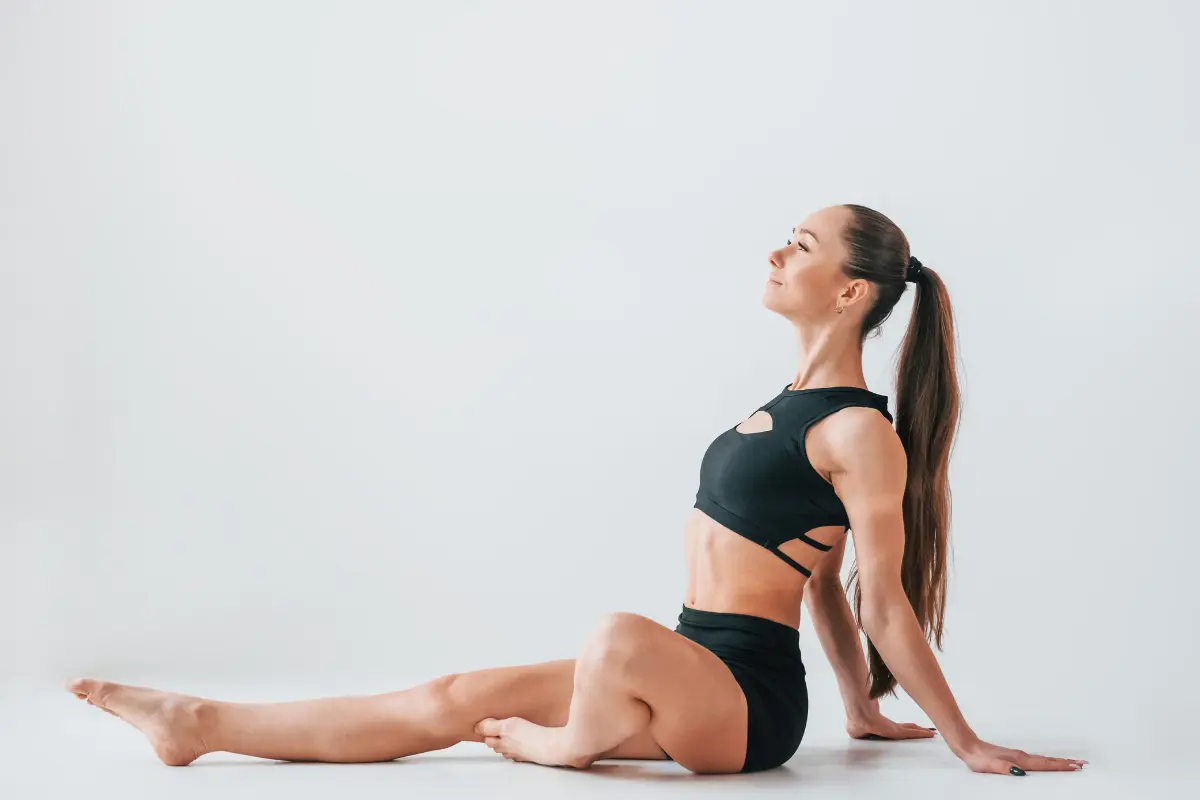
Many elite female gymnasts are relatively short and strong, and many elite male gymnasts carry visible upper-body muscle. But there is no single body type that every gymnast must have, and no rule sets a height limit.
Contents
The appearance of a selected group of elite athletes describes who reached that level. It isn’t an entry requirement for a beginner or a reliable prediction of any one child’s future.
To understand the “gymnast body” idea, separate three questions: what researchers have measured, how body dimensions interact with gymnastics skills, and what a particular athlete needs to learn and stay healthy.
What “body type” actually means
In casual conversation, the phrase mixes height, limb proportions, muscle development, body composition and posture. Those are different characteristics. Calling someone “compact” doesn’t establish her strength, flexibility or technical ability.
| Characteristic | What it describes | What it doesn’t establish |
|---|---|---|
| Height and proportions | Body dimensions and relative segment lengths | A guaranteed event specialty |
| Body composition | The estimated contributions of different tissues | A complete measure of health or performance |
| Strength | Force capability in a specified task | Technical readiness for every skill |
| Flexibility | Available movement at particular joints | Control of that range during a routine |
Researchers sometimes summarize physique with a somatotype, a measurement-based description using components such as mesomorphy (relative muscularity) and ectomorphy (relative linearity). It is not the same as looking at a photograph and assigning someone a permanent category.
What research can and can’t show
A 2024 study by González Macías and Flores measured 48 artistic-gymnastics and aerial-hoop participants using the Heath–Carter somatotype method. The group mixed ages, sexes, activities and competitive backgrounds. It found variation in physique and links with flexibility, but because it looked at one group at one time, it can’t prove that training produced every difference or define an ideal body.
A 2019 study of 53 Polish male gymnasts, assessed before their 2017 national championships, found that seniors were more muscular in build and stronger in grip and leg power than juniors. Floor and vault specialists also had more muscular builds and better jumping results. Those are associations within one selected group. Training may shape physique, and physique may also influence which events an athlete gravitates toward.
Elite samples are not beginner samples. Elite athletes have come through years of training and selection, while many who started the sport took other paths. The 2013 review of growth and maturation in artistic gymnasts discusses selection and maturation when interpreting gymnasts’ smaller average size. A short elite group doesn’t by itself show that gymnastics reduces adult height; our growth guide covers that question.
Is there a height limit in gymnastics?
No. None of the rulebooks used for FIG, USA Gymnastics or NCAA competition sets a minimum or maximum height. Elite competition has age rules, and judges deduct for execution errors such as bent knees, form breaks and landing steps, not for a gymnast’s height.
Equipment is standardized but adjustable. Under the FIG Apparatus Norms, the uneven bars stand 255 cm (high bar) and 175 cm (low bar) above the floor, and the distance between them adjusts from 130 to 181 cm. Gymnasts whose feet touch the mat during a routine may have both bars raised by 5 or 10 cm. The beam is the same for everyone: 125 cm high and 10 cm wide.
Height does change the physics. A longer body spreads mass farther from the axis of rotation, which makes some rotations more demanding; that’s one reason gymnasts tuck to spin faster. A lower center of mass can make balance feel more forgiving. Longer limbs, on the other hand, give reach and long lines. None of this ranks one height as better at gymnastics overall.
For the numbers, see the average height of female gymnasts at each Olympics and the tallest female gymnasts in Olympic history.
What shapes a male gymnast’s physique?
Men compete on six events: floor exercise, pommel horse, still rings, vault, parallel bars and horizontal bar. Across them, athletes produce force through the legs and trunk as well as the upper body, combining takeoffs, landings, swings, supports and strength holds.
| Event | What a physique photo can’t show |
|---|---|
| Floor and vault | How running, takeoff, flight and landing are combined |
| Pommel horse | How continuous support and body movement are coordinated |
| Still rings | How strength positions are combined with swings and control |
| Parallel bars and horizontal bar | How support or hang changes through swings, releases and regrasps |
Supporting and moving the whole body through the hands is heavy work, so “bodyweight training” doesn’t mean easy training, and gymnasts also use weights in conditioning. No single hold or exercise explains a gymnast’s muscle.
Muscle size, strength, power and skill are related but different. A larger upper arm can’t substitute for the timing of a swing or the balance of a handstand. Male Olympic gymnasts have averaged about 166–167 cm (5′5½″ to 5′6″) since 1996; our guide to the average height of male gymnasts has the details.
Why gymnasts develop strong legs
Female and male gymnasts alike build strong legs through years of sprinting, jumping and landing. On floor and vault, the legs help produce takeoff; on every event, they help control landings. On beam they support turns, leaps and landings on a narrow surface, and on bars they’re part of the changing body shape during swings.
The thigh isn’t one muscle. The quadriceps at the front, the hamstrings at the back and the adductors on the inner thigh do different jobs, working with the hips, lower legs and trunk (OpenStax lower-limb anatomy).
Thigh size alone doesn’t measure strength, health or ability, and a photograph can’t show how much is muscle or fat. Neither is a measure of an athlete’s worth. What matters is what the legs help her do.
What parents and beginners should take from this
Choose instruction based on the athlete’s experience, goals and needs, not on whether a child resembles an Olympian. Ask the coach what the gymnast is learning, which prerequisites need attention and how progress will be assessed. Our guide to choosing a gymnastics class suggests questions for that conversation.
Be careful with comments about bodies. The American Academy of Pediatrics notes in its young-athlete guidance that even a casual weight-related comment from a coach can raise a young athlete’s risk of unhealthy eating. A 2023 IOC-associated review found that body composition did not help with early talent identification in the evidence it reviewed. Concerns about growth, nutrition or health belong in a private conversation with a health professional.
Common questions
Is there a height limit in gymnastics?
No. FIG, USA Gymnastics and NCAA rules set no minimum or maximum height. Bars can be adjusted for taller gymnasts, and judges deduct for errors, not size.
Are taller gymnasts at a disadvantage?
Some skills feel different. Rotations can be more demanding and bars need more clearance, but longer limbs also bring reach and long lines. Taller gymnasts are less common at the elite level, partly because of selection, but height doesn’t decide who can compete.
Why are male gymnasts so muscular?
Six events demand repeated support, swings, holds and powerful takeoffs. That work builds muscle, but individual build, age, years of training and event focus all vary, so there’s no single male gymnast physique.
Do gymnasts have to be skinny?
No. There’s no single best weight for a sport, and a scale reading doesn’t show strength or technique. Our guide to height and weight research in gymnastics explains what the numbers can and can’t tell you.
Final Takeaway
There is no single gymnast body type. Elite gymnasts tend to share strength built by their sport, but heights, proportions and builds vary widely, among both women and men.
No rule sets a height limit, and equipment adjusts for different bodies. A gymnast’s progress is better judged by her skills, control and health than by how her body compares with an Olympian’s.