Height and Weight in Elite Gymnastics: What the Research Actually Measures
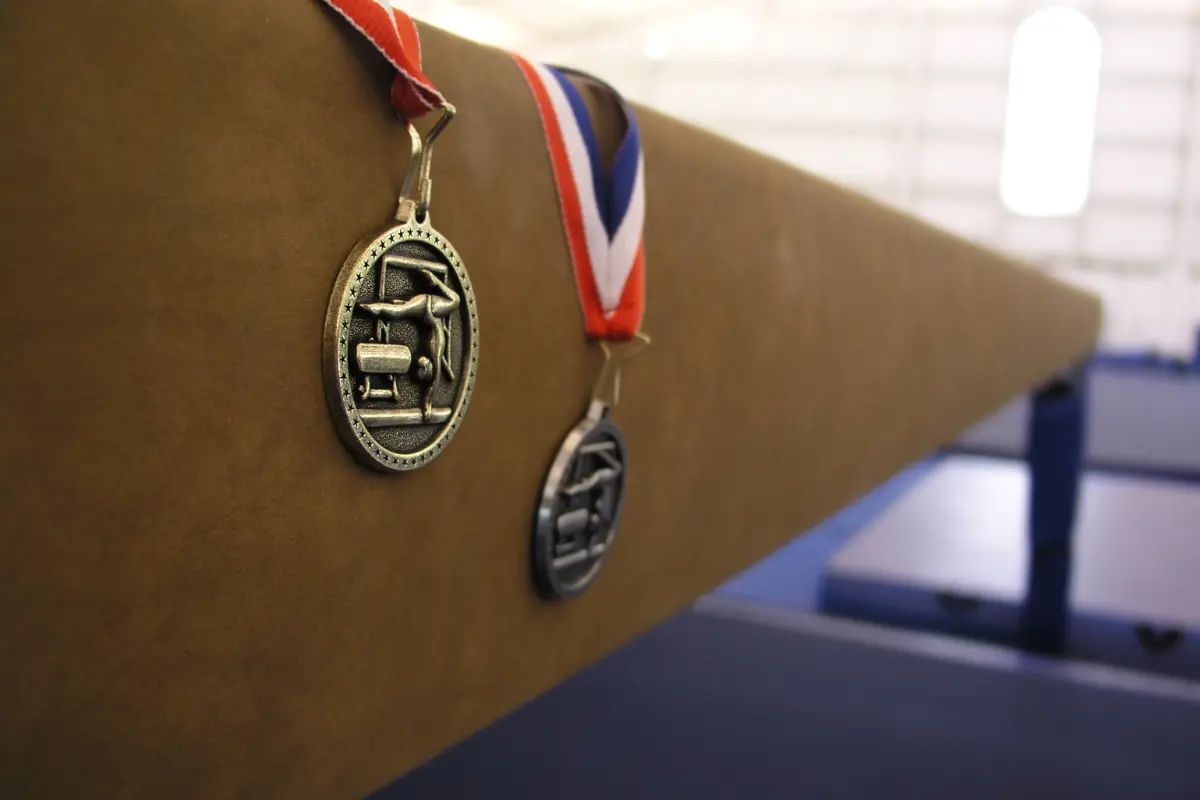
Height and weight figures for elite gymnasts can come from very different sources: an Olympic biography, measurements taken at a national championship, or a study combining young participants from several activities. Those sources should not be treated as interchangeable.
Contents
- Three studies, three different populations
- What historical Olympic data can show
- How much do female gymnasts weigh?
- What direct measurements add
- Why a youth gymnastics headline needs a methods check
- Height, mass and body composition are different measures
- How to read an average without turning it into a target
- What should families and coaches do with the information?
- Keep the population attached to the number
A useful comparison starts by identifying who was studied, when the measurements were collected and how they were obtained. This guide explains how to read that evidence without turning a group average into a body target or presenting a youth study as an Olympic norm.
Three studies, three different populations
| Research | Population and method | Useful scope |
|---|---|---|
| Olympic historical analysis, published 2020 | Archived athlete information across six Games, 1996–2016 | Comparing documented Olympic groups over time |
| Polish study, published 2019 | 53 male artistic gymnasts examined around the 2017 national championships | Comparing measured characteristics and fitness within that sample |
| Mexicali study, published 2024 | 48 participants across artistic gymnastics and aerial hoop | Examining body characteristics and flexibility in a mixed, mainly amateur sample |
The table is an editorial comparison of study designs, not a combined analysis. The participants, settings and measurements differ too much to add their averages together and call the result “the typical Olympic gymnast.”
What historical Olympic data can show
The 2020 Olympic analysis reports 2016 averages of 154.64 cm and 48.18 kg for 97 women, and 167.07 cm and 62.93 kg for 94 men. These are archived cohort statistics, not prescribed measurements or verified values for today’s athletes.
For a height-focused comparison across all six Games, the Olympic height article provides the historical table. Keeping the dates visible prevents an older study from being relabeled as a current average simply because a webpage was updated recently.
Height and mass also require separate checks for missing records. A researcher may have one measurement for an athlete without the other. A table’s sample count should therefore be read for each variable rather than assumed to match the entire entry list.
How much do female gymnasts weigh?
No single average covers recreational, junior, college and elite gymnasts. The most complete historical figures describe Olympic fields. In the 2020 analysis, women’s artistic gymnasts averaged 42.41 kg at Atlanta 1996 and 48.18 kg at Rio 2016, a rise of 5.77 kg over two decades in which the Olympic fields also grew older (average age rose from about 17 to about 21). The men’s averages barely changed, from 62.39 kg to 62.93 kg.
Those numbers describe selected Olympic athletes; they are not targets. The American Academy of Pediatrics’ guidance for young athletes states that there is no single “best” weight for a given sport. A scale reading also says nothing about muscle, bone, strength or technique.
Lower body weight doesn’t by itself improve a skill. Strength, power, timing and body position decide how a skill goes, and cutting food to lower weight can undermine the training and recovery a gymnast needs. Our fueling and strength guide covers supporting that work. Questions about a child’s weight or growth belong with the child’s doctor; see also Does Gymnastics Stunt Growth?
What direct measurements add
In the 2019 Polish study, researchers examined 19 senior and 34 junior male artistic gymnasts. They recorded body dimensions and composition estimates alongside fitness tests, including handgrip strength, balance and jumping. The measurements were taken around the 2017 championships, not at the Olympics.
Direct measurement provides information that a brief biography may omit, such as the instruments and procedures used. It still does not make the sample representative of every gymnast. Age groups, competition levels and the way participants were recruited remain relevant.
Comparing juniors with seniors also combines several possible influences. Older athletes may differ in maturation, training history and selection. A difference between groups does not establish that one exercise routine caused the difference, or that every junior will eventually resemble the senior average.
Why a youth gymnastics headline needs a methods check
The 2024 Mexicali study included 48 participants: men’s and women’s artistic gymnastics participants and women in aerial hoop. Most were amateurs. Its overall average age was 12.5 years, with average height about 150.2 cm and mass about 43.2 kg.
Those details change how the findings can be used. The combined figures cannot accurately be presented as measurements of 48 Olympic artistic gymnasts, or even as a women’s artistic-only average. Readers need the actual sample description before interpreting the numbers.
A useful habit is to read the methods section before the headline conclusion. Check the activities included, age range, experience level and number of participants in each subgroup. A broad label can conceal a much narrower—or more mixed—research population.
Height, mass and body composition are different measures
Standing height describes one dimension. Body mass describes the total measured by a scale. Body composition concerns the components of that mass, such as fat and fat-free tissues. None of those terms can be substituted for the others.
Two athletes of the same height and mass can differ in proportions and composition. A photograph cannot supply the missing measurements, and a weight listing does not reveal strength, endurance or the quality of an athlete’s diet.
Even body-composition estimates depend on the measurement method and its assumptions. A useful report identifies the method instead of treating every device or equation as interchangeable. Comparing values collected by different procedures requires more care than comparing their final percentages.
How to read an average without turning it into a target
An average answers a descriptive question about a group. It does not automatically answer a practical question about one athlete. For example, a team’s mean mass cannot establish what another gymnast should weigh to learn a skill.
Imagine a fictional study comparing two training groups. If one group is older and more experienced, a difference in average strength could reflect those differences as well as training. Merely observing the groups cannot isolate the cause. A stronger causal claim needs a design that addresses competing explanations.
The same reasoning applies to competitive success. Showing that medalists share a feature is not enough to prove that changing that feature would improve another athlete’s performance. Skill preparation, opportunity, health and selection may all affect who appears in the final sample.
What should families and coaches do with the information?
Use research to ask better questions about training and measurement, not to create informal weigh-in standards from internet charts. A developing gymnast’s health and growth should be considered individually by appropriate professionals.
The 2023 IOC-associated body-composition recommendations emphasize the limits of using body-composition information and the need for an appropriate professional team. A public list of elite measurements is not a substitute for that process.
The body-type guide explains related questions about physique, appearance and training demands in women’s and men’s gymnastics.
Publication year and collection year should also remain separate. A paper published in 2019 can describe measurements collected in 2017. The publication date tells readers when the analysis appeared; the collection date identifies the athletes’ circumstances at measurement. Neither date should quietly become the date of a later website revision.
Keep the population attached to the number
A reliable description includes the group, date, measurement method and limitations. “Recorded Olympic athletes in 2016” conveys something different from “junior competitors at a national championship.” Preserving that distinction makes research useful without asking it to answer questions it never tested.