Gymnasts and Dancers: Comparing Training Demands Without Body-Type Myths
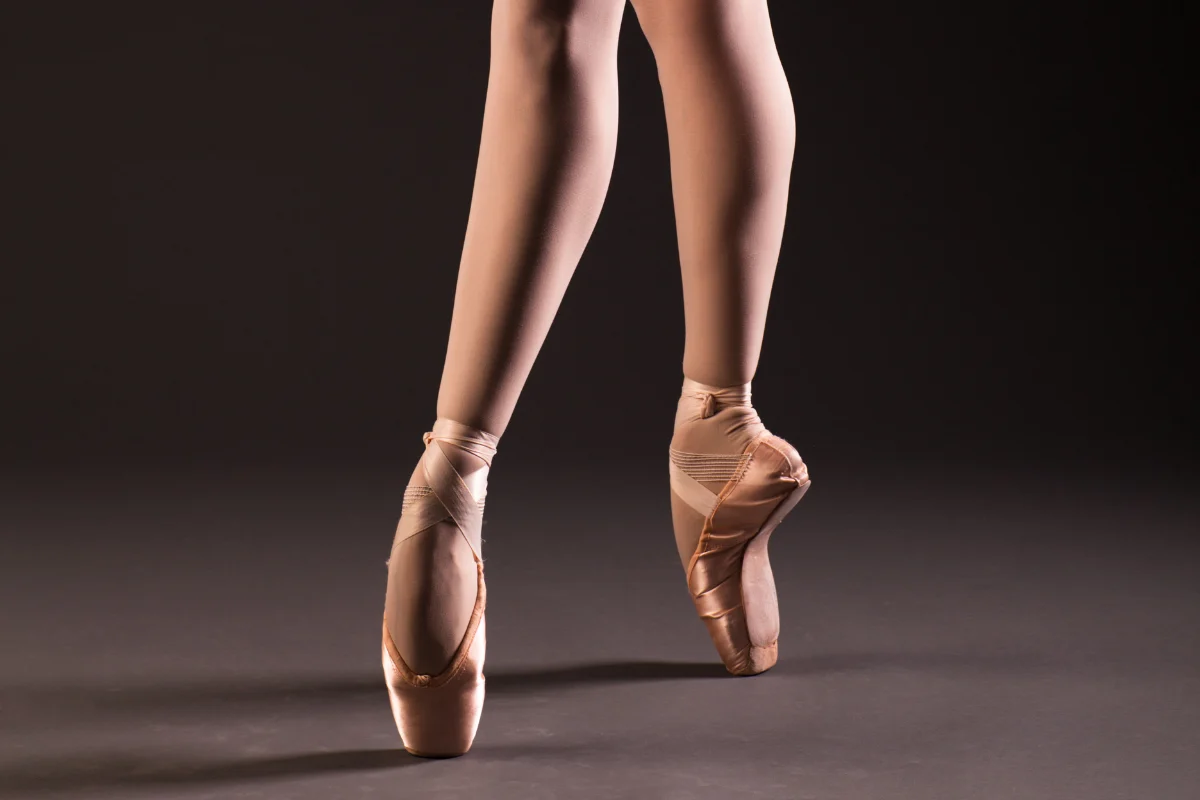
A gymnast and a dancer may train differently, but neither activity creates one fixed body type. Artistic gymnastics includes swinging, supporting, tumbling and balancing; dance includes many styles with different combinations of jumping, turning, floorwork and partnering. A useful comparison looks at those demands before making claims about appearance.
Contents
- Compare the activity before comparing the athlete
- Where the movement demands overlap
- Dancers use explosive power too
- Gymnastics strength is not a separate kind of muscle
- Visual line is different from bone length
- Flexibility needs control in both activities
- How cross-training can be useful
- Choose instruction by goals, not appearance
The familiar contrast between a “compact, powerful gymnast” and a “long, lean dancer” leaves out too much. Dancers need power, gymnasts need artistry, and people with varied physiques take part in both.
Compare the activity before comparing the athlete
A competitive male rings specialist and a beginner ballet student differ in much more than their chosen activity. Age, experience, event specialization and training volume all change the comparison. Putting their photographs side by side cannot isolate an effect of training.
Even within artistic gymnastics, a rings routine and a women’s floor routine place different demands on the athlete. Likewise, classical ballet, contemporary dance and styles with substantial floorwork do not form a single physical category.
For a useful discussion, name the task: supporting body weight through the arms, producing a jump, controlling a turn or sustaining movement through a performance. These can be observed and assessed more directly than an assumed “gymnast look” or “dancer look.”
Where the movement demands overlap
| Quality | Artistic gymnastics example | Dance example |
|---|---|---|
| Power | A takeoff for tumbling or a leap | A high jump or rapid traveling sequence |
| Strength | Supporting and pulling on apparatus | Controlling positions or lifting a partner |
| Balance | A beam position or handstand | A controlled single-leg position or turn |
| Mobility and control | Showing a required body shape | Moving through a chosen range with precision |
| Coordination | Connecting skills and landings | Coordinating steps, directions and musical phrasing |
The examples identify shared qualities, not identical techniques. A gymnast’s landing preparation and a dancer’s transition into the next step may have different purposes. Similar physical qualities still need to be applied to the movement being learned.
Dancers use explosive power too
The claim that dancers rely on control “instead of” explosive movement does not fit jumping. Leaving the floor requires a forceful takeoff, even when the performance makes the movement look effortless.
A study published in 2022 examined 24 young ballet dancers from one school. The group receiving additional lower-limb training improved its countermovement-jump performance over 16 weeks. The groups differed at baseline, and the study did not compare dancers with gymnasts.
The appropriate lesson is that strength and jumping performance are relevant to dance. The paper does not show that every dancer needs the same program or that a measured improvement guarantees a better stage performance. It also provides no basis for ranking the physiques of the two activities.
An IADMS report on 61 collegiate dancers similarly discusses relationships between lower-body power and balance. It is a reminder to examine performance qualities together rather than divide athletes into “powerful” and “graceful” groups.
Gymnastics strength is not a separate kind of muscle
Terms such as “dense gymnast muscle” and “long dancer muscle” are usually informal descriptions of appearance. They are not sufficient measurements of muscle structure or function. A photograph cannot show how much force a person can produce or how effectively that force is used in a skill.
Gymnastics preparation can include bodyweight exercises, apparatus work and external resistance. Dance preparation can also include resistance training. The equipment alone does not determine whether an athlete becomes stronger, gains muscle or develops endurance; the task and training program matter.
The NSCA’s youth resistance-training statement describes several training methods, including bodyweight work, bands and weights. It emphasizes appropriate instruction and progression. There is no sound reason to label all bodyweight work “gymnast conditioning” and all resistance work “bodybuilding.”
Visual line is different from bone length
A straight knee, an extended foot and a deliberate arm position can make a movement’s line easier to see. That is a presentation and technique question. It does not establish that training has lengthened the athlete’s bones or created a different anatomical class of muscle.
Clothing, lighting, camera angle and pose also affect comparisons. A flexed-arm photograph emphasizes different features from a full-body dance position. Neither is a neutral measurement of physique.
Our gymnastics body-type guide explains the limits of drawing conclusions from selected elite athletes. It is especially important to avoid applying those impressions to children whose bodies are still developing.
Flexibility needs control in both activities
Reaching a position with assistance and actively controlling it are different abilities. A performer may have a large available range but still need strength and coordination to use it during a jump, turn or balance.
Neither “soft dancer flexibility” nor “tense gymnast flexibility” describes a complete training method. The useful questions are which joint movement the task needs, how the person enters and leaves the position, and whether the movement can be controlled comfortably.
Instruction should also respect the learner’s current ability. A dramatic split or backbend seen in an elite performance is not a reason to force the same range in another person. Persistent pain is a reason to stop and seek appropriate assessment, not evidence that a stretch is working.
How cross-training can be useful
A gymnast might study dance to improve timing, transitions and expressive movement. That goal is more specific than trying to acquire a “dancer body.” A dance student might pursue supervised gymnastics basics to develop a particular support or inversion skill, rather than copy an advanced tumbling routine.
The instructors should agree on the intended benefit and account for both schedules. Extra classes still add work. Our dance-training guide for gymnasts focuses on choosing useful goals, while the conditioning and strength guide explains how physical preparation fits together.
Progress can be recorded in the task itself: clearer changes of direction, more consistent timing, or a controlled position that previously needed assistance. Those observations are more useful than asking whether a gymnast now looks slimmer or a dancer looks more muscular. The aim of cross-training should be an identifiable improvement in movement or capacity.
Choose instruction by goals, not appearance
A beginner’s interest, comfort with the class and access to suitable teaching are better starting points than a physique label. Comparing movements can reveal useful training differences. Comparing bodies as though each activity has one required shape usually obscures them.