Eight Gymnastics Meet Hairstyles and How to Choose a Workable Style
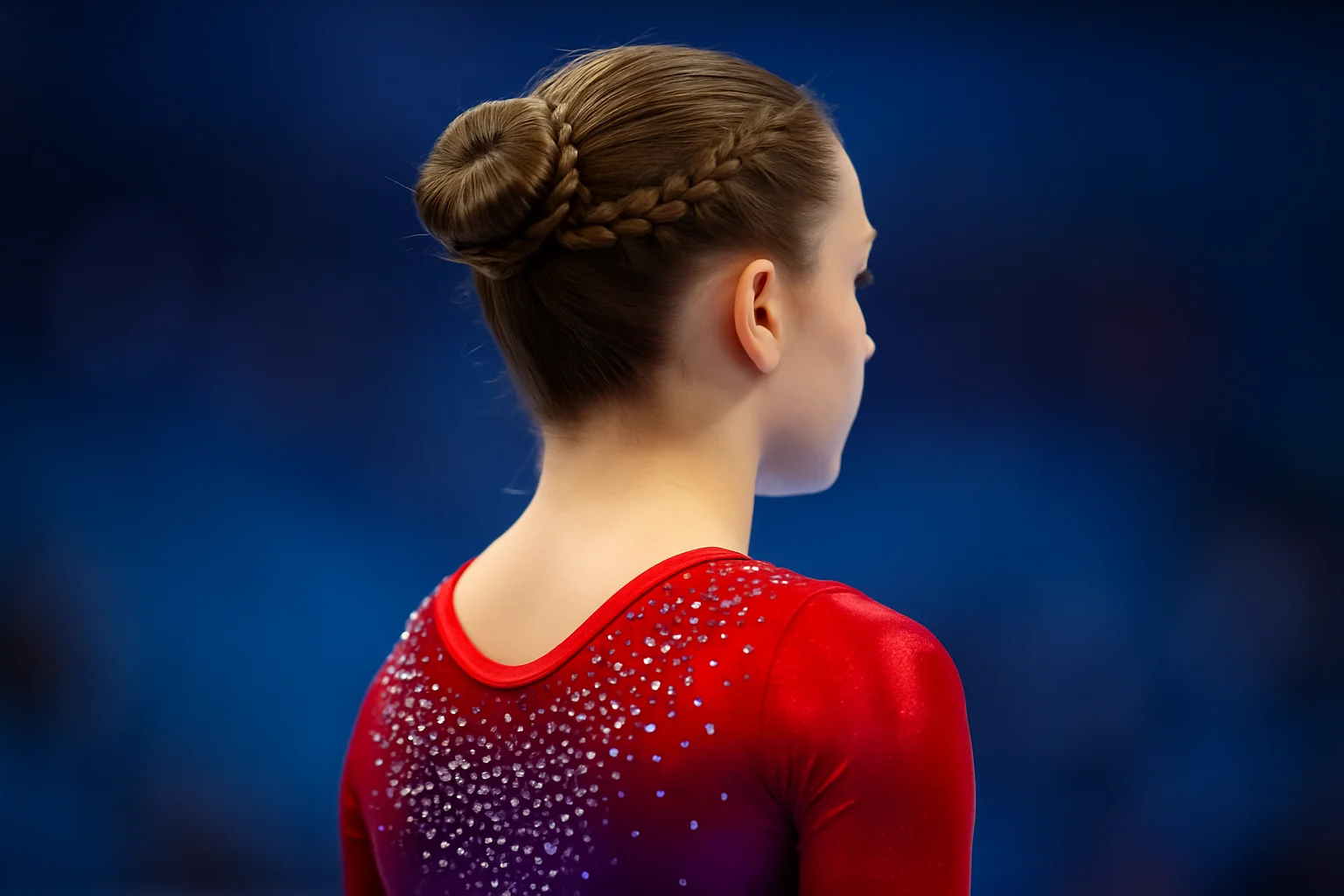
A competition hairstyle needs to work through warm-up and every apparatus in the gymnast’s session. It should keep hair out of the eyes, contain loose length and remain comfortable. A complicated design is not automatically more secure than a simple one.
Contents
The eight options below are starting points to test with the gymnast and coach. Hair length, texture, existing styling and personal preference all matter. You do not need to make every athlete’s hair look identical to meet a practical requirement.
Check the rule before choosing the style
The 2026–2027 USAG women’s Rules and Policies require hair to be secured away from the face so it does not obscure vision of the apparatus. That instruction does not prescribe a particular named braid or bun for every gymnast.
Other organisations and teams may have different requirements. Ask the coach about the actual meet, any team appearance instructions and which accessories are suitable. A photograph of an elite gymnast is not a substitute for checking the rules of a local program.
Comfort belongs in the decision too. The American Academy of Dermatology warns that hairstyles that pull on the hair can lead to hair loss, known as traction alopecia. A style that hurts should be loosened or changed; pain is not evidence that it will hold better.
Eight options to compare in practice
1. A simple secured ponytail
A ponytail is a practical starting point when the loose length stays clear of the face and apparatus. It is quick to prepare and relatively easy to adjust, which can make it useful for a gymnast who dislikes lengthy styling.
Check what happens to the finished tail during the normal lesson. Raising the tie higher does not necessarily solve a problem with long hair; it can simply change where the tail swings. If the gymnast repeatedly moves hair away from the eyes, consider containing the length rather than adding tension at the scalp.
2. A braided ponytail
Braiding the ponytail can gather loose strands into one more manageable length. This may suit hair that otherwise separates or tangles during activity, provided the gymnast finds the arrangement comfortable.
The braid still has weight and can still swing. Check the end as well as the tie at the base, and ask whether it interferes during the athlete’s usual coached movements. A braid that reaches an awkward place may need gathering into a more compact arrangement. Do not assume that every braid is ready for a meet simply because the strands stay together.
3. A French braid with contained ends
A French braid gathers hair progressively along the head, which can help contain sections that do not stay in an ordinary ponytail. The final loose length still needs a suitable finishing arrangement.
Try the style before competition day so the person preparing it can judge the time and the gymnast can report any pulling. The goal is to gather the hair comfortably, not to create the tightest possible pattern. Check the hairline and the area where the braid finishes, particularly if the athlete says turning their head feels uncomfortable.
4. Two braids gathered together
Two braids can help organise hair from either side of the head. Depending on length, their ends may be secured separately or brought together into an arrangement approved by the coach.
Compare the finished shape rather than aiming for perfect visual symmetry. One side should not be pulled harder simply to make the pattern look identical in photographs. Also check the combined bulk at the back: bringing two long braids together may solve loose length while creating a new problem with weight or fastening placement.
5. A compact bun
A bun contains longer hair in a smaller area and can work well when a loose tail is inconvenient. Its position matters, because a bulky arrangement may press awkwardly during some movements or when the gymnast puts on warm-up clothing.
Test the actual size and fastening method during training. A bun that is comfortable while standing may behave differently through a full lesson. Ask the gymnast where it feels heavy or catches, and check that accessories remain secure. More pins or a tighter tie should not be the automatic answer to every problem.
6. A braided bun
A braided bun combines gathered strands with contained length. It may be useful when a gymnast already likes a braid but wants the end kept closer to the head.
The extra styling steps can also add bulk and preparation time. Compare it with a simpler bun before deciding that it is the better meet option. The successful version is the one that stays manageable without discomfort and can be prepared reliably. If it takes several painful attempts to reproduce, reconsider the arrangement before competition morning.
7. Gathered twists, braids or locs
Existing twists, braids or locs can be arranged according to their length and the gymnast’s preferences. The practical questions remain the same: is vision clear, is loose length contained and does the arrangement feel comfortable during the activity?
There is no need to change the hair’s texture or dismantle an established style merely to copy another teammate’s appearance. Discuss workable ways to gather it with the athlete and, when helpful, their usual stylist. Pay attention to the combined weight and pulling created by gathering several sections into one point.
8. A short-hair arrangement
Short hair may need only the front or side sections secured away from the eyes. A full ponytail or bun is not always possible or necessary. Ask which small bands or clips the coach permits and check how they behave in practice.
For layered hair, focus on the pieces that actually fall forward. Trying to force every short strand into one tight tie may be less comfortable than a simple arrangement suited to the cut. Recheck after warm-up, when movement may reveal loose sections that were not obvious at home.
Test through the ordinary lesson
Choose a practice when the coach can observe the style across the athlete’s usual activities. The test should happen during supervised training; there is no reason to rehearse unfamiliar gymnastics at home for a hair check.
Afterward, ask three questions: did hair enter the eyes, did the style need repeated adjustment, and did anything pull or press uncomfortably? Change the specific feature that caused the problem. A different placement or a simpler style may help more than additional product.
Make meet-day preparation easy to repeat
Prepare permitted spare ties and any familiar accessories in a small, accessible kit. Allow enough time to adjust the style without making the gymnast late for arrival or warm-up.
Protect the leotard while using styling products and follow the garment maker’s directions. Our leotard care guide explains why sprays and delicate finishes need attention.
If hair becomes loose during the session, the gymnast should tell the coach and use an appropriate break to fix it. For the everyday routine behind a reliable meet style, see comfortable hairstyles for practice. Familiar, manageable preparation leaves more attention for the gymnastics itself.