By Level 4, the beam routine starts to look and feel more like real gymnastics. You’re still mounting with the familiar jump-to-front-support, but now you’re adding vertical handstands, 120-degree split jumps, a full turn in passé, and a cartwheel into a side-handstand dismount, these moves set you up for even bigger skills ahead.
Mount and Beginning Shapes
The gymnast salutes, then performs a jump to front support. From here, the non-dominant leg kicks up behind into a tucked shape. Arms stay straight, toes pointed. They slide the foot onto the beam, transition into a seated position with the dominant leg forward, and lift into a butterfly-arm shape, looking down the beam with intent.
The gymnast lowers their hands to the beam, steps up to stand, and prepares for the next shape: a sharp pose with drama and strong leg lines. Coaches often cue “squeeze the quad” and “hang the foot straight down,” helping gymnasts maintain tall posture and body control.
Tap and Press Sequence
From the standing pose, the gymnast presses one foot behind into a light tap. This isn’t a lazy rest, but a clear and active placement. The chest stays tall, and the tap is paired with a supple arm motion.
Next comes a controlled press: the arms sweep down and forward into a lifted pose, paired with a reach and chin lift. The goal is to show height and control, not to rush.
Vertical Handstand and Landing
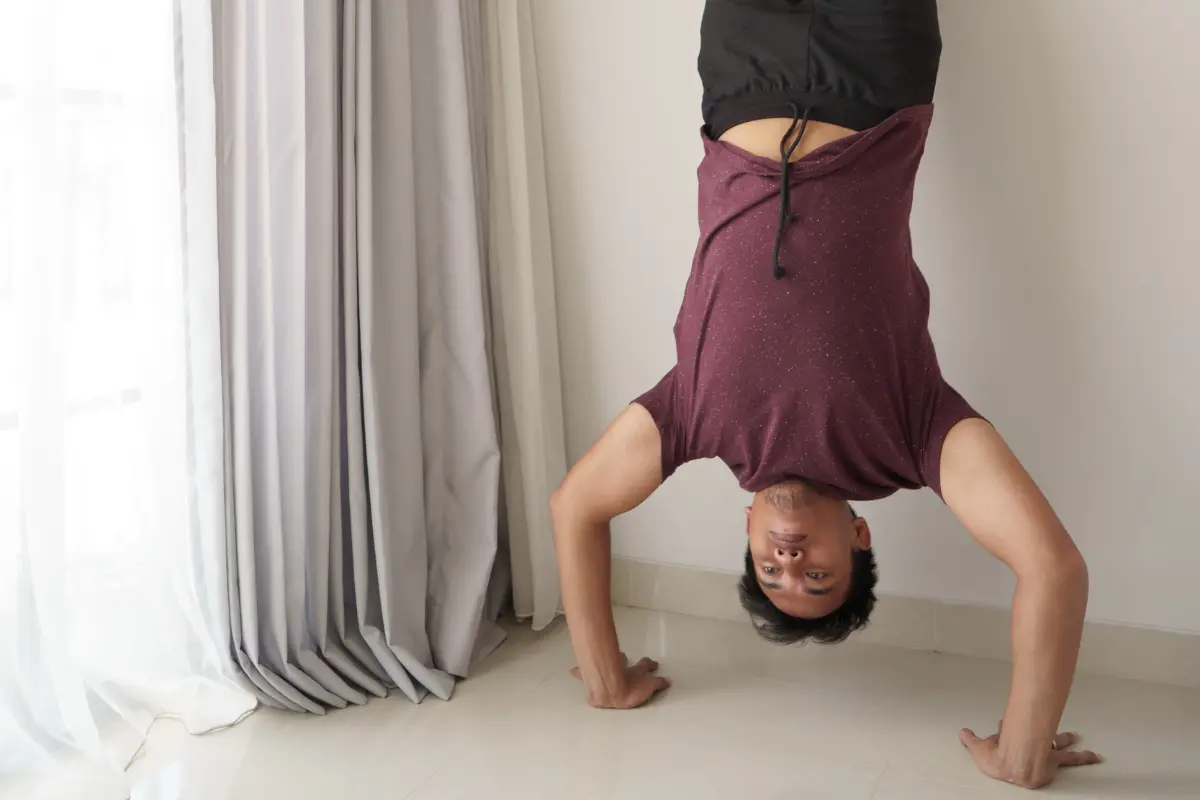
Near the end of the beam, the gymnast sets up for the handstand. This begins with a cartwheel-like entry, keeping the back leg lifted and hips square. A key focus is to “fight to stay on the beam.” As Coach Victoria explains, “if you fight to stay during practice, you’ll fight to stay during competitions.”
The gymnast must hit vertical and hold the position as this is a requirement for the routine to count. To avoid piking or arching, they should squeeze their glutes and engage the core to maintain a straight line. After the hold, they step down into a squat or stand position, knees together, eyes on the beam.
Plie Pose and Snap Turn
Once standing, the gymnast bends the knees into a plié, keeping ankles flat and core tight. Then, they transition into a passé with sharp arm motion—one hand on the hip and the other pressing forward, creating a tall, clean shape.
Next comes the snap turn. The gymnast initiates the turn with the arm on the hip, sweeping up through crown and into the turning position. They snap around, maintaining relevé throughout and keeping the supporting leg tall.
Coaches cue: “Hip hand does the work,” reminding gymnasts that the turning arm sets the shape.
Jump Series: Double Stretch Jump and Pose
The gymnast now performs a stretch jump series: plié, stretch jump, land; plié again, second stretch jump, land. Arms rise with each jump and finish down before the next takeoff.
Immediately after the second jump, the gymnast lands and locks into a fossé pose. Hands are stacked in front of the chest, jazz-style fingers spread, chin up, and eyes down the beam. It’s a dramatic and controlled finish to the jump series.
Leap Series and Relevé Hold
From the pose, the gymnast steps forward on the non-dominant foot into a deep plié and launches into a split leap onto the dominant leg. They land in plié, then rise into relevé, finishing the sequence with arms up by the ears in a tall crown.
Maintaining square hips and tight legs is essential here. Coaches remind gymnasts to “squeeze their bottom” during the leap and to finish tall without wobbling.
Pivot Turns in Series
Next is a step-lock-pivot-lock-pivot sequence. Though it’s not a full turn, it mimics the rhythm and posture of one. The gymnast steps with the non-dominant leg, locks the back foot behind, pivots while spotting the end of the beam, then repeats.
The weight should stay over the back foot to avoid wobbling. Coach cues include: “flat ankle,” “chin up,” and “reach tall.”
Final Poses and Dismount Prep
The gymnast steps backward with the dominant foot into a pose. The front foot is in forced arch, and arms are soft—bending to the shoulders and pressing forward. Then, they repeat with the other foot and display a clasped-arm pose with fingers interlocked in front.
The final step is a strong point forward with arms high. The gymnast prepares for a side handstand dismount, entering with a lunge or mountain climber.
To finish strong, the gymnast must hit vertical during the handstand before coming down and saluting. Coaches emphasize straight hips and eyes focused on the beam throughout the dismount.