By Level 3, the beam routine finally starts to look and feel like real gymnastics. It introduces gymnasts to more advanced choreography, sharper arm and leg movements, and increased control.
You’ll see a vertical handstand, a heel-snap turn, preparation for leaps, and even a double stretch jump, packed into just under 90 seconds.
Mount and Beginning Shapes
The gymnast starts with a jump to front support on the beam. The non-dominant leg kicks up behind to a tucked shape while keeping the arms straight and toes pointed. From here, the middle of the foot is placed on the beam, and the dominant leg swings through into a sitting pose.
While seated, the gymnast lifts the arms into a crown, looks down the arm, then lowers the hands to grab the beam. They kneel on the dominant knee and sit fully onto their heel with the non-dominant leg hanging naturally off the beam.
Then, arms move out to a T, sweep down, and lift through crown into a soft press-back V position, with chin lifted and eyes focused toward the end of the beam.
Tap Sequence and Handstand
The gymnast lifts the dominant leg to the front (not a sharp kick—more of a controlled lift) and gently presses the arms forward. Then comes a sharp “tap-tap” of the dominant foot behind the beam.
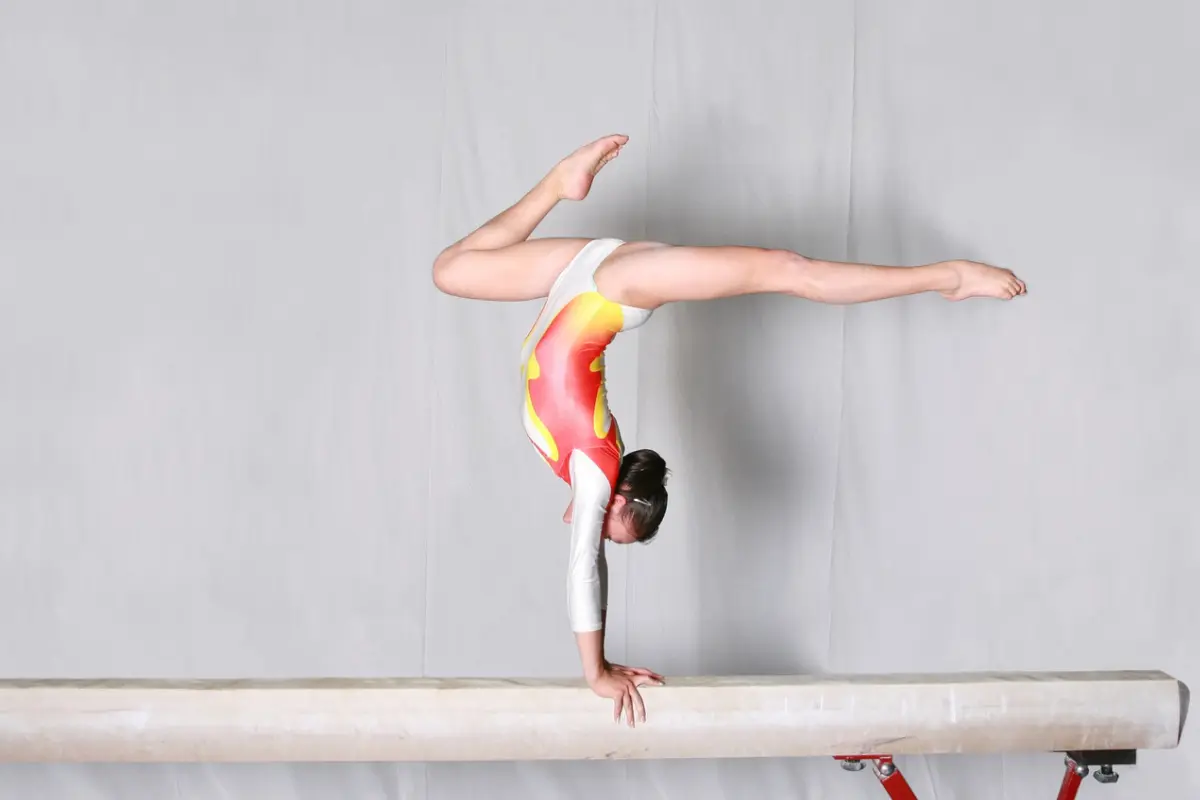
After the second tap, arms lift by the ears into a tall T. The gymnast prepares for a vertical handstand near the end of the beam. They can enter with either a lunge or a mountain climber position. After holding the handstand briefly, they step the feet together and finish standing in a tall V shape.
Plie Pose and Lock Stand
After the handstand, the gymnast places the non-dominant foot in front, goes into a plié pose with knees together, and points the back foot. Arms cross in front of the chest, and the gymnast lifts the back leg to a high passé.
The non-dominant hand goes on the hip, while the dominant arm pushes forward in a soft crown shape. This brings them into a relevé lock stand, feet together, back foot slightly behind, and body tall.
Turn Preparation and Heel Snap Turn
Next comes the phrase, “hip hand does the work.” The gymnast brings the arm around from the hip to crown, setting up the shape for a heel snap turn. They place their dominant foot in front, arms in a rounded “beach ball” position.
In the turn, they rise onto relevé, snap the heel around, and land with the heel down in the same position. The leg in passé should stay high, knee level with the beam. After landing, arms move through crown, then lower behind the body.
Jump Series and Pose
With the dominant leg now in front, the gymnast bends into a plié, then performs two stretch jumps in a row. Arms rise with each jump and return down before the next. After the second jump, they land and pause in a fossé pose—hands stacked, chin up, and eyes down the beam.
Leap Series and Relevé Hold
From the pose, the gymnast steps forward with the non-dominant leg, bends deeply, and performs a split leap onto the dominant leg. They land in a deep plié again and rise into relevé. Arms sweep from the side, down, and up by the ears to finish the leap pass.
Pivot Turn Series
After the leap pass, the gymnast performs a step-lock-pivot-lock-pivot sequence. The movement mimics a full turn, helping the gymnast learn how to rotate the upper body and spot during turns.
Coach Victoria emphasizes keeping weight on the back foot and maintaining a straight line from fingertip to toe during the pivots. The gymnast stays in relevé after the final pivot to show control.
Ending Pose and Dismount
The gymnast steps the dominant leg behind into a pose with the front foot in a forced arch. Arms bend softly to the shoulders and press forward. They repeat this with the other leg: step back, forced arch, and show a clasped hand pose in front of the body. Hands form a strong line from elbow to elbow.
From there, they step and point the dominant foot forward, lift arms high, and prepare for the side handstand dismount. They can choose either a mountain climber or lunge entry. The handstand must reach vertical before the gymnast lands and salutes.
In Summary
Level 3 beam is about linking shapes, rhythm, and control. Each move prepares gymnasts for higher levels by teaching balance, posture, and artistry. The handstand and turn add challenge, while the leap and jumps help build confidence and coordination.