Today’s scoring systems reward gymnasts who can show both power and artistry. That’s why dance cross-training is no longer just “extra.” It’s one of the most effective ways to improve performance and score higher on both beam and floor.
How Dance Improves Beam Routines
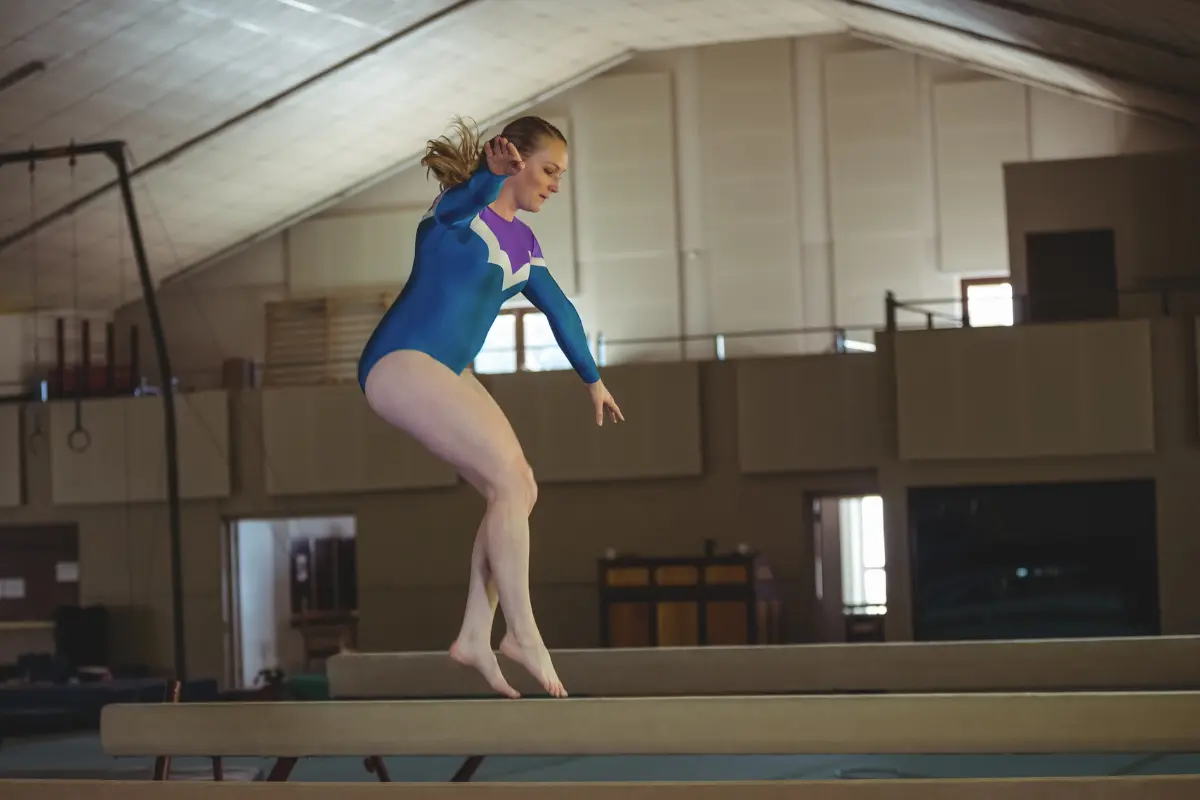
The beam is only four inches wide, so every movement needs to be steady and controlled. Dance helps gymnasts improve the key qualities judges look for.
1. Better Posture and Clean Lines
Dance teaches gymnasts to lift their chest, extend their legs, and lengthen their arms. This creates clean, elegant shapes in:
- leaps
- jumps
- turns
- poses
These details make hard skills look easier and more polished.
2. Smoother, More Connected Transitions
Beam routines include many small steps and poses between the big skills. Dance helps gymnasts link these moments so the routine flows instead of looking choppy.
Judges reward routines that feel calm and continuous.
3. Stronger Balance and Core Control
Dance builds core strength, balance, and good footwork, all essential on beam. This leads to:
- steadier landings
- fewer wobbles
- more confident turns and poses
When a gymnast moves with dancer-like control, the whole routine looks more refined.
4. Better Leaps and Turns
Many beam dance skills come straight from dance training. Ballet and contemporary help improve:
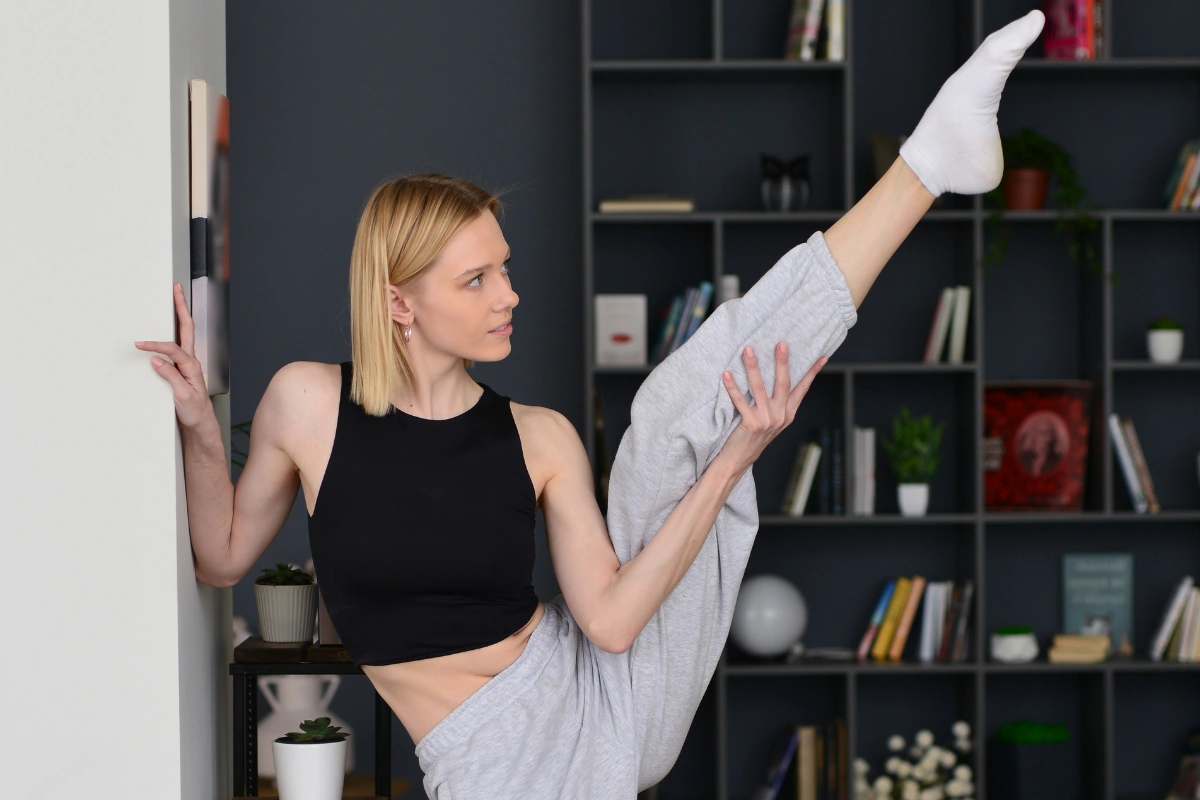
- split height
- toe point
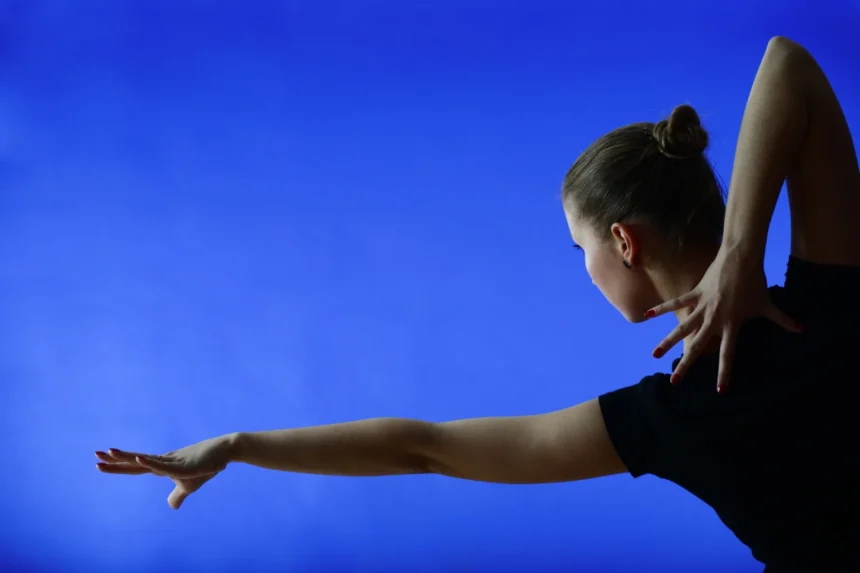
- arm placement
- turn technique
Cleaner mechanics mean fewer deductions and higher scores.
How Dance Improves Floor Routines
Floor routines blend tumbling with music, dance, and expression. Dance training helps gymnasts stand out in several important ways.
1. Better Musicality and Timing
Dance teaches rhythm and timing. Gymnasts learn to count music and move on the beat.
This makes their routine match the music instead of feeling rushed or random.
2. Stronger Performance and Expression
Dance helps gymnasts feel more comfortable performing. They learn to use:
- emotion
- facial expression
- character
- audience connection
This makes routines more engaging and memorable.
3. Cleaner Leaps, Jumps, and Dance Moves
Dance improves flexibility, control, and technique. With training, gymnasts show:
- higher split leaps
- sharper jumps
- smoother choreography
- better toe point and arm lines
These details improve execution and reduce deductions.
4. A More Connected, Polished Routine
Dance teaches flow, one movement leading naturally into the next. On floor, this means:
- tumbling blends into choreography
- transitions look intentional
- the routine feels complete
This is one of the biggest artistic improvements judges notice.
| Routine Element | How Dance Helps | Visible Improvement |
|---|---|---|
| Beam — Poses, Leaps, Turns | Better posture, cleaner lines, improved balance | More controlled, elegant execution |
| Beam — Transitions & Connections | Enhanced fluidity and movement flow | Fewer pauses; smoother sequencing |
| Floor — Dance & Tumbling Integration | Rhythm, expression, musical timing | Routines feel connected and polished |
| Floor — Leaps, Jumps, Poses | Stronger shapes, sharper timing | Higher leaps; cleaner landings; better form |
| Overall Artistry (Beam & Floor) | Harmony between strength and grace | Fewer deductions; standout presentations |
Recommendations: How to Incorporate Dance Cross-Training Effectively
Based on coaching best practices and what experts consistently recommend, here is a simple and effective way to make dance a meaningful part of a gymnast’s development.
1. Choose Dance Styles That Support Gymnastics Skills
Gymnasts benefit most from styles that improve posture, alignment, control, and expression. The best styles for gymnasts areDifferent dance styles build different strengths. Gymnasts benefit most from styles that improve posture, alignment, control, and expression.
The best styles for gymnasts are:
- Ballet: builds clean lines, balance, turnout, pointed toes, and overall body control
- Contemporary: encourages fluid movement and expressive choreography
- Lyrical: strengthens musicality and smooth transitions
- Jazz: adds sharpness, performance quality, and energy
For young gymnasts, ballet or contemporary are especially helpful because they build good habits early.
2. Add Dance Classes at a Balanced, Sustainable Frequency
Gymnasts already have full training schedules, so dance should be added carefully.
Most coaches recommend:
- 1–2 dance classes per week
- Technique-focused classes rather than long recital rehearsals
- Scheduling dance on lighter gymnastics days to prevent fatigue
This frequency gives gymnasts clear artistic benefits without overwhelming their bodies or schedules.
3. Focus on Technique and Fundamentals, Not Just Learning Routines
To make dance truly help gymnastics, the focus should be on technique, not just choreography.
Important fundamentals to build:
- posture and alignment
- turnout and foot placement
- core strength and rib control
- balance and weight transfer
- clean arm and leg positions
- rhythm and musical timing
These skills transfer directly to cleaner leaps, steadier turns, and better transitions on beam and floor.
4. Use Dance to Improve Musicality and Expression
Dance helps gymnasts perform with confidence and feel more connected to the music.
Through dance, gymnasts learn to:
- feel and count the beat
- move in sync with music
- hit accents in leaps or poses
- change energy and dynamics
- use facial expression and emotional tone
These skills make floor routines look more dynamic, expressive, and memorable.
5. Use Dance to Support Conditioning and Long-Term Strength
DanDance also supports physical conditioning that benefits gymnasts:
- better hip and ankle mobility
- improved flexibility with control
- stronger balance and coordination
- better foot strength
- stronger core and stabilizing muscles
Because dance uses different movement patterns, it can also help reduce overuse injuries.
✅ Summary: A Simple Plan to Get Started
To add dance effectively into a gymnast’s routine:
- Pick a style with strong fundamentals — ballet, contemporary, or lyrical
- Add 1–2 classes per week
- Prioritize basics like alignment, control, posture, and rhythm
- Use dance to boost musicality, expression, and smoother movement
- Treat dance as both artistic training and physical conditioning