Biles II Explained: The Floor Skill and the Vault
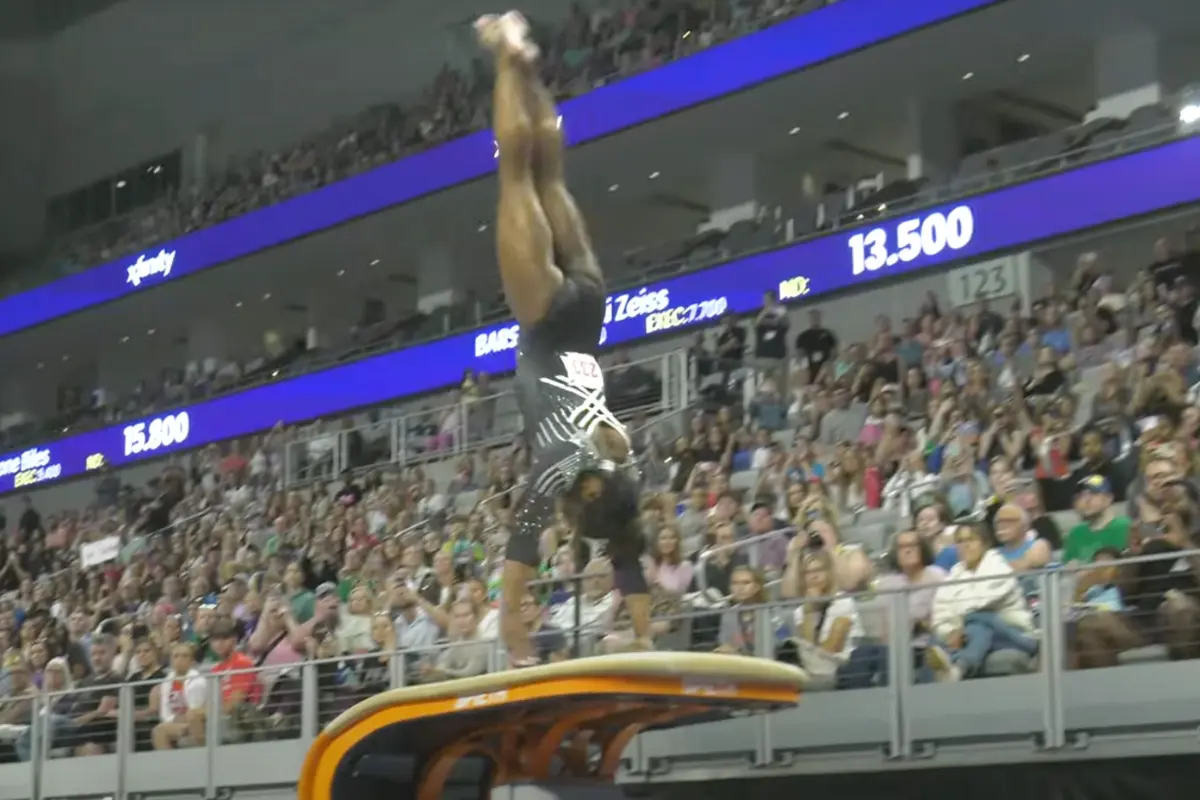
There are two different gymnastics skills called the Biles II. On floor exercise, it is a triple-twisting double back somersault in a tuck. On vault, it is a Yurchenko double pike: two backward somersaults with straight knees and folded hips after leaving the table.
Contents
The name is shared because Simone Biles earned a second named skill on each of those apparatus. The floor move and the vault are not two versions of the same movement, and “II” does not tell you how many flips or twists to count.
The Two Biles II Skills Side by Side
| Question | Biles II on floor | Biles II on vault |
|---|---|---|
| Other name | Triple-double | Yurchenko double pike |
| Where the named skill happens | In one airborne tumbling element on floor | In a complete vault using a roundoff and backward entry onto the table |
| Somersaults in the main flight | Two backward | Two backward after table contact |
| Twists in that flight | Three full twists | None |
| Body shape | Tuck: hips and knees bend | Pike: hips bend, knees remain straight |
| 2025–2028 women’s Code value | J, worth 1.00 as an individual element | 6.4 as a complete vault’s difficulty score |
| Worlds performance that earned the name | Stuttgart, 2019 | Antwerp, 2023 |
Values are checked against the women’s Code available on 2 November 2026: floor element 5.1002 and vault 4.61. The table counts the vault’s two somersaults after the hands leave the table, not the inverted movements in its approach.
How to Recognize the Biles II on Floor
The nickname triple-double puts the twist count first: three twists and two somersaults. Those rotations happen during one airborne skill. Biles does not land between them, and it is not three separate flips.
A backward somersault turns the body head over heels. A twist turns it around the head-to-foot axis. A replay is easier to follow when you count those actions separately; our flip-versus-twist guide explains the distinction.
The floor Biles II is tucked. The knees bend as the gymnast completes the multiple rotations. That distinguishes it from the straight-legged pike on vault and from Biles’ first named floor skill, a double layout with a half twist.
Watch Team USA’s 2019 U.S. Championships floor video on YouTube. The first tumbling pass, around 0:20–0:26, is the example to watch. Follow the takeoff into the tucked airborne element, then the return to the floor. The video is a historical performance, not a practice tutorial.
That U.S. competition was different from the performance that secured the international name. Biles performed the triple-double at the 2019 World Championships in Stuttgart; USA Gymnastics reported that it would become the Biles II on floor. Its J value belongs to that element, not to the whole routine.
How to Recognize the Biles II on Vault
The vault starts with a Yurchenko entry: a roundoff to the springboard followed by a backward handspring action onto the table. The contacts matter. The roundoff hands touch the runway or hand mat, the feet strike the springboard, and the hands then meet the table.
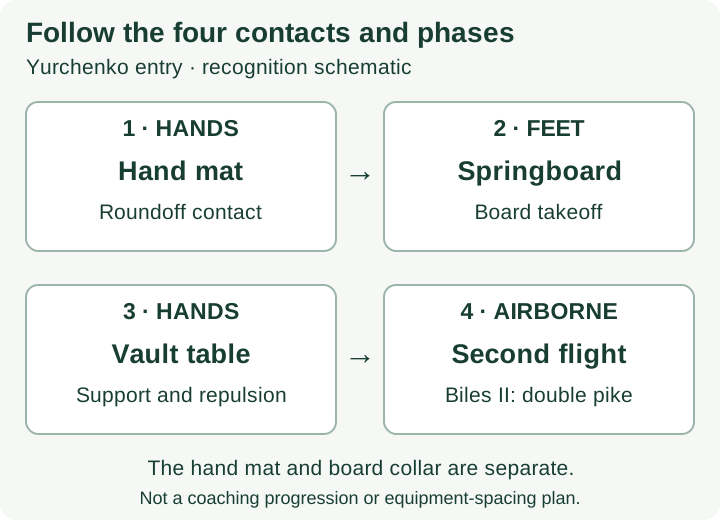
After table contact, Biles completes two backward somersaults in a pike. Her hips fold while the knees remain straight. Calling this a tuck would describe a different shape; see tuck, pike and layout for a visual comparison.
There is no twist in the double-pike flight. That is the quickest way to distinguish this Biles II from the floor one. A skill with no twist can still have a very high difficulty value because the entry, number of somersaults and body position also define it.
Watch USA Gymnastics’ 2023 Core Hydration Classic vault on YouTube. Around 0:15–0:20, follow the hand mat, board and table contacts, then the piked flight. This domestic meet preceded the Antwerp Worlds performance that earned the international name.
The full Yurchenko double pike guide covers its history and scoring example. The different apparatus, shape and twist count are the main clues for telling the two Biles II skills apart.
Why J and 6.4 Are Different Kinds of Value
On floor, J is a letter value worth 1.00 toward the routine’s difficulty calculation when the element receives credit and is counted. The rest of the routine also contributes. A routine containing the Biles II does not have a total difficulty score of 1.00.
Vault works differently: the listed number describes the difficulty of the complete vault. A credited Biles II vault has a 6.4 difficulty score, before the execution score and any neutral deductions produce the final result.
You cannot divide 6.4 by 1.00 and conclude that the vault is 6.4 times harder than the floor skill. The values have different jobs in the scoring system. Our guide to gymnastics difficulty values explains how individual letter values fit into a routine.
High difficulty also does not guarantee a perfect landing. Both skills can receive execution deductions. A claim about a stick or a fall should refer to a specific performance, rather than treating the skill’s name as a promise of flawless execution.
Why Both Skills Can Have the Same Name
Named elements are identified with their apparatus. “Biles II on floor” is a complete identification; “Biles II” without an event needs context. The same principle explains why the first Biles on floor is different from the Biles beam dismount.
Biles’ floor triple-double and her double-twisting double-back beam dismount were recognized following the 2019 Worlds. The Yurchenko double pike became her second named vault following the 2023 Worlds.
For the full set, see Simone Biles’ five named gymnastics moves. The separate skill-naming guide covers eligible competitions and technical approval; a domestic debut and an internationally named element are different milestones.
Final Takeaway
Remember the apparatus first. Floor Biles II: two tucked backward somersaults and three twists. Vault Biles II: a Yurchenko entry and two piked backward somersaults with no twist after the table. Their shared name celebrates the same gymnast; their shapes, takeoff surfaces and scoring values are different.