Bare Feet, Socks or Gymnastics Shoes? What Gymnasts Wear and Why
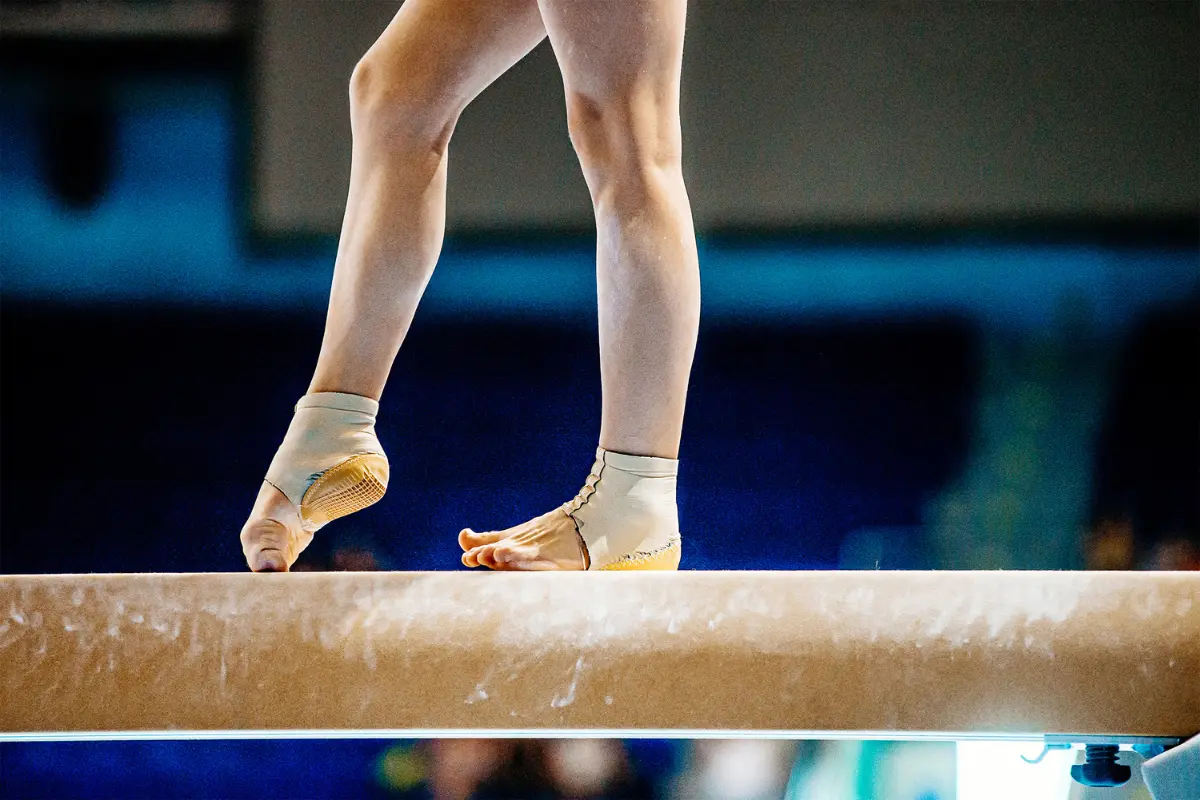
Gymnasts often perform barefoot because the activity can be taught and performed without an ordinary shoe between the foot and the apparatus. But bare feet are not compulsory throughout artistic gymnastics. Depending on the programme and event, gymnasts may wear socks or specialist gymnastics footwear—and some men’s international events require socks as part of the competition outfit.
Contents
- Why bare feet are common in gymnastics
- What international competition rules allow
- Bare feet, ordinary socks and gymnastics footwear are different choices
- Why one gym allows shoes while another asks for bare feet
- What if a gymnast needs tape, a support or a different arrangement?
- A practical check before the first lesson
- Choosing footwear with the activity in mind
For a beginner, the practical answer is to follow the club’s instructions for the actual class. What an elite gymnast wears on television does not automatically establish what a child should wear on a particular gym’s mats.
Why bare feet are common in gymnastics
Removing ordinary outdoor shoes leaves the toes and sole directly in contact with the activity surface. There are no laces to come loose, no bulky trainer sole and no shoe that needs to stay secure as the gymnast changes position. Many recreational clubs organise their equipment use around barefoot participation.
That is a practical explanation, not a promise that bare feet always create more grip. The relationship between the foot, its covering and the surface matters. A landing mat, a beam covering and a carpeted floor are different surfaces, and the same footwear can behave differently on each one.
It is also too strong to claim that barefoot gymnastics prevents injuries, permanently improves arches or fixes foot problems. The American Academy of Pediatrics’ gymnastics guidance discusses foot and ankle injuries as well as the importance of coaching, supervision and appropriate preparation. Being barefoot does not remove those other considerations.
A child who is comfortable walking around barefoot still needs suitable instruction on the apparatus. Footwear is only one part of the setup, alongside the activity, equipment, supervision and the gymnast’s individual needs.
What international competition rules allow
The 2025–2028 FIG artistic Codes do not impose a universal barefoot rule. They include footwear provisions within the gymnast’s competition-attire responsibilities, and the men’s and women’s provisions differ.
| International programme or event | Relevant footwear provision | What a spectator should understand |
|---|---|---|
| Women’s artistic gymnastics | Gymnastic slippers and/or socks are permitted. | Bare feet are common, but they are not the only permitted option. |
| Men’s pommel horse, rings, parallel bars and horizontal bar | Long gymnastics pants and socks are required. | Socks on these events are part of the prescribed attire, not an exception invented by the athlete. |
| Men’s floor exercise and vault | Short pants may be worn with or without socks; long gymnastics pants are worn with socks. | A gymnast’s outfit can differ from the one used on the other men’s apparatus. |
| Men’s artistic gymnastics generally | The Code also permits gymnastics footwear and/or socks. | Specialist footwear is recognised by the rules. |
These points come from Section 2 of the women’s Code and Article 2.3 of the men’s Code, checked in September 2026. Coaches must consider the complete attire rules, including any relevant restrictions, rather than treat this short footwear summary as the whole uniform policy.
FIG provisions do not automatically govern a recreational class, a USAG developmental level or an NCAA competition. The relevant programme’s current rules take priority for that setting.
Bare feet, ordinary socks and gymnastics footwear are different choices
“Socks” is a broad label. An everyday sock, a sock with rubberised grip areas and a garment designed for a particular sports use are not interchangeable simply because they all cover the foot. Likewise, a soft gymnastics slipper is a different item from an outdoor trainer or a cheer shoe.
A family should not buy grip socks on the assumption that extra traction is always desirable. Gymnastics includes controlled changes of direction and turns as well as landings. The coach needs to assess whether the covering suits the planned activity and surface.
Specialist footwear is not automatically required for a first class. If a programme requests it, ask for the exact type, the reason it is used and any fit requirements. A photograph of a competition athlete is not enough information to select the right product.
Loose, damaged or unsuitable footwear can also interrupt a lesson. Before the activity begins, the gymnast should be able to tell the coach if something slips, bunches or feels uncomfortable. Simply tightening an unfamiliar shoe or adding another layer is not a reliable solution.
Why one gym allows shoes while another asks for bare feet
Club policies reflect the activities and equipment used in that programme. For example, Infinity Gymnastics Academy’s FAQ tells families that gymnasts participate barefoot and excludes socks and tights in the gym.
By comparison, the dress-code section of Gymnastics East’s policies allows students to go barefoot or wear gymnastics shoes. The same page contains instructions for particular activities, so families should confirm which guidance applies to their booking.
These are individual club examples checked in September 2026, not competing national rules. They demonstrate why calling ahead is more useful than relying on a universal statement that “gymnastics always means bare feet” or “gymnastics shoes are always allowed.”
The beginner clothing guide covers the rest of the outfit. Footwear should be confirmed alongside hair, jewellery and clothing requirements, before buying specialist equipment.
What if a gymnast needs tape, a support or a different arrangement?
A prescribed support, an existing injury or another individual need should be discussed before class. The family can explain the advice already received from the treating clinician, while the coach can explain the equipment and activities involved. Neither a general article nor a clothing policy can assess an individual injury.
Tape is not a substitute for that conversation. Seeing an experienced athlete with a taped ankle does not establish that the same taping method is suitable for another gymnast, or that it makes continuing through pain appropriate.
If pain, an open skin problem or an uncomfortable support affects participation, tell the coach before using the apparatus and seek appropriate medical guidance. Where an adjustment is needed, establish it through the people responsible for the athlete’s care and the lesson rather than improvise a fix during training.
Some children also find a change from shoes to bare feet unfamiliar. A parent can raise that concern with the club beforehand and ask how the class handles individual needs. The aim is to find a workable arrangement within the activity’s requirements, not to surprise the child at the entrance to the gym.
A practical check before the first lesson
The booking confirmation should identify the footwear policy, but families can ask directly if it does not. Useful questions are whether the child should be barefoot, whether any specific footwear is permitted, and whether different parts of the programme have different requirements.
Arrive with enough time to remove and store outdoor shoes where instructed. Ask about bathroom trips and movement through public areas, since an instruction to train barefoot need not describe every part of the building. Keep belongings out of the apparatus area and let the coach know about any unresolved comfort issue.
The guide to what happens at a first gymnastics class explains how these preparations fit into arrival and the lesson. There is no need to purchase a shoe or sock collection before the programme has explained what is needed.
Choosing footwear with the activity in mind
Bare feet, socks and gymnastics footwear all appear in artistic gymnastics. The right choice depends on the programme, apparatus and individual circumstances. Start with the club’s current instructions, check competition rules when they become relevant, and address discomfort before it becomes something the gymnast feels expected to ignore.