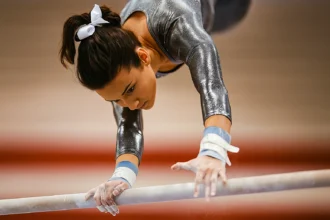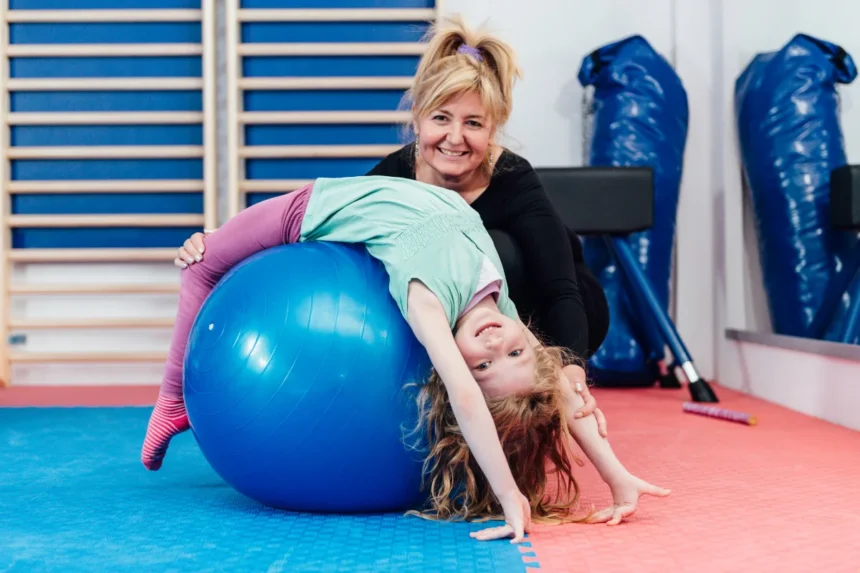
A strong recreational gymnastics curriculum does more than fill class time. It creates structure, builds confidence, and helps gymnasts develop real skills in a safe, enjoyable way.
In preschool recreational gymnastics, the focus is on building gross motor skills, balance, coordination, confidence, and enjoyment of movement, rather than competition or technical perfection. Lesson plans should reflect the needs of children ages ~3–5 and give them repeated opportunities to explore movement in safe, engaging ways.
Below is a progressive weekly lesson format you can follow or adapt, along with a detailed single session plan you can use right away.
1. Start with a Consistent Class Routine
Young children thrive on predictable structure. Each class should follow a similar flow:
- Welcome & circle time – Brief hello, name game or simple question
- Warm-up & movement play – Get bodies ready to move
- Skill focus – Introduce the movement theme of the day
- Station exploration – Kids rotate through fun activity zones
- Group game or challenge – Reinforce concepts cooperatively
- Cool-down & reflection – Gentle movement and wrap-up
This routine aligns with fundamental preschool lesson plan guidance that emphasizes opening routines, movement exploration, focused activities, and closing reflection.
2. Weekly Curriculum Themes (Example 4-Week Cycle)
Using weekly themes in a preschool gymnastics curriculum helps keep classes fresh, engaging, and developmentally appropriate. Thematic focus also allows young children to explore movement concepts repeatedly and meaningfully through games, stories, and play-based activities.
Week 1: Movement Basics
Focus: Locomotor skills and spatial awareness
Young preschoolers are rapidly developing fundamental movement patterns. This week, concentrate on:
- Locomotor skills: running, hopping, and skipping in playful contexts
- Basic balance practice: standing on one foot, walking on a taped line or low beam
- Concepts of body awareness: exploring “high/low,” “fast/slow,” and “stop/start” through movement games
Activities might include themed warm-ups (e.g., “Follow the Leader”), directional games (fast/slow animal walks), and obstacle paths that encourage varied movement. Preschool lesson planners often include these kinds of locomotor and balance games to build gross motor confidence.
Week 2: Balancing Fun
Focus: Stability, pose shapes, and cooperative play
Once foundational movement is established, children are ready for more deliberate balance challenges:
- Beam or line walk games (e.g., “Walk like a tightrope walker”)
- Shape freezes such as star, tuck, and wide shapes (“Freeze like a star!”)
- Pose mirror games where children imitate you or a partner
This theme supports balance and body control while encouraging social skills like turn-taking and imitation. Using mirrors, partner poses, or simple rhythm games adds playfulness while reinforcing the body positions that are key in gymnastics.
Week 3: Rolling & Jumping
Focus: Core movement skills with safe landings
This week combines two big developmental skill areas:
- Rolling: log rolls and gentle forward rolls using mats or wedges
- Jumping: small jumps with focus on safe landing mechanics
- Obstacle courses: combine rolling and jumping elements for a sequence challenge
Obstacle courses are highly recommended in preschool gymnastics planning because they allow children to string together movement skills in a playful environment while building coordination, agility, and spatial awareness.
For example, roll down a soft incline → jump over a small object → balance across a line. Courses like this help children apply movement concepts while keeping them engaged and excited.
Week 4: Play & Combine
Focus: Sequencing, cooperation, and integrated skills
As preschoolers become more familiar with basic movements, use this week to blend and reinforce prior skills in cooperative and fun ways:
- Sequence challenges: children move from station to station completing mini-tasks
- Fun relay races: incorporate cues like “jump, balance, hop” in each leg
- Group games: create playful challenges combining balance and locomotion (e.g., follow the animal leader through a course)
These combined activities help children learn to follow multi-step instructions and build early executive function skills (like memory and sequencing) while practicing motor skills they’ve developed throughout the curriculum.
3. Step-by-Step Lesson Plan: Sample 45-Minute Class
Below is a developmentally grounded preschool gymnastics lesson you can use with 3–5-year-olds. It integrates playful movement, motor-skill development, and social interaction.
Age group: 3–5 years
Apparatus: Soft mats, low balance beam or taped floor line, cones, small blocks
A) Welcome & Circle Time (3–5 minutes)
Start every class with a calm gathering:
- Children sit in a circle or semi-circle
- Quick greeting song or name game
- Announce the theme: “Today we will wobble, roll, jump, and play!”
This opening routine sets expectations, captures attention, and gives children a social connection before movement begins. Preschool lesson planners emphasize starting with structure to improve focus and cooperation.
B) Warm-Up & Movement Play (7–10 minutes)
Warm-ups for preschoolers should be active, playful, and simple. These activities begin to warm muscles and introduce body awareness:
Suggested warm-ups:
- Animal walks — Bear walk, crab walk, frog hops, kangaroo jumps
Animal walks improve gross motor control and make movement fun while working on balance and coordination. - Reach and bend — Touch toes, big arm circles to wake up shoulders and hips
- Follow the leader — Copying a coach’s movement sequence
These dynamic games get bodies ready for activity and help children begin to sequence movement—an important early motor planning skill.
C) Skill Focus & Demonstration (8–10 minutes)
Choose one fundamental movement concept for the day. Focus on playful progressions and safety.
Example Theme: Rolling & Safe Landing
- Log rolls — Demonstrate and let each child “roll like a rolling ball” across soft mats.
- Forward roll practice — Encourage children to tuck their chin and roll slowly on soft mats.
- Small jumps with safe landings — Gentle jumps from two feet with emphasis on soft knees and quiet landings (“stick” landing cue).
Keep explanations short and visual. Preschoolers learn best by watching and trying rather than long verbal cues.
D) Stations (15 minutes)
Setting up short, varied stations keeps all children engaged by offering novelty and movement variety. Rotating every 2–3 minutes prevents boredom and supports attention span development.
1. Balance Zone
- Low beam or taped line on floor
- Practice walking forward, small pauses, and balancing with arms out
2. Tumbling Zone
- Soft mats for rolling (log rolls, egg rolls, gentle forward rolls)
3. Jumping Zone
- Cones or low blocks for mini jumps
- Encourage safe landings with “stick it!” cues
4. Movement Play Zone
- Crawls, animal walks, and fun locomotor paths
Stations like these are commonly recommended in preschool gymnastics plans to help children explore movement in multiple ways and increase time on task.
E) Group Game (5 minutes)
“Balance Freeze”
- Play music or call out movements (walk, jump, balance)
- Children do the movement and freeze when the music stops
This game reinforces motor skills and listening skills while adding an element of play. Group games also support social development by encouraging children to pay attention and respond to cues.
F) Cool-Down & Reflection (5 minutes)
Close the class with simple calming activities:
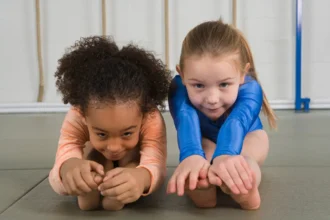
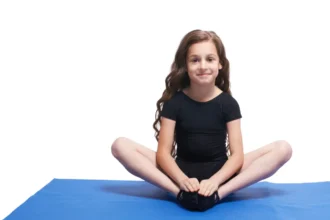
- Gentle stretches: Reach for the sky, touch toes, butterfly stretch
- Deep breaths: In through nose, out through mouth
- Reflection question: “What movement did you like best today?”
Ending with reflection helps children process their learning, supports emotional development, and creates a calm transition back to caregivers.
Tips for Preschool Success
Successful classes rely on flexibility, positivity, and thoughtful structure.
1. Keep Cues Short and Positive
Preschoolers process information best in small, simple pieces. Use one clear cue at a time and phrase it positively.
Instead of long explanations, try:
- “Arms up!”
- “Quiet feet.”
- “Freeze like a statue.”
Avoid overcorrecting. At this age, encouragement and repetition matter far more than perfect technique. When children feel successful, they are more willing to try again.
2. Use Props and Music to Maintain Interest
Props turn simple movements into exciting challenges. Scarves, foam shapes, cones, hoops, stickers, and floor dots can instantly increase engagement.
Music is equally powerful. Background music during warm-ups or group games helps:
- Set the energy level
- Improve rhythm and timing
- Support transitions between activities
Changing music or props mid-class can quickly refocus attention if energy starts to dip.
3. Encourage Parent Participation When Appropriate
In parent-tot or early preschool classes, caregiver involvement can be incredibly helpful. Parents can:
- Assist with balance or rolling
- Help children feel safe and confident
- Reinforce listening and turn-taking
Clear guidance is important. Simple cues like “hold their hand” or “stand behind them” help keep everyone on the same page.
When cues are positive, activities are playful, and lessons are thoughtfully planned, children walk out smiling, confident, and excited to return.