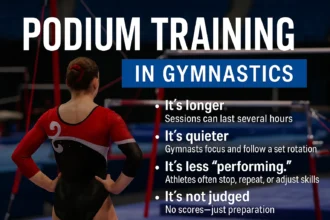
Podium training may look relaxed to parents watching from the stands, but for coaches, it’s the most revealing part of the entire competition weekend. They watch how gymnasts are adjusting, thinking, reacting, and carrying themselves.
Here are the six major signs coaches use to judge whether a gymnast is truly prepared for meet day.
1. Equipment Feel and Apparatus Adjustment
The first thing coaches watch is how well a gymnast adjusts to the competition equipment — because podium-raised apparatus feels different from equipment at home.
What coaches observe
- Floor bounce: Is the floor firmer, softer, or unusually springy?
- Vault table and board response: Does the board feel “dead” or too lively?
- Bars timing and swing: Do the rails flex more? Does the chalk hold differently?
- Beam texture and stability: A podium beam often feels higher and more solid.
- Arena lighting and spacing: Are there glare spots? Are the mats placed differently? Are cameras distracting?
Why this matters
Even small differences can affect power, timing, and confidence. Coaches want to see how quickly a gymnast can adjust and make the environment their own.
If adjustments are slow, coaches may add:
- tiny technical corrections
- run-up distance changes
- timing reminders
- calming cues (“same rhythm you use at home”)
How well a gymnast adapts in the first few minutes tells coaches a lot about how they’ll handle the competition floor.
2. Warm-Up Behavior and Skill Selection
Podium training is not a performance. It’s a study session. And coaches pay close attention to how gymnasts warm up, not just what they do.
What coaches look for
- Skill choices: Are they warming up big skills or safer versions?
- Routine structure: Full routines or selective parts and connections?
- Movement between skills: Smooth, calm transitions or rushed and jumpy?
- Body readiness: Are they stiff, tight, or already moving well?
- Coachability: Do they respond to cues or let nerves take over?
A gymnast’s warm-up tells coaches more about their readiness than the “showy” skills do. Warm-ups reveal confidence, physical condition, and emotional steadiness.
3. Technical Execution and Precision
After warm-ups, coaches zoom in on the details such as shapes, lines, timing, and technique to see how skills transfer onto the new equipment.
Key things coaches watch
- Body lines: Straight legs, pointed toes, tight shapes
- Run-up consistency: Especially for vault and tumbling
- Timing changes: Are swings or rebounds different due to equipment?
- Connection quality: Especially on beam and bars
- Landings: Controlled, stable, or too soft and collapsing?
- Flow and rhythm: Smooth movement or choppy transitions?
- Correction habits: Do they fix errors immediately?
Podium training often predicts what will happen under pressure. If something looks off today, it most likely won’t fix itself by tomorrow morning. That’s why coaches take notes, record videos, and plan adjustments overnight.
4. Mental and Emotional Readiness
Technique is only half the picture. Coaches also watch the gymnast’s mindset — because podium training often reveals nerves earlier than the actual meet.
Mental cues coaches monitor
- Composure: Calm, steady movement vs. tension and overthinking
- Body language: Shoulders tight? Steps hesitant? Eyes darting?
- Focus: Staying engaged or easily distracted by the venue?
- Mistake reaction: Quick reset or frustration and panic?
- Confidence: Even small hesitations reveal if an athlete trusts their skills
If a gymnast shows nerves during podium training, coaches know they need to intervene now.
5. Strategy and Competition Planning
Podium training is also when coaches make final strategy decisions. It’s the last chance to adjust difficulty, pacing, and choreography based on how the gymnast handles the actual arena.
Coaches evaluate:
- Is the gymnast ready for full difficulty?
- Should a vault be downgraded for safety?
- Is the run-up too long now that spacing is different?
- Are bar settings ideal after testing the rail flex and grip?
- Is lighting interfering with a release skill or dismount?
- Are landings stable enough to keep higher-risk dismounts?
Sometimes podium training leads to:
- switching vaults
- lowering bar difficulty
- changing a beam or bars dismount
- adjusting choreography counts
- adding or removing mental cues
These small strategic adjustments can prevent big deductions or injuries the next day.
6. Safety and Injury Prevention
Above all, podium training is a safety check.
Coaches look for:
- controlled landings
- signs of soreness or tightness
- fatigue showing up early
- hesitation from fear
- equipment behaving unpredictably
- any sign that a skill might be risky tomorrow
If something feels “off,” coaches may immediately:
- lower difficulty
- change a vault
- adjust a beam or bar plan
- shorten warm-up sequences
- re-evaluate whether the athlete is competition-ready
A gymnast who looks strong, physically comfortable, and confident is almost always ready for a clean, safe competition.
Common Pitfalls Coaches Try to Avoid
| Pitfall | Simple Explanation |
|---|---|
| Hesitation or Nervousness | The gymnast looks unsure or scared, which affects confidence and timing. |
| Run-Up Problems | The runway feels different, causing steps to be too long, too short, or off-rhythm. |
| Wobbly or Unsteady Landings | Landings look shaky or flinchy, showing the gymnast hasn’t adjusted to the equipment yet. |
| Loss of Rhythm | Warm-ups look choppy or rushed instead of smooth and steady. |
| Equipment Surprises | New equipment feels different (springier floor, firm beam, bouncy board) and throws off technique. |
| Getting Distracted | The gymnast watches others too much, reacts to noise, or focuses on performing instead of practicing. |
| Over-Correcting | One mistake causes the gymnast to suddenly change their run-up or technique too drastically. |
In conclusion, when a coach watches podium training, they’re assessing readiness across multiple dimensions: physical, technical, mental, strategic, and safe.