Gymnastics at Age One: Choosing Movement Play That Fits Your Child
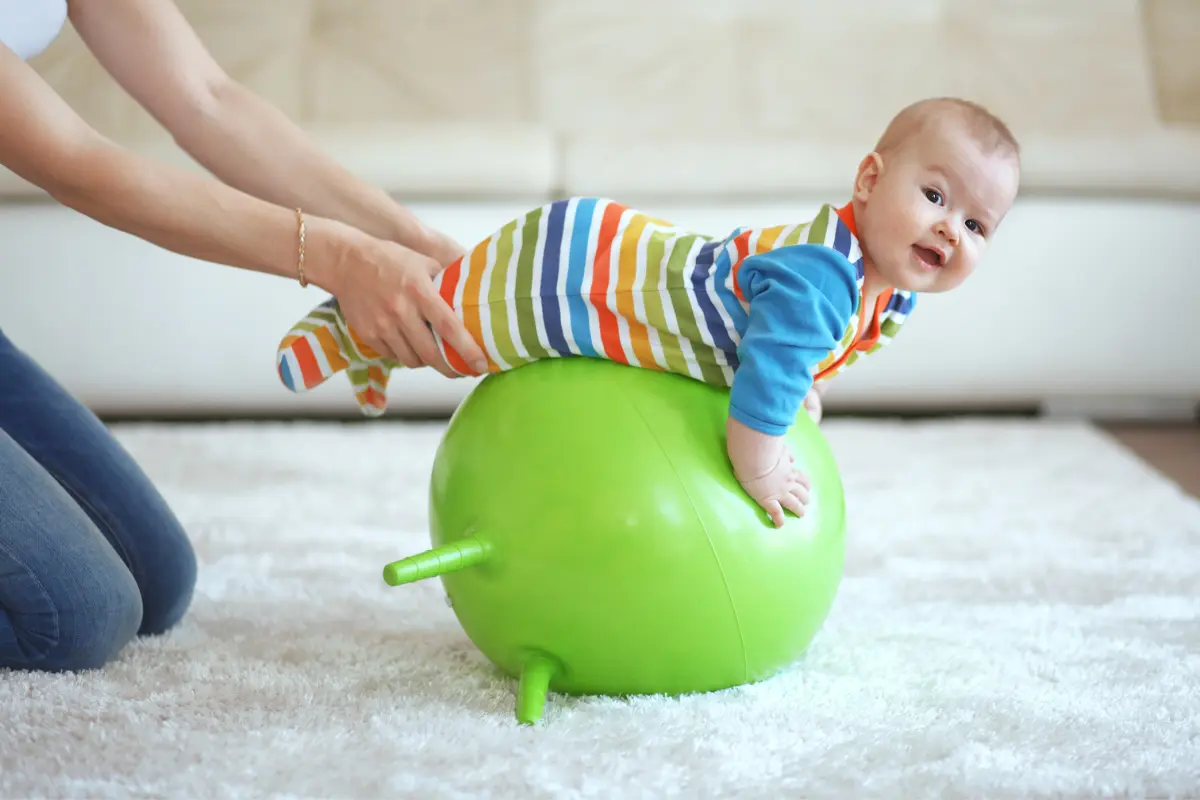
Gymnastics for a one-year-old should mean supported movement play in an environment designed for very young children. The useful question is whether the session suits your child’s current movement and comfort, not whether it will get them ahead in gymnastics.
Contents
A one-year-old may be newly walking, cruising along furniture or exploring mainly on the floor. A class label such as baby gym, toddler gymnastics or parent-and-child tells you little about which children the activities actually suit. Ask the provider what participation looks like before deciding whether to join.
A first birthday is not a gymnastics readiness test
The CDC’s one-year milestone guidance includes pulling up to stand and walking while holding furniture. The checklists describe skills that at least 75 percent of children can do by a given age; they are not sports placement tests or substitutes for developmental screening.
That distinction matters in a class containing children at different stages. A walking child and a child moving close to the floor need different space and support. The instructor should explain how the same session accommodates them, or recommend a more suitable group.
Do not use a gymnastics lesson to diagnose a delay or to promise that a child will catch up. If you are concerned about development or a child has lost a skill they previously used, discuss it with their clinician. A class can provide enjoyable activity while healthcare questions receive appropriate attention elsewhere.
Tell the instructor how your child usually moves and communicates, including how you recognise tiredness or a request to stop. This practical information is more useful than describing them as athletic or not athletic.
Check what the class name actually means
A coached parent-and-child lesson, a toddler open gym and an independent preschool class have different expectations. In a coached lesson, an instructor should introduce the activities and explain the caregiver’s role. Open play may offer space and equipment without the same teaching structure. An independent class expects children to participate without their caregiver beside them.
Age bands also vary. Infinity Gymnastics Academy, for example, lists Parent Tot for ages one to three. That is one club’s enrollment range; it does not mean every activity listed for the group is appropriate for every one-year-old.
When contacting a provider, ask whether the class welcomes children who are not walking independently, whether one adult must attend with each child, and whether the adult must be able to move around the floor. Clarify sibling arrangements before arriving. Supervising a baby and a second child at the same time may not fit the program’s setup.
For a fuller picture of lesson organisation once you have found an appropriate group, see our guide to toddler gymnastics classes.
What worthwhile movement play can look like
A session does not need impressive gymnastics skills to have a clear purpose. Following a familiar song, exploring a clear floor area and interacting with a caregiver can be meaningful parts of the experience. The instructor’s job is to make the environment and invitations suitable for the children present.
| Possible invitation | What to look for | How to keep the expectation realistic |
|---|---|---|
| Explore toward an age-appropriate toy. | A clear space where the child can use their usual way of moving. | The child chooses whether and how to approach; there is no race. |
| Join a familiar action song. | A caregiver and instructor modelling a simple movement. | Watching, smiling or copying one action can count as participation. |
| Play with a soft ball alongside a caregiver. | Equipment chosen for the child’s age and close supervision. | There is no expectation of an accurate throw, catch or coordinated sequence. |
| Explore a coach-selected station. | Clear instructions about where the adult stays and what support is needed. | The coach offers an alternative if the task does not fit the child. |
These are examples to discuss with an instructor, not a required circuit. A suitable session might use different activities. What matters is that the child has room to explore and the caregiver understands the boundaries.
Observe whether activities build on what your child is already trying. A lesson that repeatedly requires an adult to place the child into unfamiliar positions may be less useful to your family than one with more opportunities for active participation. Ask the instructor to explain the purpose of an activity if it is unclear.
The caregiver’s role should be explained, not assumed
Being present does not automatically tell an adult how to help. Before each unfamiliar station, the coach should explain where you stand, when you help, and when the activity belongs with the instructor. Do not improvise gymnastics spotting from a photograph or copy another parent’s technique.
Good preschool teaching is a specific skill. USA Gymnastics’ R101 preschool education course covers child development, class management, safety and lesson planning. A course listing does not certify every local teacher, but it provides useful topics to ask about when discussing their training and experience.
Notice how the group shares the room. Toddlers should have clear boundaries away from moving apparatus, runways and older athletes. Also ask how the coach supervises more than one station and what adults should do while waiting.
Your child should be able to return to you or pause. Joining every activity is not a sensible measure of success for the first visit. A calm introduction, a brief attempt and an opportunity to watch may tell you more about the class’s suitability than completing a checklist.
Prepare for the visit without buying a home gym
Choose clothing that allows comfortable movement and follows the provider’s rules. Ask about footwear for both the child and participating adult, because policies differ. Bring the usual changing supplies and any items the venue specifically requests, and find out where bags and drinks are kept.
Try to choose a session that works with your child’s normal routine. Tell the coach if the first visit falls on an unusually tired or unsettled day; it may help you interpret the experience without treating it as a final judgment.
There is no need to buy rings, a bar or a trampoline to prepare for a toddler lesson. In particular, the AAP’s trampoline guidance advises against recreational trampoline use and says children under six should not jump. It distinguishes professionally coached training settings from backyard or trampoline-park play; owning a small trampoline does not create such a setting.
If you want ideas between classes, ask for ordinary movement games that suit your child and your available space. Avoid turning a brief lesson into a daily home routine of inversions, hanging or forced stretching.
Decide whether to continue by looking at the experience
After a visit, separate three questions: Did the environment suit your child? Did the instructor communicate clearly? Did the session work for your family? A child may enjoy movement play while the timing, noise level or group format is a poor fit.
You can try a different session, stay with ordinary play for now or return later. A one-year-old does not need a gymnastics enrollment history to enter a beginner class when older.
If the class is enjoyable, continue because it offers a pleasant shared activity. If it is not, there is no missed sporting deadline. For choosing among providers, our class-selection guide helps turn a vague impression into specific questions about teaching, organisation and support.