Creating an effective home gym for calisthenics isn’t about filling your space with machines or expensive equipment. Calisthenics is built around the idea of minimal gear, maximal performance. The right tools should be versatile, space-efficient, and practical.
While you can train calisthenics with almost nothing, having a few carefully chosen pieces of equipment makes a noticeable difference in strength development, skill progression, and joint health. Below are the top five must-have items that consistently deliver the best return for home calisthenics training.
1. Medium-Sized Parallettes
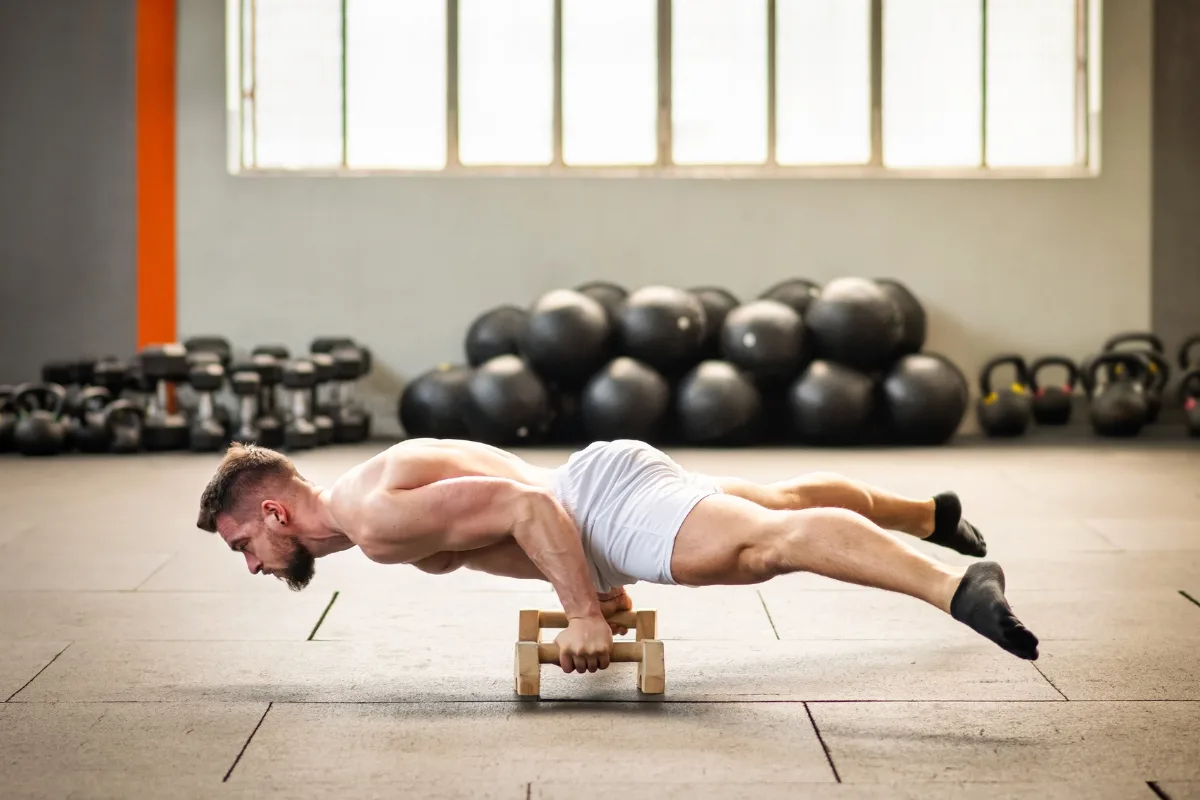
A solid set of medium-sized parallettes is one of the best investments you can make for calisthenics. They’re compact, easy to store, and open the door to a wide range of exercises without requiring much space.
One of the biggest advantages of parallettes is wrist comfort. Unlike floor-based movements that force your wrists into deep extension, parallettes allow for a more neutral wrist position. This reduces strain and discomfort, making it easier to train consistently especially for handstand and planche-focused athletes.
Parallettes are incredibly versatile. The raised platform increases range of motion and improves exercise quality across multiple movements:
- Push-ups: Deeper range of motion leads to greater chest, shoulder, and triceps engagement.
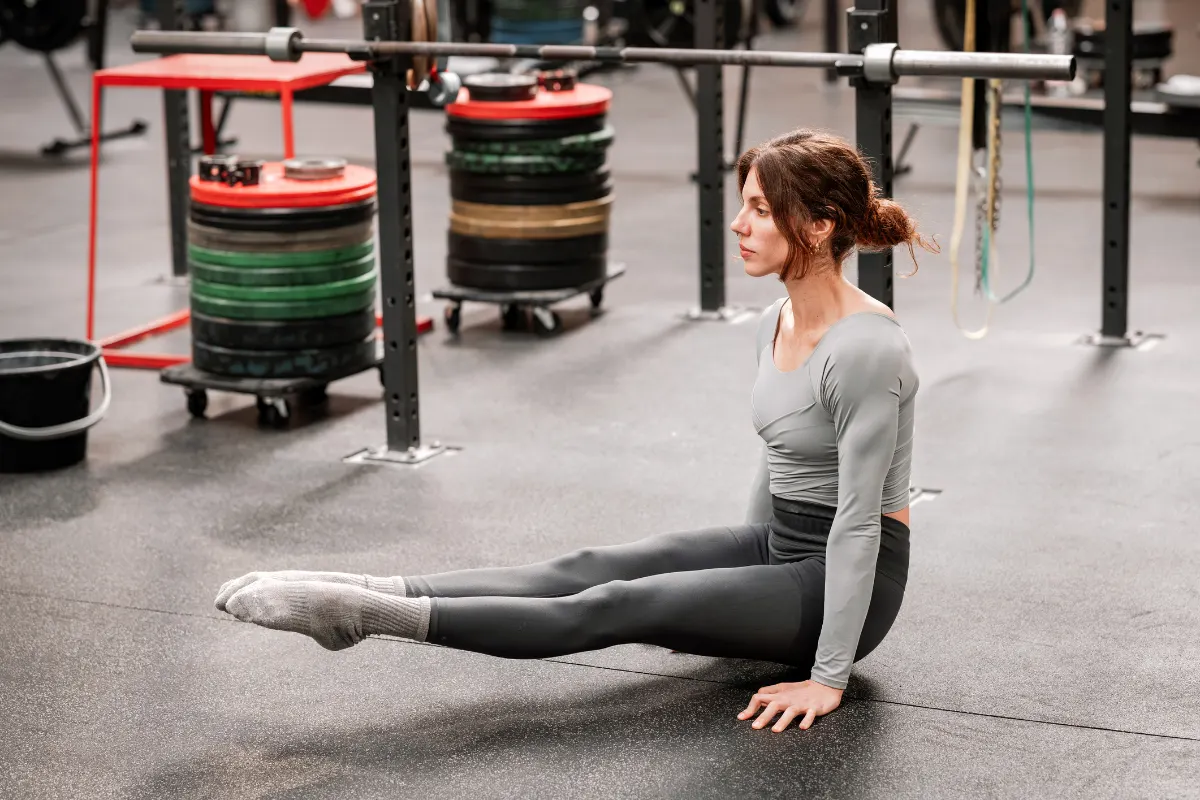
- L-sits: Parallettes provide clearance and stability, allowing stronger core and hip flexor activation.
- Handstand drills: They offer a solid base for practicing balance, alignment, and shoulder control.
- Planche training: Parallettes are ideal for planche leans and progressions, helping you safely build the required shoulder and core strength.
When choosing parallettes, material matters. Wooden parallettes are popular because they absorb sweat and provide a natural, secure grip. Metal parallettes are often more durable and can handle heavier loads, though they may require grip tape to prevent slipping. Regardless of material, look for a wide base and non-slip feet.
Verdict: Highly recommended. A true staple for any calisthenics home gym.
2. Pull-Up Bar
If calisthenics has a cornerstone piece of equipment, it’s the pull-up bar. Pulling strength is fundamental to calisthenics, and a pull-up bar instantly transforms any home into a functional upper-body training space.
With a pull-up bar, you can target multiple muscle groups using simple but highly effective movements:
- Pull-ups and chin-ups: Build the lats, biceps, upper back, and grip strength. Changing grip width or orientation shifts muscular emphasis and prevents plateaus.
- Hanging leg raises: Strengthen the core while simultaneously improving grip endurance.
- Advanced skills: As you progress, the bar supports front levers, muscle-up transitions, and other advanced movements that demand strength and coordination.
Many pull-up bars are designed for easy installation. Doorway-mounted bars are renter-friendly and require no permanent modifications, while wall-mounted bars offer greater stability and support a wider range of movements.
Before buying, check two key factors: weight capacity and installation security.
Verdict: A must-have for anyone serious about calisthenics.
3. Gymnastic Rings
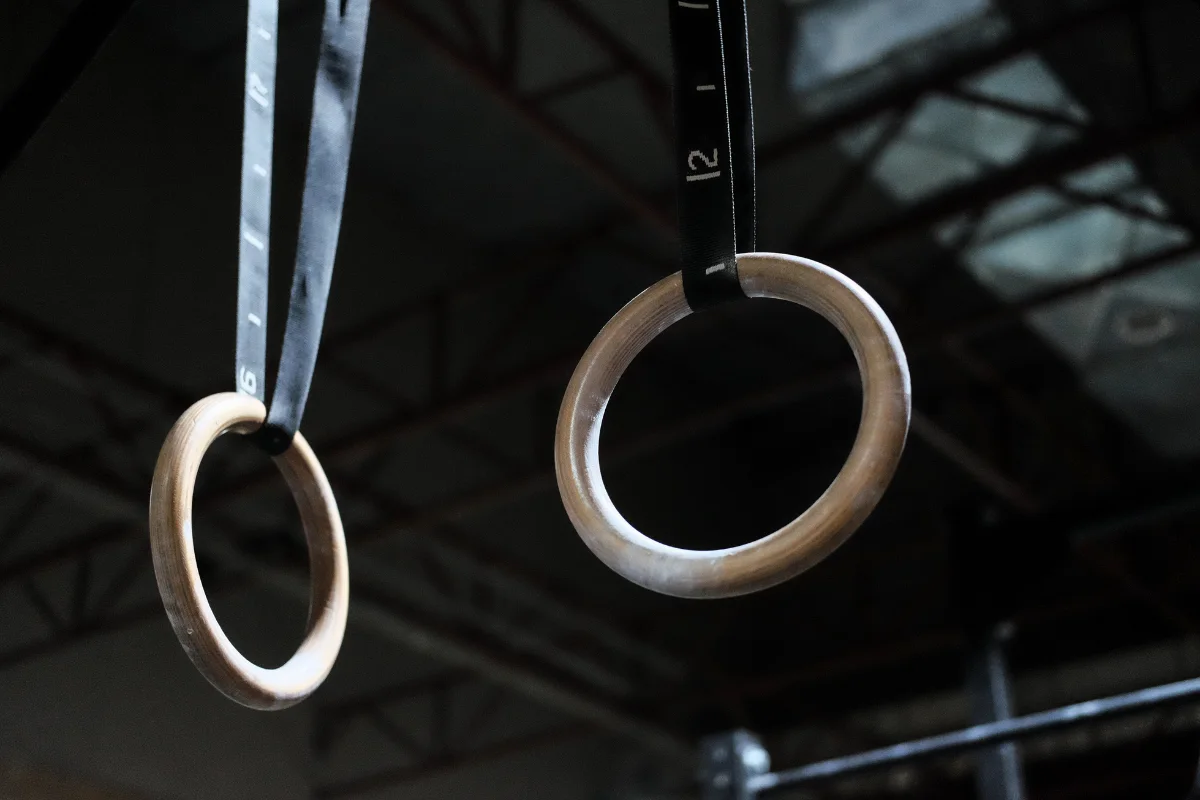
Gymnastic rings are often considered the most versatile piece of calisthenics equipment. With a single set of rings, you can replicate an entire gym’s worth of exercises while dramatically increasing difficulty through instability.
Rings demand constant control, forcing stabilizer muscles to work harder and improving joint strength over time. They’re excellent for building both raw strength and refined body control.
With rings, you can train:
- Muscle-ups: Developing explosive pulling and transition strength
- Dips: More challenging than bar dips due to instability
- Rows and push-ups: Scalable for endurance and strength
- Pull-ups: Increased stabilizer activation compared to a fixed bar
Rings are also highly portable. You can hang them from a pull-up bar, beam, tree branch, or outdoor structure, instantly turning almost any space into a training area.
When choosing rings, a few details matter:
- Material: Wooden rings are preferred for their superior grip and sweat absorption.
- Thickness: 28mm (Olympic standard) or 32mm (CrossFit standard), depending on hand size and preference.
- Straps: Durable, wide straps with clear markings and strong buckles are essential for safety and quick adjustments.
If you could only buy one piece of calisthenics equipment, rings would be the strongest argument.
Verdict: 10/10 investment. Unmatched versatility and value.
4. Weighted Vest
A weighted vest is an excellent tool for athletes who have outgrown basic bodyweight movements and want to continue progressing at home. By adding external load, it increases training intensity without changing exercise mechanics.
Weighted vests are especially effective for:
- Push-ups and dips: Greater upper-body loading
- Pull-ups and chin-ups: Increased back and arm strength
- Squats and lunges: Lower-body development without barbells
The added resistance also increases energy expenditure, which can support fat loss and improvements in body composition.
When selecting a vest, look for adjustability, comfort, and even weight distribution. While beginners don’t need one, intermediate and advanced athletes will find it useful for pushing past plateaus. At higher levels, a dip belt may become more comfortable for heavy weighted pull-ups and dips.
Verdict: Useful, but not essential. Best for intermediate to advanced home training.
5. Resistance Bands
Resistance bands are one of the most underrated tools in calisthenics.
They provide adjustable assistance, allowing athletes to practice difficult movements before full strength is developed. Bands are especially valuable for:
- Pull-ups and dips: Assisting beginners toward unassisted reps
- One-arm pull-ups: Gradual unilateral strength development
- Static holds: Reducing load for planche, front lever, and back lever training
Beyond strength, resistance bands are excellent for warm-ups, mobility work, and flexibility training. They’re lightweight, portable, and take up almost no space, making them ideal for home workouts or travel.
For progression, the method is simple: start with thicker bands and gradually reduce assistance as strength improves. This controlled approach helps avoid stalls and reduces injury risk.
Verdict: A must-have for anyone progressing in calisthenics.
Investing in these key pieces of equipment greatly enhances your home calisthenics training experience. Each item is carefully selected to complement others, helping you build a robust, progressive, and effective training regimen.