Before a gymnast can perform powerful, personalized routines in optional gymnastics, she first has to master the five compulsory levels. These routines get a little tougher, and more expressive at each step. Every level introduces new skills, faster music counts, and sharper poses, but the goal stays the same: build strong basics judges can count on.
In this guide, we’ll walk through each floor routine from the 2021–2029 compulsory cycle, with insights and examples from Coach Victoria at Flight Athletic Academy.
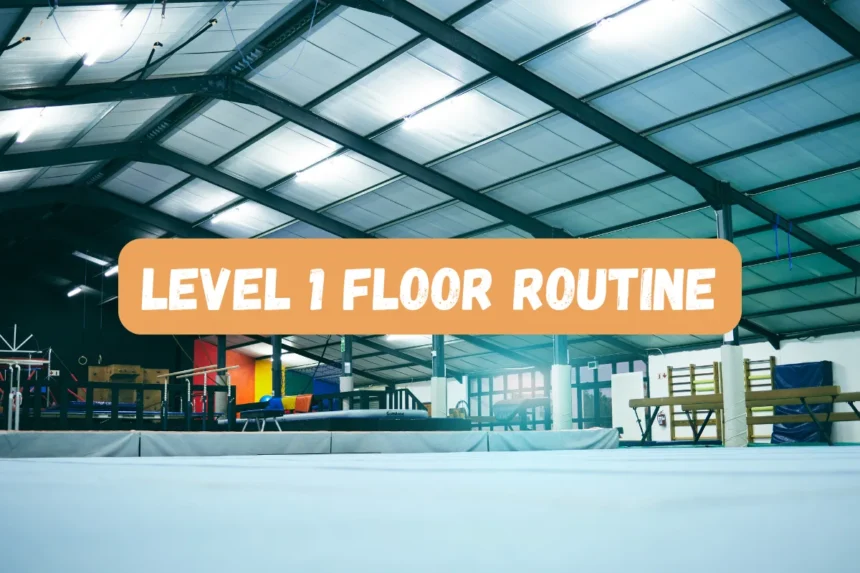
The Level 1 floor routine is a young gymnast’s first real performance. In Coach Victoria’s video, each moment is carefully cued.
Starting Strong with Pose, T, and Point
The routine begins with a simple but expressive starting pose. The gymnast stands with feet together and arms gently placed behind them. From there, they bend the knees into a soft plié, bringing their fingertips together in front of the body while rounding down. This rounded shape sets the tone.
Next, the gymnast opens their arms to a straight T position, not too high and not too low. Then the arms rise overhead into a tall stretch. While holding this tall shape, they shift their weight into the back foot and point the front foot in the direction they are about to move.
This opening is often taught using a rhythm cue: “Pose, T, Point.” It helps gymnasts connect the movement to the music and builds a natural sense of timing.
Moving into the Acro Section
After the point, the gymnast steps forward into what Coach Victoria calls a mountain climber. This is a strong lunge position with arms overhead and ears covered. From that lunge, the gymnast performs a cartwheel, lands with feet together, and then immediately rolls backward into a tuck position. They finish by standing up tall.
This part flows smoothly together. To help her students learn the pace, Coach Victoria often sings it out loud: “Mountain climber, cartwheel, step together, backward roll to a tuck and stand.”
From Candlestick to the Happy Pose
The next skill is a candlestick roll. The gymnast rolls back with legs extended toward the ceiling, then uses momentum to return to standing.
At the top of the roll, they strike a fun and confident pose. One hand rests on the hip while the other arm lifts up into a crown shape. They look over the shoulder on their dominant side. Coach Victoria calls this the happy pose. She encourages gymnasts to place the hand right at the leotard line for a clear and consistent shape.
Turning Sequence with Grace and Control
After the happy pose, both hands go to the hips. The gymnast steps forward with the dominant leg, lifts the opposite leg into a strong passé position, and then lowers it in front. Arms open into a T position as the gymnast rises onto tiptoes. At this point, the gymnast should be in a lock stand, with the back foot lightly crossed behind the front one.
Next comes a pivot turn. The gymnast turns halfway around on tiptoes, then drops the heels and stretches the arms back out to the side. The non-dominant foot steps forward, preparing for the next part.
Chassé and Low Pose
The gymnast now performs a chassé, which is a gliding step that ends when the back foot lands behind. This leads straight into a small plié, almost like a curtsy. They step forward with the non-dominant foot and bring their arms into a low pose, crossing them gently in front of the body. The back foot should be pointed and legs straight, not tucked under.
Crown, Stretch Jump, and Forward Roll
From the low pose, the gymnast brings both feet together and lifts the arms into a high crown position. A quick plié follows, and then a strong stretch jump straight up. After landing, the gymnast holds the crown again for a polished finish before continuing into a forward roll. After the roll, they stand up tall and lift their arms once more into a crown.
Final Skill and Closing Pose
The last skill is a handstand. The gymnast steps into a mountain climber or lunge, then kicks into a handstand. Some gymnasts step their feet together at the top, while others may finish in a lunge depending on their training.
After landing, the gymnast lifts into a final pose with what Coach Victoria calls supple arms. The arms are gently bent, the hands are light, and there’s a soft flick of the chin and fingertips to close the routine with style.
The Level 1 floor routine may be short, but it’s packed with the basics of gymnastics: shape, rhythm, balance, and presentation. Every plié, cartwheel, and jump teaches you how to connect movement with music, and how to perform.